Doctor of the Church 1347 - 1380

To three cardinals: “Let it not seem hard to you, if I pierce you with the words which the love of your salvation has made me write; rather would  I  pierce you with my living voice, would God permit me.”

Her Biographer, Paul Murray O.P. writes:  “For Catherine freedom became almost an obsession. In her short life, she was such a force of freedom — and a force for freedom — that she seemed, at times, more like an element than a human being. On one occasion, putting to herself the question, “What is my nature?” she replied at once, “It is fire!”

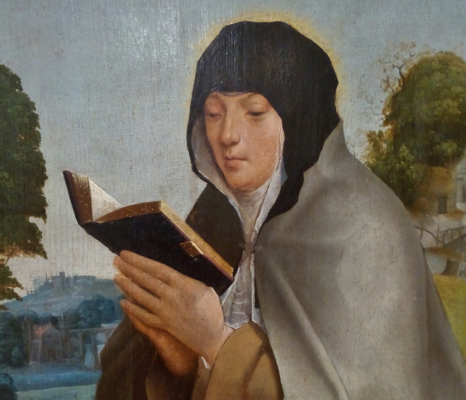
She was a member of the Third Order of Saint Dominic, was a mystic, activist, and author who had a great influence on Italian literature and on the Catholic Church. Canonized in 1461, she is also a Doctor of the Church.

Born and raised in Siena, she wanted from an early age to devote herself to God, against the will of her parents. She joined the “mantellates“, a group of pious women, primarily widows, informally devoted to Dominican spirituality.

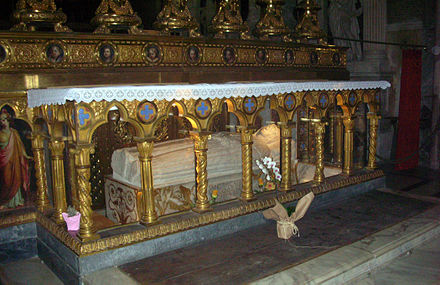
Her influence with Pope Gregory XI played a role in his 1376 decision to leave Avignon for Rome. The Pope then sent Catherine to negotiate peace with Florence. After Gregory XI’s death (March 1378) and the conclusion of peace (July 1378), she returned to Siena. She dictated to secretaries her set of spiritual treatises The Dialogue of Divine Providence. The Great Schism of the West led Catherine of Siena to go to Rome with the pope. She sent numerous letters to princes and cardinals to promote obedience to Pope Urban VI and to defend what she calls the “vessel of the Church”. She died on 29 April 1380, exhausted by her rigorous fasting. Urban VI celebrated her funeral and burial in the Basilica of Santa Maria sopra Minerva in Rome.

Saint Catherine of Siena by Giovanni Battista Tiepolo
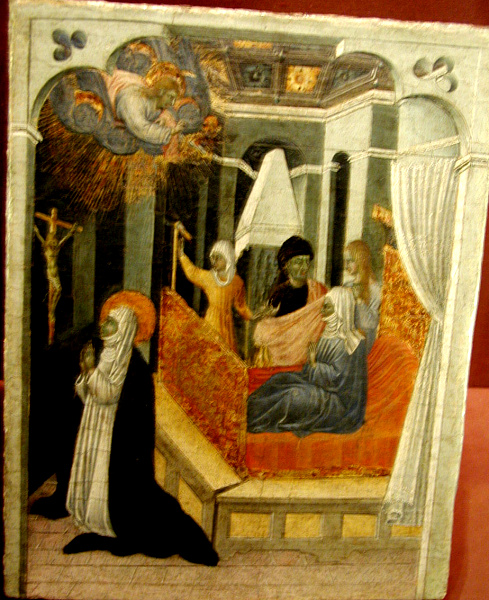
Catherine prays for her dying mother

The Norwegian novelist Sigrid Undset, who won the Nobel Prize for literature, wrote a biography of Catherine.


“Her mother, Lapa had already had twenty-two children when she gave birth to twins, two little girls, on Annunciation Day, March 25, 1347. They were christened Catherine and Giovanna. Madonna Lapa could only nurse one of the twins herself, so little Giovanna was handed over to a nurse, while Catherine fed at her mother’s breast. Never before had Monna Lapa been able to experience the joy of nursing her own children—a new pregnancy had always forced her to give her child over to another woman. But Catherine lived on her mother’s milk until she was old enough to be weaned. It was all too natural that Lapa, who was already advanced in years, came to love this child with a demanding and well-meaning mother-love which later, when the child grew up, made the relationship between the good-hearted, simple Lapa and her young eagle of a daughter one long series of heart-rending misunderstandings. Lapa loved her immeasurably and understood her not at all.”

One evening when Catherine was about six years old she was on her way home from visiting her married sister Bonaventura.

She had come to a place where the street goes steeply downhill between garden walls and house-fronts towards the valley,  on the other side of which are the great stone walls of the abbey church of San Domenico, massive and austere, with no other ornament than a series of windows with pointed arches.

The little girl looked over the valley.

And then she looked up, over the roof of the church.
San Domenico
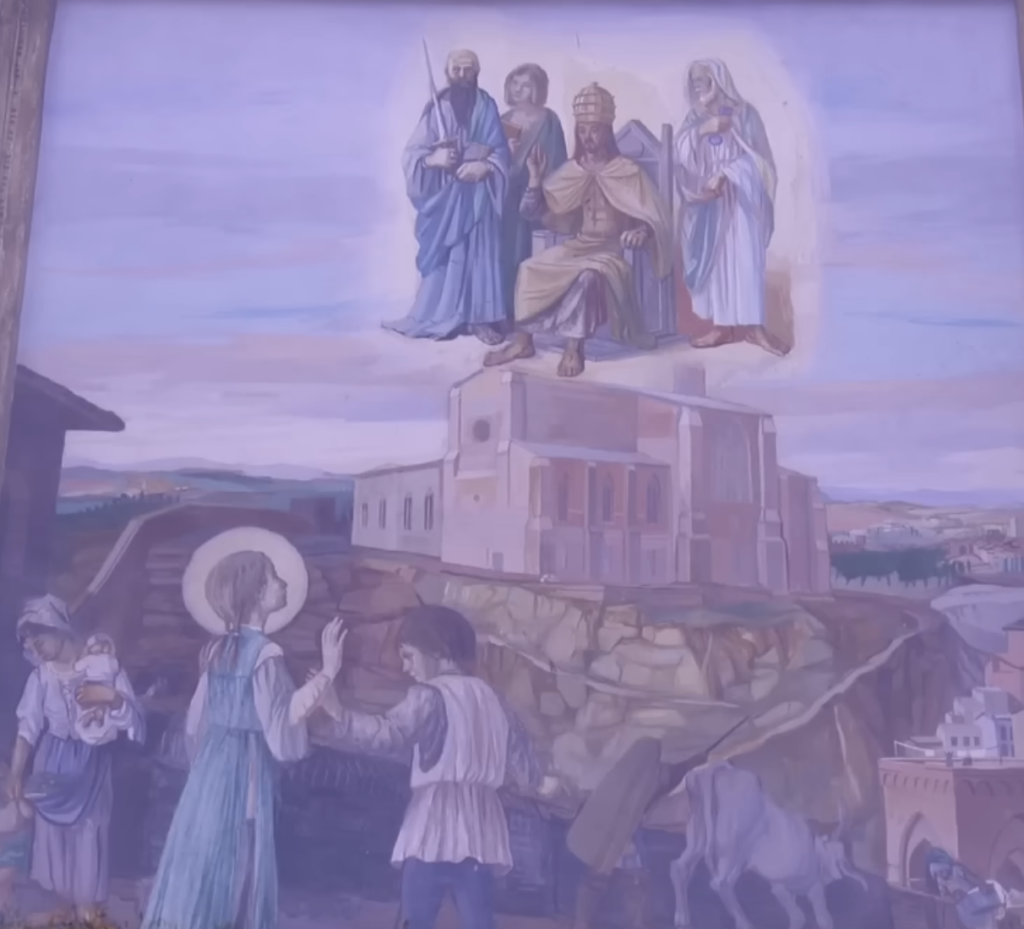
She saw a sight so wonderful that she could never have dreamed of anything like it: the Saviour of the world sitting on a royal throne, clothed in a bishop’s robes, and with the triple crown of the Pope on His head. Beside Him stood the apostles St. Peter and St. Paul, and St. John the Evangelist.

The child stood as though she were rooted to the spot. She stared enraptured at the vision “with the eyes both of her body and her soul”. Our Lord smiled lovingly at her, lifted His hand and blessed the child with the sign of the cross, as a bishop does. . . .

Catherine stood motionless, while the love of God streamed into her soul, filling her whole being and transforming it—for ever.
Catherine's Vision
Fossa San Ansano

Sometime later one beautiful summer morning Catherine provided herself with a loaf of bread and went out alone in the direction of her married sister’s house near the Porta di San Ansano. But this time she went past it, and out of the gate, and for the first time in her life the little child of the city looked out over the quiet Valle Piatta and the green countryside. She was so used to her own world, with the houses close in on each other along the steep, narrow streets, and the swarms of people on foot or horseback, the donkeys, the ox-carts and the teams of mules, the dogs, and—ever-present members of all Italian families—the cats, that Catherine almost certainly thought that this green and peaceful world must be the desert. So she walked on and looked for a cave. Along the sides of the valley there were many grottoes in the limestone hills, and as soon as she had found one which she thought would be suitable she went in and knelt down.

She began to pray as devoutly as she could. But in a little while an extraordinary feeling came over her—it was as though she were lifted up from the floor of the cave and floating under the roof. She was afraid that this was perhaps a temptation of the devil—that he was trying to frighten her out of praying. So she continued to pray even more devoutly and determinedly.

When she awoke from her trance and found herself on her knees on the floor of the cave it was the time of Nones – three o’clock in the afternoon, the hour when the Son of God died on the cross.

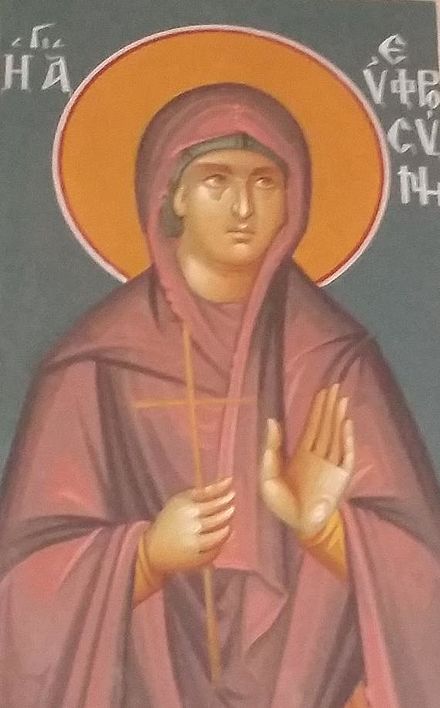
Saint Euphrosyne of Alexandria

If she had expressed a wish to go into a convent, her father Jacopo,  at least would have listened to her with understanding, even if he had not been willing to give his consent at once.

But it seems that Catherine never said that she wanted to be a nun. Beyond the fantasies she had had when she was tiny—that she should become a hermit, or imitate the Blessed Euphrosyne and run away from home dressed as a boy to become a monk—we do not know that Catherine had at any time imagined a future other than that of a life of the deepest solitude. Such a life would not be easy for a virgin wedded to God, if she was to live at home in the midst of a large family whose other members were all engaged in the work and interests of the world.

In the time of the apostles this had been the normal life for Christian women who had taken a vow of chastity. But the demands of practical life soon led to the foundation of convents where such dedicated women could live together under one rule. And an ordinary medieval dwelling house was not exactly suited to keeping, year in, year out, a daughter who refused to marry and did not think of changing home for a convent.

However Lapa, was determined that her daughter should marry and put great pressure upon her. Catherine, however, was equally determined that her only Bridegroom would be Jesus Christ. Encouraged by Fra Tommaso della Fonte, her confessor and spiritual guide, and in a gesture of resistance, Catherine cut off her crowning beauty – her brown hair – a colour that Italian suitors particularly loved!

Catherine concentrated on building up an interior ‘cell’ in her heart through prayer. After a drawn out battle of wills, Catherine’s father, and later her mother, accepted her decision not to marry..

Catherine's restored house in Siena

Lapa dismissed the housemaid and saw that Catherine had enough to do.  She had to do all the washing, prepare the food and wait at table.  On top of this, the whole household scolded and teased her as they sent her running hither and thither. However she imagined that her father was Jesus and her mother Mary. 

The Holy Spirit had taught her to build herself an inner cell, a place of refuge where she could think and pray to her Beloved. From here no-one could disturb her. “The kingdom of God is within you.”

One day in her room she knelt lost in prayer. Jacopo entered and  saw that on her head  rested a snow-white dove; but when he  approached it flew out of the window.  When he asked Catherine about it she said she had seen no dove in the room. Jacopo mused over this.

The Sisters of Penitence of Saint Dominic’s third order originated from a brotherhood of laymen which Saint Dominic had founded.  They were mostly widows who dressed in black and white. They lived in their own homes and were known as le Mantelate – the cloaked sisters. Catherine longed to become a Mantelata.

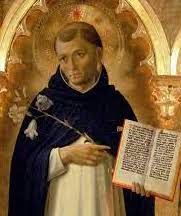
One night she dreamed that she saw  St. Dominic—she knew him at once by the beautiful white lily he held in his hand.  He showed her a robe like those worn by the Sisters of Penitence, and said to her, “Beloved daughter, take courage. Be afraid of nothing, for you shall surely be clothed in this robe which you desire.” Catherine persuaded her father that she should have her own room, a tiny cell of three by nine feet, with a bed of boards and a chunk of wood for a pillow.

In order to imitate her spiritual father, St. Dominic, Catherine gave herself the discipline—scourged herself with an iron chain—three times a day: once for her own sins, once for the sins of all living souls, and once for the souls in purgatory. The blood often ran down her shoulders—as Raimondo, her biographer, says, she gave her Saviour “blood for blood”.

To distract Catherine from her desire to become a Sister of Penitence, her mother took her to the warm sulphur springs of Bagno Vignoni. But when they were about to begin the cure Catherine asked to be allowed to bathe alone and she went to the place where the sulphur water ran out of the pipe scalding hot. The pain was awful but she tried to imagine the torments of purgatory and hell, while she begged her Creator to receive these self-inflicted sufferings instead of the torments she deserved to suffer as punishment for each time she had offended God. Lapa was bound to confess she had lost the battle.

Now Catherine implored her mother to go to the Prioress of the Mantelate and ask whether her daughter could be clothed in the robes of the order.

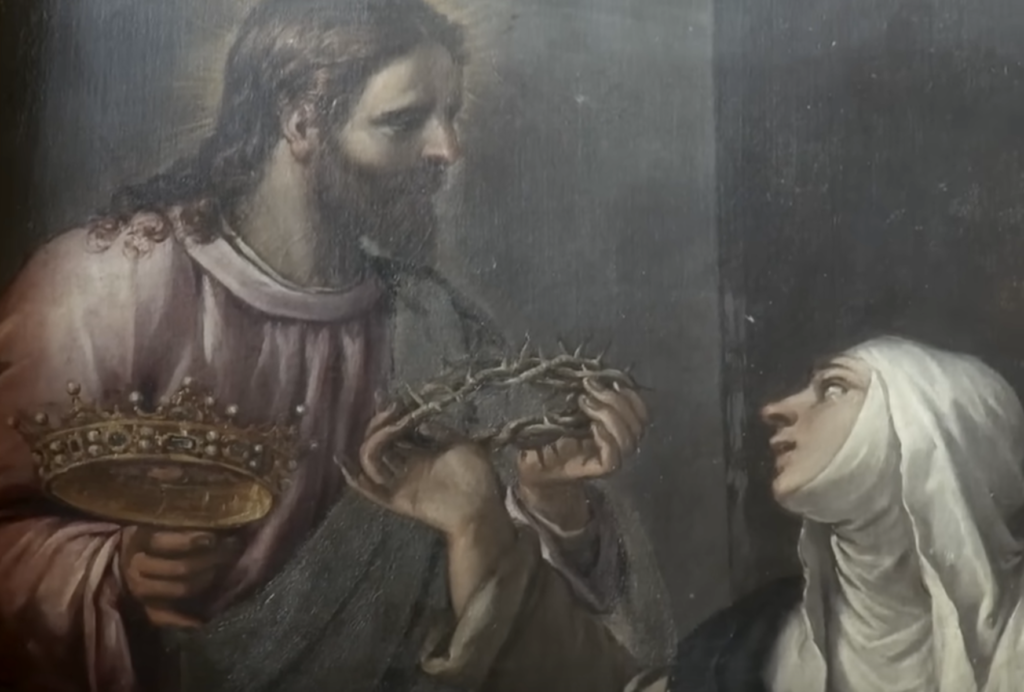
Saint Dominic
Bagno Vignoni
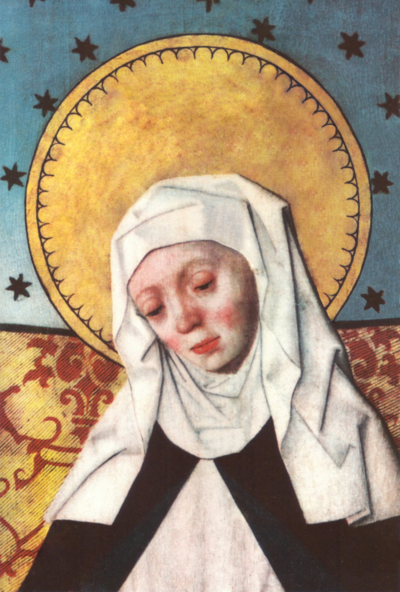
Catherine of the Third Order of Saint Dominic

However the sisters said it was against their rule to accept young girls in their congregation.  But not long afterwards Catherine became covered with a rash over her face and whole body, had violent pains and lay in a burning fever. Catherine had but one wish, and Lapa would do anything to save her daughter’s life. She beseiged the Daughters of Penitence with passionate determination and finally got the sisters to come and see Catherine.  Thus they understood how ardently she longed to join them and how pious, understanding and mature she was. It was unanimously agreed that Catherine should enter the order.
Before she was received, the tempter came to her in the likeness of a young man. The beautiful youth unfolded in front of her a cloak heavy with gold and precious stones, more wonderful than she had ever seen in reality: “All this could be yours. . .” As though in a dream Catherine stared at these examples of earthly magnificence.  Suddenly awakened she flung the tempter from her.

Some days later at dawn Lapa and Catherine went up the hill and into the Dominican church, where she  received the white robe and veil which stand for purity of body and soul, and the black cape which is the symbol of humility and death to this world.

During the next three years the young Sister of Penitence lived a life of complete solitude in the little room in the Benincasa house. On the dark side she suffered terrible temptations, particularly towards lust; and on the light side she experienced a vision in, which she became the bride of Christ.

Towards the end of three years Our Lord told he wanted her to go out into the world to save souls. She protested, “How can I be of any use in the work of saving souls? For I am a woman, and it is not seemly for my sex to try to teach men”. But Jesus replied: “All things are possible for God. You must know that in these days pride has grown monstrously among men, and chiefly among those who are learned and think they understand everything. For this reason  at another period I sent out simple men who had no human learning, but were filled by Me with divine wisdom, and let them preach. To-day I have chosen unschooled women, fearful and weak by nature, but trained by Me in the knowledge of the divine. If men will humbly receive the teachings I send them through the weaker sex I will show them great mercy.

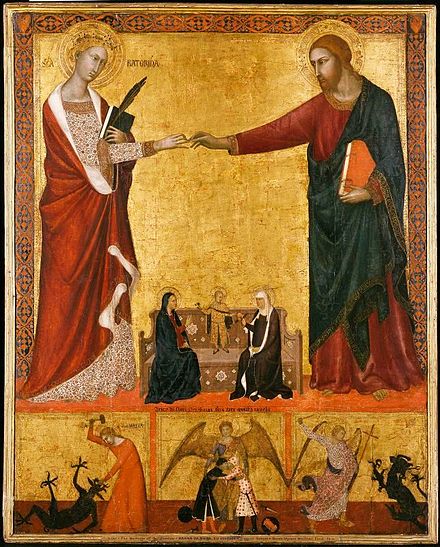
Mystic Marriage of Saint Catherine
La Scala Hospital

Catherine’s mission  led her sometimes to La Scala hospital, where she had a small cell. There were patients there whom an angel could not have satisfied. Catherine was smiling and industrious, while the patients grumbled and swore at her and complained bitterly that she neglected them, was stupid, incompetent, and a hypocrite who went around pretending to be a saint. Old courtesans and superannuated prostitutes who had long ago been forced to retire from the life of pleasure, found a bitter consolation in making the work of their young nurse as difficult as possible. They hated with their whole souls this woman whose help they could not forego.

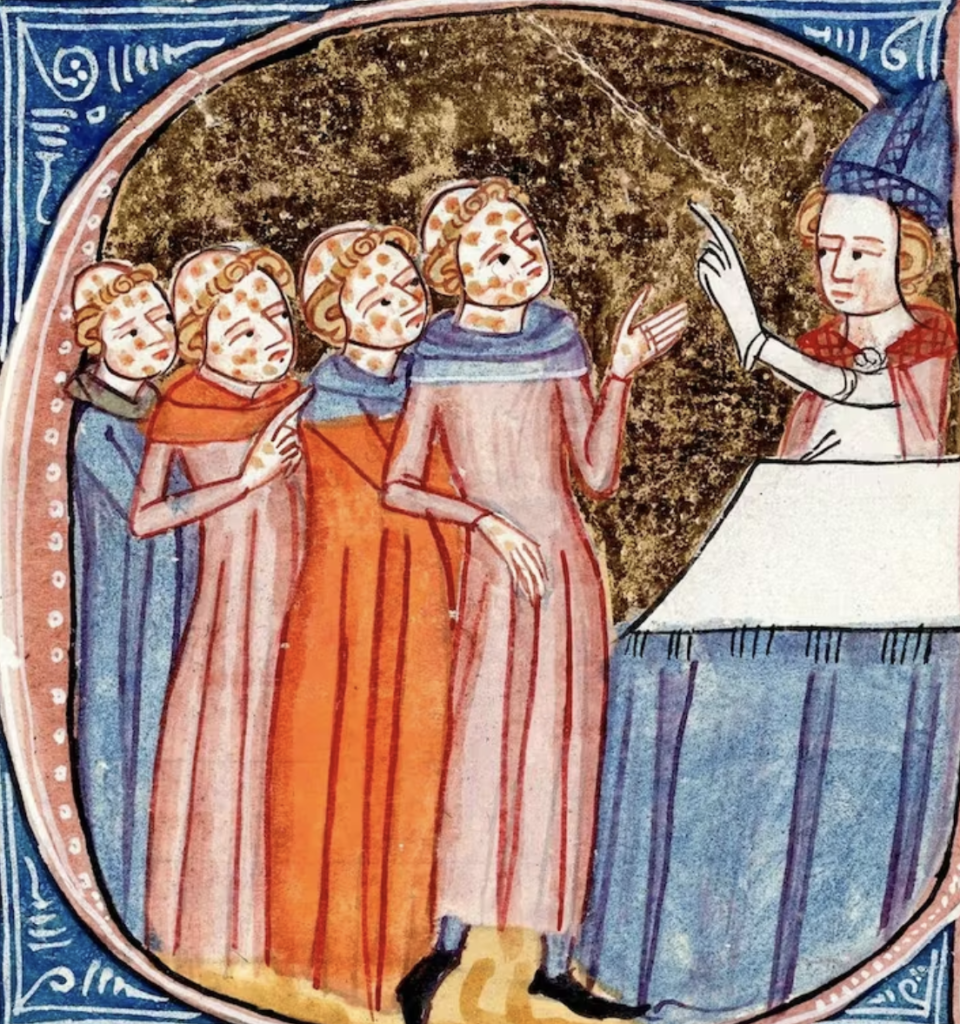
Catherine was the only nurse who dared look after a woman called Cecca who had leprosy. She prepared her meals and washed her whole stinking body,  covered with scabs, before applying salves to lessen the irritation and smarting. But Cecca was a thoroughly unpleasant woman.

Catherine promised to come to her every morning and evening as long as Cecca lived—and the poor woman perhaps found some miserable consolation for her own wretchedness in making this strong and healthy young girl as unhappy as she could. She soon began to treat Catherine as though she were her servant. Everything Catherine did for her was wrong. Sometimes when she had been praying rather longer in church she would come to Cecca later than usual. The old witch received her with oaths: “Welcome, noble lady, welcome queen and lady of Fontebranda—and where has the queen been all the morning? Isn’t the queen a paragon, always with the brothers in the church the whole day long. . . .” Catherine’s secret sorrow was for Cecca’s soul, for the old woman was ill prepared to receive God’s mercy, and she only became worse if anyone tried to talk to her of God. Catherine could only pray for her.

It seems  that Catherine’s sacrifice finally made sufficient impression on the old woman for her to listen to the consolation, the girl whispered in her ears, as she died in her arms.
Mediaeval lepers

At about this time Christ said to her: “You shall with your inner senses understand souls, just as with your physical senses you can understand  bodies. And you shall be able to see not only the souls of those around you, but the souls of all those for whom you pray.”  This was Catherine’s explanation of the uncanny ability she had to see to the very bottom of the souls of others. Her children of the spirit were overcome with astonishment and awe each time their beloved  “mammina” seemed to be able to read their thoughts, and even the subconscious or secret movements of their minds. She always knew, as though by a sixth sense, what they had done or said at any given time, while they had been away from her. She would say to them with a smile that they had read a certain book, or she would look at them with her large eyes full of affectionate anxiety and remind them that the last time they confessed they had left something out.

With Andrea, another leper patient, it became more and more difficult for Catherine to endure the smell of the decaying body. She had to fight with all her might to avoid being sick. One day when she had washed the sores she knew that it was impossible for her to continue with this work. Filled with anger against her own miserable flesh, she seized the bowl, which was full of the water she had washed the sores with, and pus from the sores: “By the Life of the Almighty, by the beloved Bridegroom of my soul, you shall receive in your stomach what you feel such fear of.” She turned from the bed and drank the contents of the bowl. Later she confessed that once she had mastered her revulsion the horrible drink had seemed delicious.

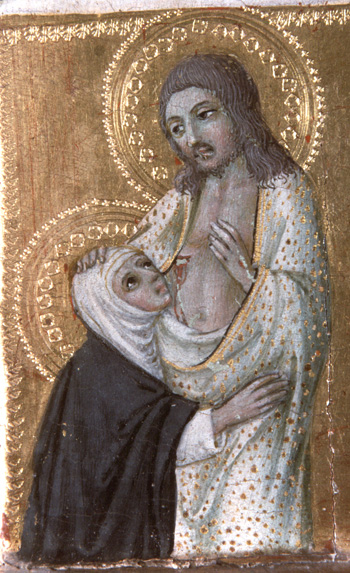
The next night Jesus appeared to her. He uncovered his five wounds: “My beloved, yesterday you won your greatest victory when you drank the terrible drink for love’s sake. Now I shall let you drink what is not often offered to human kind.” He laid His right hand on the maiden’s neck and bowed her face into His divine side: “Drink, daughter, drink My blood, and you shall taste a sweetness which will fill your whole soul; it shall even penetrate your body, which you have despised for My sake.” And Catherine laid her lips to the very Source of life and was allowed to drink her fill—and was left both satisfied and changed.

In her Dialogue she wrote that the blood of Christ was the only source of her courage and strength and wisdom, of her amazing and indomitable joy of living.

Palace of the Popes, Avignon

“The laws which the Sienese make in October are not valid in November”, Dante had said  with scorn about Catherine’s birthplace  – and with good reason. The dominating parties, the Gentiluomini – the Noble’s Party – and the Popolani – the Peoples’ Party were constantly fighting each other. Meanwhile Catherine’s father died, but Lapa, Catherine’s mother, made a remarkable recovery from near death and lived to a ripe old age.  She complained, “I think God has  wedged my soul crossways in my body , so that it cannot come out.”

Dante
Altarpiece in Salem church, Södermanland, Sweden

Meanwhile one of the most malignant roots of human misery was the self chosen exile of the Popes in Avignon. Dante accused Pope Clement VI of having married the papacy to France, saying that the Pope was no more than the chaplain to the King of France, while Petrarch described Avignon as the Babylon of the Apocalypse.

The chorus of voices which demanded that the world should do penance and the Pope return to the city which was the rightful home of the Holy See— an inevitable condition for a re-birth of Christianity—was joined by a resounding female voice from Christendom’s most northerly boundary,  St. Birgitta, Queen of Sweden. Before traveling to Rome she sent a letter to Clement VI commanding him to return to Rome. He and subsequent Popes wavered and in 1350 when Birgitta died it became Catherine’s destiny to be the master tool in the hand of God to bring St. Peter’s successor back to Rome.

Pope Clement VI
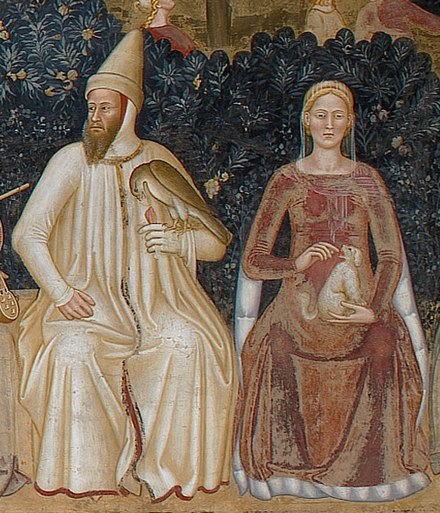
Bernarbo Visconti and his wife, Beatrice

In the winter of 1373-1374 there was repeated enmity between the Pope and Bernabo Visconti, Lord of Milan. His attacks against the clergy and monastics in the archbishopric of Milan were so outrageous that the head of the Church was forced to intervene.

By then Catherine’s influence in everything concerning religion and politics was so great that when Bernabo sent ambassadors to Siena to see if he could win the goodwill of the Republic in his dispute with the Pope, he gave them orders to make contact with the dyer’s daughter, and to get her support.

Catherine sent him a letter in reply. She begs him to return and take his share of the blood of God’s Son. Can any heart be so hard that it does not melt when it beholds the love which Divine Goodness has towards it? “Love, love, love, and remember that you were loved even before you were created.”

Catherine was also very aware of the ravages of the Moslem pirates. It seemed to her that when some thoughtless soldier took the cross to stop this disastrous influx, this must be regarded as a step which, with God’s mercy, might be the beginning of his return to God. As the flames of war consumed more and more of her beloved Tuscany and the whole of Italy, Catherine reasoned that as these men, princes, condottieri, and ordinary men-at-arms, seemed to love war.  Was it not better for them to march against the infidel and those who persecuted Christ and the Christians, than to wage civil war against their Christian brothers? Catherine wrote also to Beatrice , Bernabo’s proud wife. Again the Seraphic Virgin wrote of the unreality of all worldly things, which finally reduce one’s own soul to nothing, and of the happiness of those who love the realities—God and the blood of Christ.

Barbary pirates
Gregory XI, the last Pope in Avignon

French influence had undermined all attempts to get Gregory XI to return to Rome; and the major cause of the corruption in the Church and the state of misery in Italy, was the Popes’ “Babylonian captivity” in Avignon. Catherine wrote Gregory many letters: “Remove to Rome and raise the banner of the crusade, and you will see the wolves change to lambs.” 

On March 20 the army of the anti-papal league captured Bologna. But the following week the papal troops under Sir John Hawkwood took Casena, massacred the men and gave the women to the soldiers. At the head of a mercenary army of savage men aided by bloodhounds followed Cardinal Robert of Geneva, who later became the rival pope, Clement.

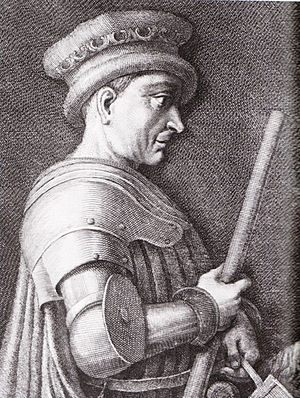
John Hawkwood, papal condottiere in Gregory XI's wars against Milan
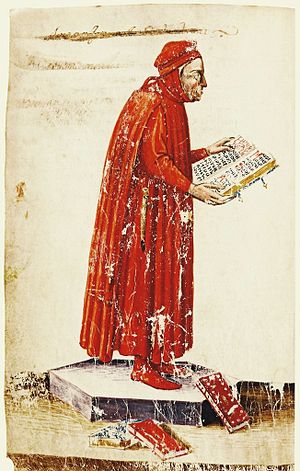
Coluccio Salutati, Chancellor of Florence during the war

At the same time ambassadors from Florence appeared before the Pope in Avignon and declared, in the name of the republic, that the political leaders called by the Pope were unable to come, some of them being in prison. 

Florence was not willing to give herself up to the Pope unconditionally; the republic had already suffered too much injustice at the hands of the Pope’s corrupt legates for that. The Pope replied by putting Florence under an interdict.  In the Middle Ages, when a town was put under an interdict, its citizens became outlaws in all Christian countries. Competitors could take the opportunity to ruin its commerce, and to imprison its citizens. Everywhere in the world the Florentines were relieved of their property in the countries where they had business connections.

Anti Pope Clement VII
Catherine sees the sea for the first time and sails to Avignon

Catherine offered to be mediator between the Florentines and the Pope.

She arrived in Avignon in June 1376. The last part of the journey was in a little boat up the Rhone. Vast crowds awaited her on the quay.

Gregory was deeply impressed by her sound common sense and spiritual insight. However the expected ambassadors from Florence did not arrive. Gregory said that they were making fools of both himself and Catherine. He was right. From July 6 a new government had ruled in Florence and they did not want peace.

In the meantime Gregory too had succumbed to Catherine’s power over the souls of men. He was completely convinced that this woman was one of God’s saints. When she spoke openly to him of the abuses practised by priests and prelates, which caused such terrible ruin within the Church, she also condemned the luxury in the papal court and the vices which flourished under the very eyes of the Pope. Here where all the heavenly virtues should flower she smelled the stink of hell’s putrefaction. Gregory interrupted her: 

“How have you, who have been here such a short time, got such knowledge of all that goes on here?” Catherine’s attitude towards the Vicar of Christ was one of the deepest humility, but now she straightened up suddenly, looked him in the face, and spoke as boldly as one prince to another. “To the glory of Almighty God I am bound to say that I smelled the stink of the sins which flourish in the papal court while I was still at home in my own town.”

In private Gregory asked her to tell him God’s will. She replied: “Who knows God’s will so well as your Holiness, for have you not bound yourself by a vow—” Greatly shaken, Gregory stared at the young woman. He had made a vow that he would return to Rome if he were ever chosen to be Pope—it was while he was still a cardinal. But he had never told a living soul. From that moment he knew that he would have to leave Avignon.  Later she wrote to him “The more quickly you do it, the less you will suffer. . . . If God is with you none will be against you.”

On October 2 he went on board the ship which was to take him from Marseilles to Genoa. The Pope wept, his French followers wept and lamented, but there was no way back. Jesus Christ’s words to Catherine many years before, when He said to His bride that He would use weak women as his ambassadors to the proud and powerful men of this world, had come true in a manner which makes Catherine of Siena’s destiny astonishing in the history of the world

When she set foot again on Italian earth, it seemed as though the holy joy which Catherine’s friends speak of so often was coloured by a natural human feeling of happiness: she shouted with joy at the sight of the earth covered with red flowers, or the milling life of an ant-heap. Everything our Creator has made is equally wonderful. “These tiny ants have proceeded from His thought just as much as I, it caused Him just as much trouble to create the angels as these animals and the flowers on the trees.”

An engraving by Luigi Sabatell of Florence during the plague in 1348, based on Giovanni Boccaccio's The Decameron.

Passionately as Catherine longed for the salvation of every human soul, she loved her own town of Siena and all the lands where her own Italian people lived, with a healthy, uncomplicated passion.

North of Genoa she went through a little town called Varazze, which had been almost depopulated during the plague. Varazze had been the birthplace of Jacopo de Voragine, the author of  The Golden Legend, which was the favourite book of the Middle Ages.

Catherine advised a handful of the citizens who had survived the epidemic to build a chapel to his honour; they would then be freed from the plague. They did so and since then the plague has never returned to Varazze.

At Genoa Catherine was far too famous to be allowed to rest in peace. Late one evening a man dressed as an ordinary priest  asked to be taken to her room.  She fell at the feet of the Vicar of Christ. The Pope told her to stand up, and late into the night the two of them sat alone talking. When Gregory left her he had been “strengthened and edified”. He had landed at Genoa after a stormy journey from Marseilles. He was received with bad tidings; the Florentine armies had beaten those of the Pope. The French cardinals interpreted the storm they at sea as a warning sent from God, and they exaggerated the rumours of the various misfortunes. Gregory called together a council, and was on the point of giving in to his cardinals. But he knew that Catherine was in town, and his conscience would not allow him to make any decision before he had asked her advice.  He let her decide his fate and the fate of the Church for many years to come. On December 5th he landed in Corneto in the Papal States. 

Tarquinia (formerly Corneto)
The Return of Pope Gregory XI from Avignon (detail) - Giorgio Vasari
On January 17, 1377, Pope Gregory XI made his entry into Rome, riding on a white mule. The Romans, who had remained loyal to the Vicar of Christ in spite of all the attempts to win them over to the other side, and in spite of all the misery they had suffered at the hands of his unworthy deputies, were wild with delight.

Showers of flowers and confetti greeted the true lord of the town on his arrival.

Throughout the night there was dancing in the streets, which shone from the light of thousands of torches and lamps.

Even the French cardinals in the Pope’s retinue were moved. . . .

Catherine returned to Siena where the government had condemned Niccolo di Tondo to death for speaking flippantly of the governors. The boy refused to apologize or to make his confession.  However Catherine visited him in prison and tamed this passionate a despairing young man. She wrote:

“He made me promise for the sake of God’s love I would be with him when the day of execution came, and I promised. The next day before the bells rang for the first time, I  consoled him greatly. I went with him to Mass, and he received Holy Communion.” Later at the place of execution he smiled when he saw Catherine waiting for him.  She bared his throat, and when he laid his head on the block she knelt beside him. He said nothing but “Jesus, Catherine”, and then his head fell into her hands.

Niccolo di Toldo's execution
Florence
In October 1377 the Florentines had won a great victory over the Pope’s mercenary army. The Pope’s position was terrible. His temporal possessions had been reduced to Rome and a few strips of land just outside the city. But the obstinacy which often accompanies indecision made Gregory refuse all attempts to make peace with the Florentines under conditions which could be honourable for both sides. 

At his bequest Catherine arrived in Florence in December. She was full of hope. The Florentines had again accepted the interdict, they no longer forced the priests to celebrate sacrilegious Masses and services, and it seemed to her that this was the first sign that the republic really wanted to return to the Pope’s community. However in March 1378 Pope Gregory died.  it did not look as if peace were any nearer.

On April 18th the cardinals in conclave chose the Archbishop of Bari, Bartolommeo Prignano, as Pope. He took the name of Urban the sixth. The prior of the Carthusians at Gorgona wrote to Catherine: “It is said that the new Holy Father is a terrible man, and he frightens people with his words and deeds. He seems to have complete faith in God, and therefore fears no man, and it is obvious that he will uproot the simony and love of luxury which has flourished in God’s Church.”  The prior wrote that the Holy Father wanted peace, but a peace which was honourable for the Church. He did not demand money. For the new Pope it was a question of spiritual, not temporal values—exactly what Catherine had begged his forerunner to remember.  She  decided that she would not leave the town until peace was made. But the Guelph party which was in power continued to persecute their public and private enemies.

Pope Urban VI
Florence

On Sunday, July 18, a messenger from the Pope rode into Florence bearing an olive branch. As the news—“Peace at last”—spread over the town the Florentines broke into wild jubilation. The fine demanded by Urban was about an eighth of what Pope Gregory had claimed. But the Florentines had to promise that all laws which were in conflict with the Church would be annulled and that the churches and monasteries which had been plundered should be compensated. The interdict was withdrawn, and Catherine’s prophecy that once the Florentines were reconciled with the Holy Father they would be his most loyal sons was fulfilled. When, shortly after, the great catastrophe came upon the Church, the Florentines stood firmly at Pope Urban VI’s side.


Although holy, Pope Urban could be harsh and tactless.  A schism was effected when a rival pope named Clement VII. He was a handsome man with a winning manner and was much liked by his fellow Frenchmen, while he was hated by the Italians.

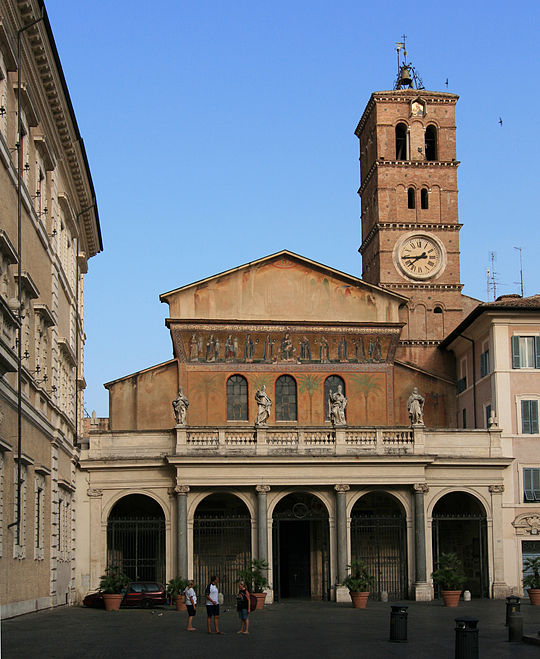
Catherine had foreseen the schism. She arrived in Rome on the first Sunday in Advent. The city was under arms. The Romans were besieging San Angelo, which the French garrison was holding for Clement. This meant that the Pope could not move into the Vatican, and so Urban lived at Santa Maria in Trastevere.  Catherine was immediately received by the Pope, who was overwhelmed with joy at meeting her again. He asked her to make a speech to the assembled cardinals, first and foremost about the schism, which had now become a fact. She did so in such a way that everyone was greatly moved. She encouraged them to show courage and determination, and not let themselves be frightened by the schism, but persevere and work for God without fear of men.  Pope Urban excommunicated the Antipope Clement.

Antipope Clement VII

Christmas was approaching — the first which Catherine was to celebrate in Rome. As a Christmas present Catherine sent the Pope five oranges which she had candied and covered with gold leaf. (Oranges were at that time a novelty in Italy; according to tradition the first orange tree was brought to the country by St. Dominic, who planted it in a garden beside the monastery of Santa Sabina.) The Christmas present was accompanied by a letter which she had written “desiring to free you from the bitter agony which rages in your soul. May the cause of this agony disappear so that you know nothing but the sweet pain which springs from the love of God — I mean the sorrow and pain caused by our own faults.” She develops the theme of the difference between the bitter and the sweet pain, and gives the Pope a recipe for making candied oranges.

It seemed to Catherine that the blood of the martyrs in Rome was still boiling. She had arranged her household expressly so that it should be easy for her family to visit the sanctuaries of the saints and martyrs, especially during Lent. The custom of keeping the “stations” gave another opportunity for great solemnities: every day during Lent the priests from all the parish churches in Rome went in solemn procession to a chosen church—some of them were so dilapidated that they were only opened on this one day of the year—in order to celebrate the Mass with all the pomp and magnificence they could contrive. Catherine was more active than ever; she wrote letters and talked with people, she carried out all kinds of charitable actions, but in her letters from Rome she speaks again of the “cell of self-knowledge” which is built in the depths of the soul—and not by human hands. 

She advises the friends who have made her their spiritual leader to retire to this cell and never leave it, however busy with outward duties they may be. Few saints have lived such a busy life, or been so occupied with the problems of their time, as Catherine of Siena, but she was absolutely sure that the most important work she had to do was to pray ceaselessly, to suffer gladly and to receive with the humility of love the messages and advice which her divine Bridegroom gave her when she was in ecstasy.

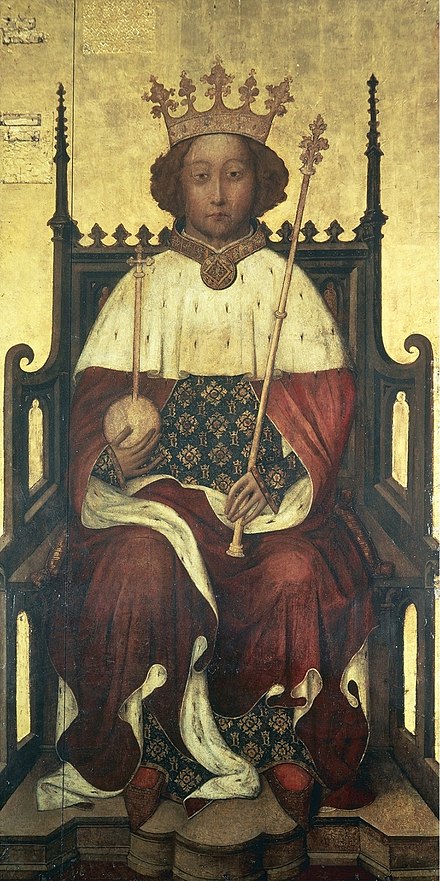
Richard II of England

In the meantime it seemed as though the schism would lead to a great war. Most of the Christian countries were still loyal to Pope Urban VI. The German Empire, Hungary, Poland, Norway, Sweden and Denmark acknowledged him. Some time later the young King of England, Richard II, drew up a document, Rationes Anglicorum, which he in vain challenged the University of Paris to refute. It had not yet come so far that the schism divided nations internally, and split the monastic orders into parties and factions, rival princes declaring themselves for Urban or Clement. It was not the first time there had been schism in the Church, but it had never meant so much before: on previous occasions everyone had known that the rival Pope had been set up by the German Emperor or some political group, and politics and force of arms had decided on the support given to the Pope or his rival. But this time the reason for the schism was really a problem concerning the Church: had the election of Urban VI been valid or not? 

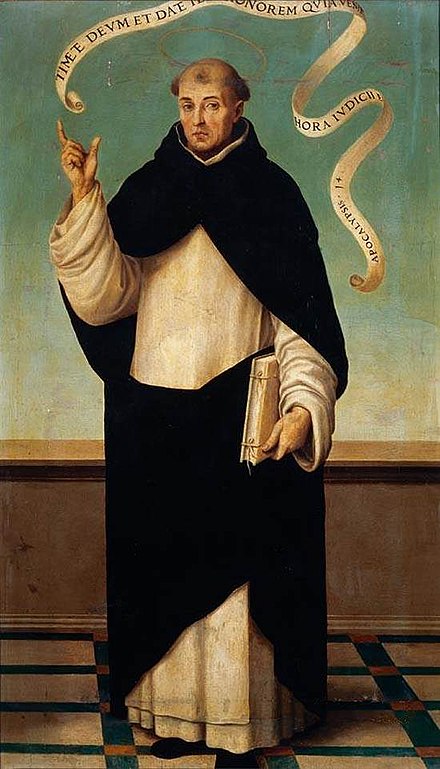
Saint Vincent Ferrer
Saint Colette
Even people of good will, even saints like St. Colette, who reformed the order of the Poor Clares, and the Dominican St. Vincent Ferrer supported the Pope in Avignon.

St. Vincent indeed ended by acknowledging that he had made a mistake and denied the authority of the Avignon Pope from the pulpit: the rival pope at that time was Benedict XIII, who had once been the Cardinal Pedro de Luna.

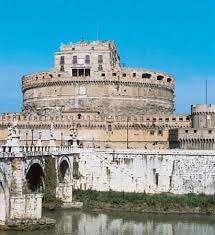
The Tuscan republics would have nothing to do with the rival French pope.  But the schism led to consequences which had to be met with force of arms.  A Clementist army of mercenary soldiers under the command of Louis de Montjoie, the rival Pope’s cousin, was in the Campagna outside Rome. The French garrison at St. Angelo was holding out against the Romans, who had besieged the fortress. So the Pope was unable to move into the Vatican, and the troops he had were not enough to guard the town while so many of them were needed for the siege of the fortress of St. Angelo.

One of Montjoie’s officers managed to force his way into Rome with a handful of men and storm the Capitol and massacre several hundred citizens gathered in consultation. The enemy managed to retire before the Romans had recovered from the shock. The people took their revenge on the foreigners in the town, and murdered many of them. Catherine demanded her Tuscan countrymen that they should come to the help of the lawful Pope . The fortress of St. Angelo surrendered to the Romans.

Castel San Angelo
Santa Maria Trastevere
Catherine advised Pope Urban to go barefoot from Santa Maria Trastevere to the Vatican, to take up residence beside the grave of St. Peter. An enormous crowd of people, wild with joy, followed the thanksgiving procession. Many considered that they could thank the Seraphic Virgin from Siena for the victory.

Like Moses in the Old Testament she had plucked victory for her people from heaven. A day or two later, on May 6, she wrote to the government of Rome. Since the days of Cola di Rienzi Rome had remained a republic under the Holy See, and chosen its own government, the Seven Flagbearers, one from each district of the town. There were moreover four “good men” whose duty it was to attend to what we would call social services. Catherine exhorts them to show gratitude to God who has saved their city from the danger which threatened, and, besides her usual advice regarding love for oneself and love for Life, she offers particular advice regarding the sins of ingratitude: blasphemy, swearing, scandal, and wicked attempts to ruin the names and reputations of one’s neighbours.

Her death-agony began when the Romans at the beginning of January rebelled against the Pope and threatened to take his life. Broken with sorrow at this new horror, Catherine could do nothing but pray her Bridegroom not to allow such a terrible crime to occur.

Catherine continued to pray till the last moment, for the Church, for Pope Urban, for her children. She prayed with such intense love that her disciples thought that not only their hearts, but the very stones must break. “Beloved, You call me, I come. Not through any service of mine, but through Your mercy and the power of Your blood.” She made the sign of the cross and cried, “Blood, blood. . .” Then she bowed her head. “Father, into Your hands I commit my spirit.” And as she said it, she gave up her spirit. Her face had become as beautiful as an angel’s, radiant with tenderness and happiness. It was at about the hour of terce on April 29, 1380.

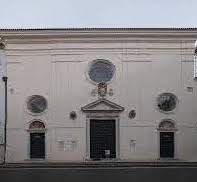
Her body was taken to the Church of Santa Maria sopra Minerva

Santa Maria sopra Minerva Trastevere
Giovanni di Paolo, The Mystic Marriage of Saint Catherine of Siena

Devotion around Catherine of Siena developed rapidly after her death. Pope Pius II canonized her in 1461; she was declared a patron saint of Rome in 1866 by Pope Pius IX, and of Italy (together with Francis of Assisi) in 1939 by Pope Pius XII. She was the second woman to be declared a “doctor of the Church,” on 4 October 1970 by Pope Paul VI – only days after Teresa of Ávila. In 1999 Pope John Paul II proclaimed her a (co-)patron saint of Europe.

Sarcophagus of Saint Catherine of Siena beneath the High Altar of Santa Maria sopra Minerva