Bishop and Martyr - 30 - 107 A.D.

He was one of first Apostolic Fathers of the Church, together with Clement of Rome and Polycarp

He was the second Bishop of Antioch (the first being Evodius). He was arrested (some writers believe that he must’ve been denounced by a fellow-Christian), condemned to death and transported to Rome to be thrown to the wild beasts in the arena.

In one of his letters he describes the soldiers who were escorting him as being like “ten  leopards, who when they are kindly treated only behave worse.”  In the course of his journey he wrote seven letters to various churches, in which it out wisely and deeply with Christ, the organisation of the church and Christian life. They are important documents for the early history of the Church and they also reveal a deeply holy man who accepts his fate and  begs the  Christians in Rome not to try to deprive him of the crown of martyrdom.

The name Ignatius means God-bearer.

 Ignatius was originally known as Ignatius Theophorous. He later seemed to drop the surname and went by the name of Ignatius.

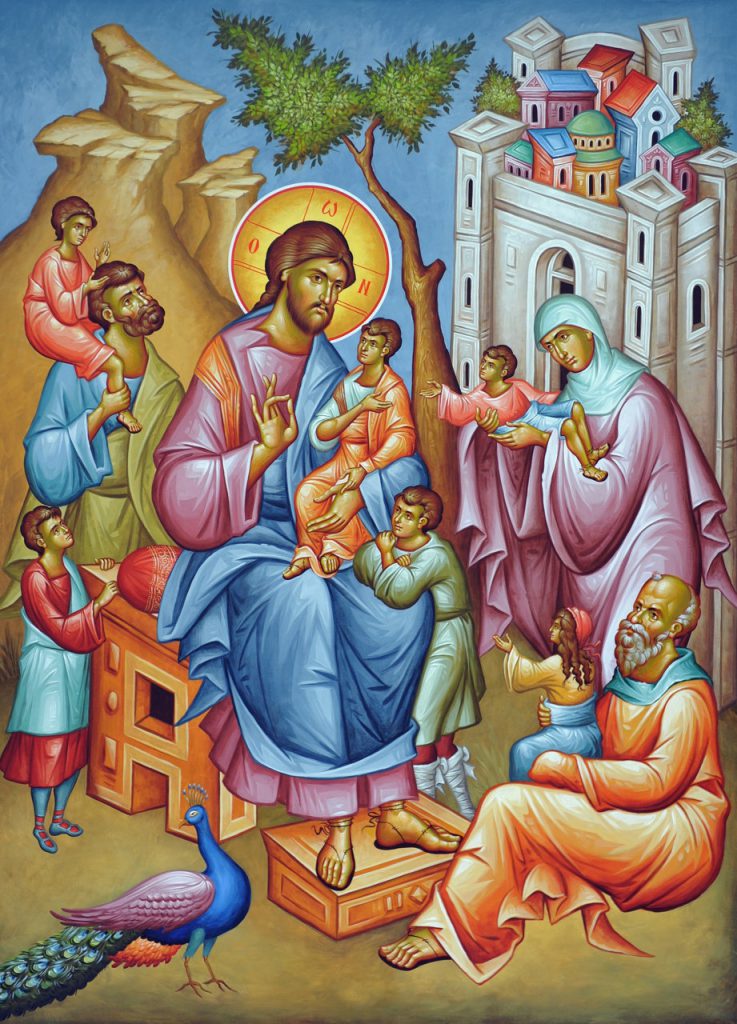
Tradition has it that he was one of the little children that Jesus took in His arms and blessed.

Early church writings state that Ignatius was an early disciple of St. John the Evangelist. It may have been John who first introduced him to the deep revelations of the things of God. He and Polycarp were both students of John.

Tradition has it that the Apostle Peter ordained Ignatius as bishop of Antioch in AD 69. He oversaw the Antioch church for around 40 years.

He is quoted in the Catholic Catechism as saying: 

“Neither the pleasures of the world nor the kingdoms of this age will be of any use to me.

It is better for me to die in order to unite myself to Christ Jesus, than to reign over the ends of the earth.

I seek him who died for us; I desire him who rose for us.

My birth is approaching. . .”

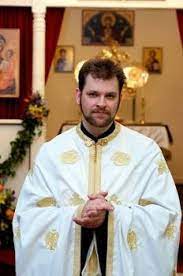
Fr. Andrew Stephen Damick is an American Orthodox Christian priest, who was converted from Protestantism to Orthodox Christianity by studying the life of Saint Ignatius, has written an excellent biography entitled God Bearing, the Life and Works of Saint Ignatius of Antioch. I have necessarily drawn fairly heavily from this book.

On studying Ignatius Father Damick wrote, “I decided to become Orthodox. I was convinced not by some fast-talking apologist trying to get me to join his church, but rather by the words of a witness to the vitality of the Christian life taught by the apostles, from a time before all the competing schisms, heresies, and denominations up to our time.”

Of course we should remember that at the time of Ignatius the Catholic and Orthodox churches were one and the same.

The Life of St. Ignatius of Antioch

Antioch was one of the first places where the Christian Church flourished. It dominated Syria, which in the Roman Empire was a larger region than the modern state.  It was the home of the first Gentile church and  was founded  by the apostles, Peter and Paul. Peter may have been its first bishop and it was the home base for many of the apostles’ missionary journeys, especially Paul’s.

After  Peter’s episcopacy which may have begun in  AD 37 and lasted until roughly AD 53, the second bishop was St. Evodius, who served until 69. As reported by the early Church historian Eusebius of Caesarea, Evodius  was succeeded by Ignatius. 

Ancient Antioch

 According to tradition, the first time we hear of Ignatius is in the Gospel of Matthew.

At that time the disciples came to Jesus, saying, “Who then is greatest in the kingdom of heaven?”

Then Jesus called a little child to Him, set him in the midst of them, and said, “Assuredly, I say to you, unless you are converted and become as little children, you will by no means enter the kingdom of heaven. Therefore whoever humbles himself as this little child is the greatest in the kingdom of heaven.” (Matt. 18:1–4).

While Matthew does not give the name of this child, tradition claims the  child is  Ignatius, who was likely of Syrian origin.

One fascinating detail that is known from the time of Ignatius’s episcopacy comes from Socrates Scholasticus’s Ecclesiastical History, which notes that it was Ignatius who introduced antiphonal chanting to the Church. Socrates writes:

“We must now however make some allusion to the origin of this custom in the church of responsive singing. Ignatius saw a vision of angels hymning in alternate chants the Holy Trinity. Accordingly he introduced the mode of singing he had observed in the vision into the Antiochian church; whence it was transmitted by tradition to all the other churches.”

Music was clearly important to Ignatius, and he uses a musical metaphor in his epistle to the Ephesians

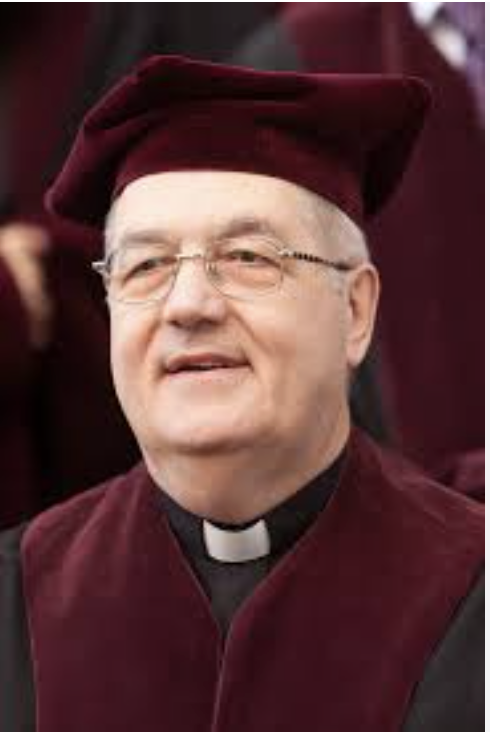
Father Hubertus Drobner

In his book “The Fathers of the Church” Father Hubertus Drobner lists three primary themes in his letters:

  1. Warnings against heresies, especially Docetism. The incarnation, death and resurrection of Christ, as well as his presence in the Eucharist, did not take place through a merely simulated external shape, but rather in the reality of the humanity of the Son of God.
  2. The unity of the theology of trinitarian monotheism attested here for the first time.  The earthly church is the reflection of the heavenly kingdom. It is structured hierarchically according to the pattern of the Trinity, under the leadership of the bishops, assisted by presbyters and deacons.  The bishops presides over baptism, the Eucharist and the marriage ceremony and vouches for orthodoxy.
  3. The yearning for matyrdom.


Excerpts from the Epistle of Ignatius to the Ephesians

I do not issue orders to you, as if I were some great person. I simply speak to you as fellow-disciples.  I am far inferior to you, and require to be sanctified by your Church of Ephesus, so renowned throughout the world. Your justly renowned priests are to your bishop, as are the strings to the harp. Thus in your concord and harmonious brotherly love, Jesus Christ is sung. You are  happy who are  joined to your bishop as the Church is to Jesus Christ., and as Jesus Christ is to the Father, that so all things may agree in unity! Let no man deceive himself: if any one be not within the altar, he is deprived of the bread of God. 

Beware of false teachers For some are in the habit of using the name of Jesus Christ in wicked guile, while yet they practise things unworthy of God, whom ye must flee as ye would wild beasts. For they are ravening dogs, who bite secretly, against whom you must be on your guard.

This relief depicts a Roman ship around 200 A.D.. The rig of the ship on which Saint Ignatius sailed probably resembled this one

Three celebrated mysteries 

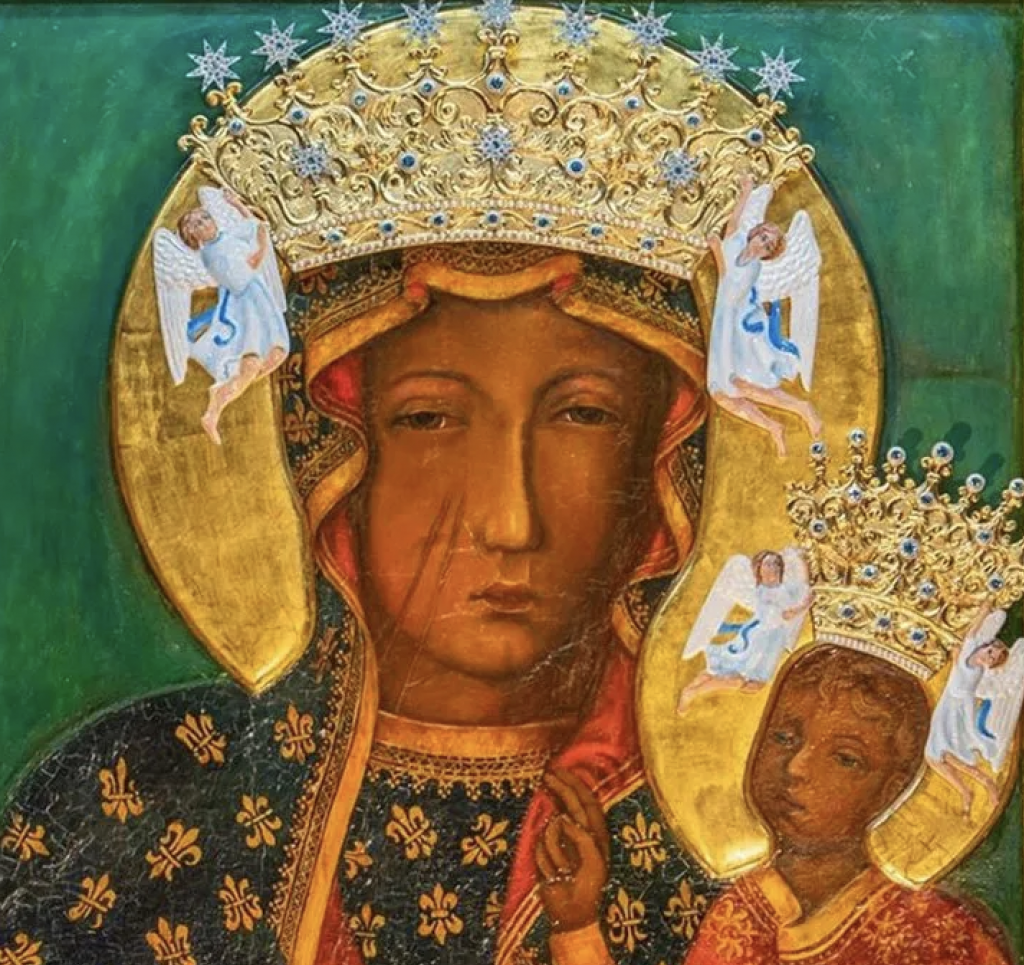
Our Lady of Czestochowa

 The virginity of Mary was hidden from the prince of this world, as was also her offspring, and the death of the Lord; three mysteries of renown, which were wrought in silence by God. How was He manifested to the world? A star shone in heaven above all the other stars, the light of which was inexpressible. Its novelty struck men with astonishment. And all the rest of the stars, with the sun and moon, formed a chorus to this star. And there was agitation felt as to whence this new spectacle came, so unlike everything else in the heavens. Hence every kind of magic was destroyed, and every bond of wickedness disappeared; ignorance was removed, and the old kingdom abolished, God Himself being manifested in human form for the renewal of eternal life.  Henceforth all things were in a state of tumult, because He mediated the abolition of death.

In conclusion pray for the Church which is in Syria, whence I am led bound to Rome, being the last of the faithful who are there, even as I have been thought worthy to be chosen to show forth the honour of God. Farewell in God the Father, and in Jesus Christ, our common hope.
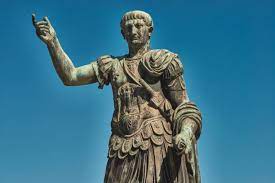
In AD 107 the Emperor Trajan began a general persecution of Christians , declaring that they should partake in pagan sacrifices or be killed. Trajan had enjoyed a number of big victories, and he believed the pagan gods had made it possible. Thus, worshiping them was an act of patriotism. Christians’ worship of Christ was interpreted as defiance against the empire. Ignatius’s response was to preach the Gospel ever more fervently, to urge pagans to become Christians and to give courage to Christians who would not adulterate their faith with the worship of false gods. Word of Ignatius’s defiance of the imperial edict reached the emperor’s ears, and the bishop was arrested and brought before Trajan himself while he was sojourning in Antioch for the winter.
Emperor Trajan
A fresco of Ignatius and Trajan from San Clemente.in Rome.

A traditional account of Ignatius’s life, relates his confrontation with each other;

Trajan asked, “Who art  thou, thou wretched devil, so ready to disobey our royal orders?” Ignatius answered, “No one who bears God can be called a  devil.”   “We too have gods in our hearts, since they are allies against our enemies?”  “Your  nation’s gods are demons. There is only one God Who created the heaven and earth and the sea and all things that are therein, and one Christ Jesus, the only-begotten Son of the God and Father.” “Do you speak , of the one Who was crucified by Pontius Pilate?”  “I speak of Him Who  puts down the principalities and the powers, triumphing over them.” 

Trajan  offered Ignatius the opportunity to become a high priest of Zeus, if only he would render homage to Trajan’s gods, making Ignatius first among the emperor’s inner circle.  Ignatius replied that emperors should only offer favours  beneficial to their recipients, and that this “favour” would bring “condemnation and everlasting punishment.” Trajan threatened him with every kind of punishment, but Ignatius says that the very aim and purpose of his life was to go to Christ by a painful death, since the Lord had suffered such things for him. He went on to  mock Trajan’s pagan deities.

The emperor’s response was to order him put in chains to be transported to Rome and torn apart by wild beasts as a public spectacle. He did not want him martyred in Antioch because of the honour his flock would show him, supposing that if he were transported a long distance away, Ignatius would die in obscurity.  Scholars consider Ignatius’ transport to Rome unusual, since those persecuted as Christians would be expected to be punished locally. 

He was escorted to Rome by a company of ten Roman soldiers, whom he called “leopards.” 

Zeus statue discovered at Smyrna
Map of Ignatius' Journeys

 They travelled  sometimes by boat and sometimes by land. They stopped for an extended rest at  Smyrna, where he was received with great joy by his friend Polycarp,  the local bishop, having been appointed there by the apostles themselves. While there, Ignatius,  was visited by delegations from neighboring Christian communities, including Onesimus, the bishop of Ephesus. Possibly Onesimus was the runaway slave  introduced in Paul’s Epistle to Philemon. He would be martyred later by stoning.  During his time in Smyrna, Ignatius wrote four epistles, three to churches in Asia Minor—Ephesus, Magnesia, and Tralles.

Excerpts from the Epistle of Ignatius to the Magnesians

Roman remains from Magnesia, (present day Manisa in Turkey)

In Ignatius’s time there were still Jews,  who taught the Church was not remaining Jewish enough. Ignatius addressed this in his epistle to the Magnesians:

“Do not be deceived  by antiquated myths. For if we are still living in conformity with Judaism, we acknowledge that we have not received grace.” 

For Ignatius Christianity was the fulfillment of Judaism. He claims the prophets were not for the Israel of the Old Covenant, but for the Church:

“The prophets were persecuted for  living in conformity with Christ Jesus; but they were  inspired by grace to convince the disobedient that there is one God, manifested through Jesus Christ his Son, who is his Word which proceeded from silence.”

Note: On this subject I would recommend reading Salvation is of the Jews by Roy Schoeman

Excerpts from the Epistle of Ignatius to the Philadelphians

In his letter to the Philadelphians (today’s Alasehir in Turkey), where a division had arisen over how Christianity related to Judaism, Ignatius affirms the value of the Jewish prophets, claiming them for the Church, even speaking of them as if they were apostles of Jesus:

The prophets we also love because by their proclamation  they relate to the gospel and they  were waiting for Christ . By believing in Jesus Christ they were saved. Worthy of love and admiration, they are saints, attested by Jesus Christ and numbered together with us in the gospel of the common hope.

Church of St John, Philadelphia, the site of one of the seven churches referred to in Revelations. This city of 'brotherly love' gave its name to Philadelphia in the USA

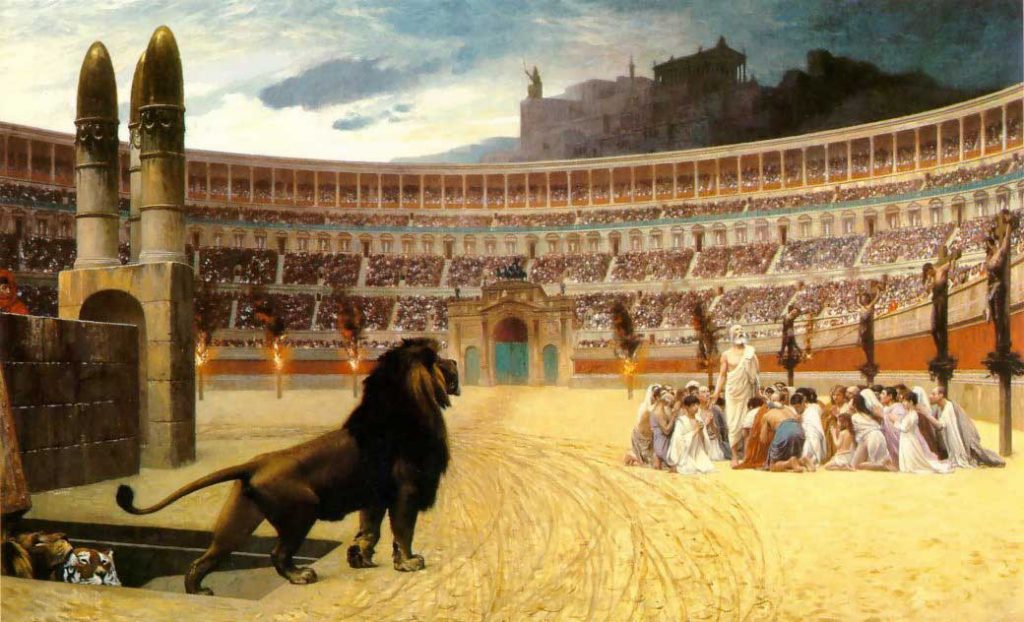
The journey to Rome continued over land, through Macedonia and Illyria, now roughly parts of Greece and Albania, and Ignatius and his captors boarded a boat at the port city of Dyrrhachium, the modern Albanian city of Durrës. From there, they sailed to Neapolis, modern day Napoli (or Naples) in Italy. Upon his arrival in Rome, Ignatius was taken to the Colosseum, the site of numerous martyrdoms of Christians during pagan Roman rule.

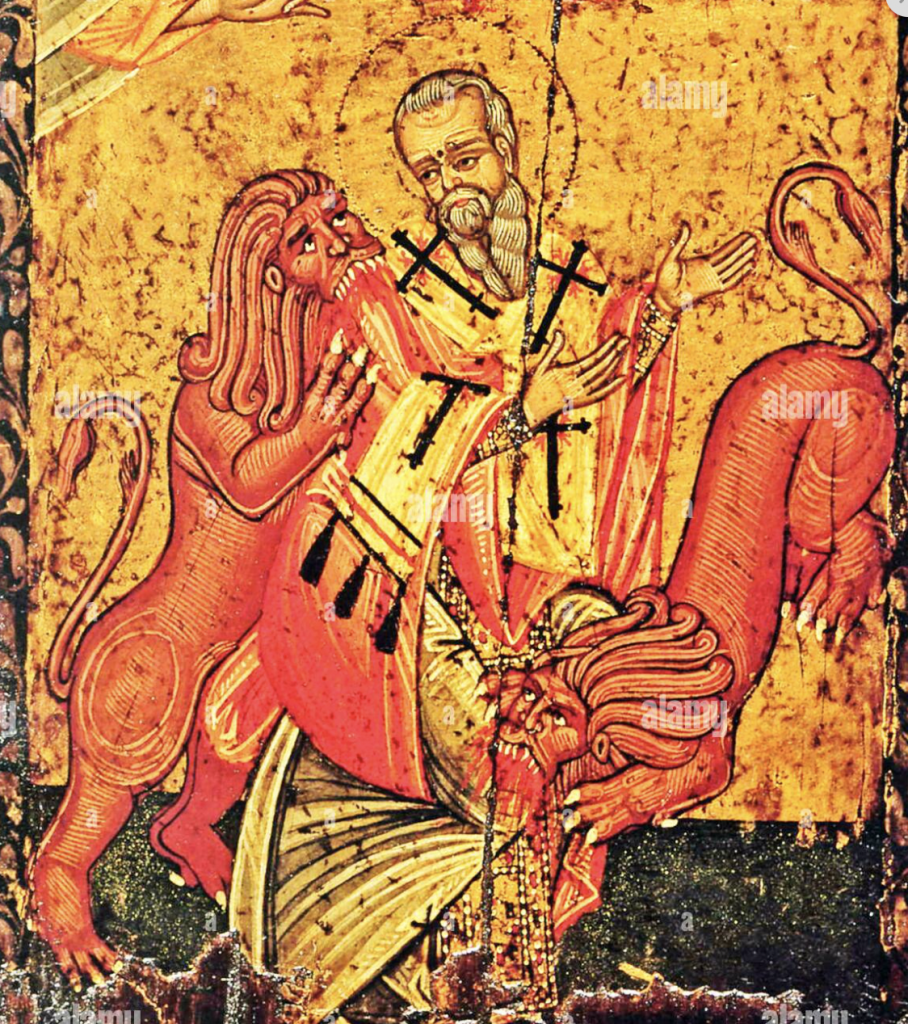
There, in that most famous of amphitheatres, which could hold up to fifty thousand spectators, the great bishop of Antioch was torn apart by lions, all the while joyfully praising the emperor for the opportunity to be martyred.

After Ignatius yielded up his life, the Emperor Trajan heard how he had died. It is said that Trajan came to revere Ignatius and all Christians, how they   prayed through the night and were merciful to the suffering. Because they posed no threat to the empire, Trajan felt remorse for his prior treatment and enacted a law that ended persecution of Christians by execution. Ignatius thus went from serving the Christians in Antioch  to serving all the Christians throughout the Roman Empire. And now his martyric witness, as well as the letters he left behind, inspires Christians throughout the whole world.

Before he died he said : “I am God’s wheat, and I shall be ground by the teeth of beasts, that I may become the pure bread of Christ.”

Together with Benedict of Nursia, Therese of Lisieux and Francis of Assisi, Ignatius is a patron of the Community of the Sons and Daughters of God.