
He wrote: “Alone among all animate beings, man can boast of having been counted worthy to receive a law from God: as an animal endowed with reason, capable of understanding and discernment, he is to govern his conduct by using his freedom and reason, in obedience to the One who has entrusted everything to him.”
The first of the great Latin speaking theologians and moralists, he was born at Carthage into a pagan family, of good societal standing. His father was an officer in the Roman army. He studied law and rhetoric at Rome, where he made a reputation for himself as a lawyer. Impressed by the witness of the martyrs, he was converted about 193. He settled at Carthage in the service of the Christian community. It is not certain whether he was a priest in that great city, where all the currents of the ‘new religions’ met and mingled, where Christianity itself was still fluid.
His influence covered different areas: from the use of language and the recovery of classical culture to singling out a common “Christian soul” in the world.
He attempted to delineate its features more precisely in opposition to pagans, Jews, heretics and Gnostics. But his tendency to extremes led him about 207 to espouse Montanism, a charismatic movement that claimed to be inaugurating the age of the Spirit, and professed the utmost rigorism in a sort of eschatological frenzy.
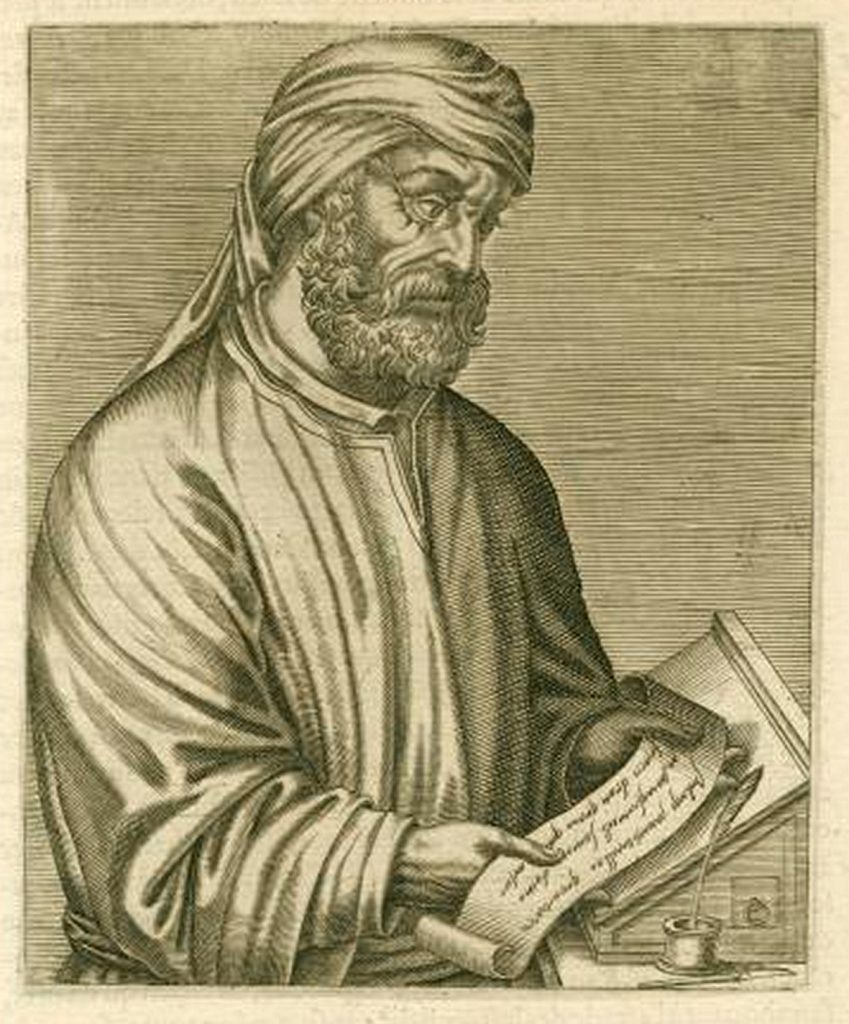
Carried away by the arguments of the sects, Tertullian accused the Catholic Church of laxity amd ended by founding a church of his own on the fringe of Montanism. Tertullian was a man of passionate feeling, full of paradox. He strove relentlessly against error, but demanded from the State, which he regarded anyway as evil, freedom of religion . He violently rejected any philosophical approach to Christianity – ‘what can Athens have to do with Jerusalem’ – and professed a faith that is irrational by choice.

His most famous work, Apologeticus, denounces the unjust behavior of political authorities toward the Church; explains and defends the teachings and customs of Christians; spells out differences between the new religion and the main philosophical currents of the time; and manifests the triumph of the Spirit, who counters the violence of the persecutor with the blood, suffering, and patience of the martyr. He accuses the state of the murder of children, incest and Thyestean feasts, where human flesh is served.
“Refined as it is”, the African writes, “your cruelty serves no purpose. On the contrary, for our community, it is an invitation. We multiply every time one of us is mowed down. The blood of Christians is effective seed”. Martyrdom is in the end victorious and more efficient than the cruelty and violence of totalitarian regimes.
His writings are important as they show the practical trends in the Christian community regarding Mary Most Holy, the Sacraments of the Eucharist, Matrimony, Reconciliation, Petrine primacy and prayer .
On military service he asked: “Shall it be held lawful to make an occupation of the sword, when the Lord proclaims that he who uses the sword shall perish by the sword?”
And of fasting he wrote: “God did not give the body to be an obstacle by means of its weight … A lighter flesh he will raise more quickly to new life.”

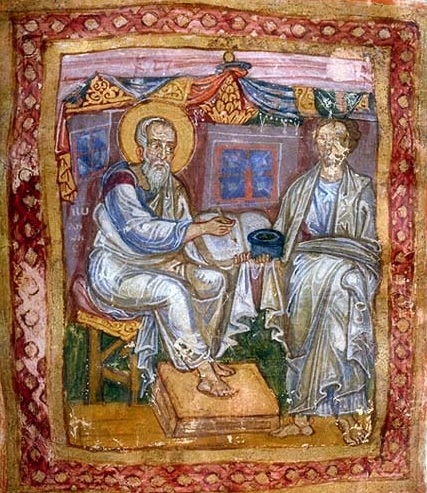
At that time Marcion’s teaching was regarded as the most dangerous of heresies; so much so that Tertullian wrote a five volume book, Adversus Marcionem, attacking it.
Marcion preached that the sending of a good God, Jesus Christ, was unknown before and distinct from the “vengeful” God (Demiurge), of the Old Testament.This punishing god had created the evil world and corrupt matter.
Jesus Christ the Son could not therefore have become a material human being.
In order to deliver creation from Adam’s sin, he merely took on what appeared to be a body, so as to proclaim his father’s message of salvation, without being tainted by evil matter.
Marcion’s truncated Bible is reduced to the passages that do not refer to the OT creator God.
Tertullian unpicked Marcion’s teaching, point by point.
Ronald Knox, who took thirty years to write his masterpiece Enthusiasm, a Chapter in the History of Religion, writes: “(Tertullian) is usually presented to us as a morose Puritan, self-exiled from the genial warmth of the Christian fire-side by the fierce intolerance of his African temperament.”
He continues: “I find the secret of his attitude in something quite other. To me he is the born arguer, who talks himself rather than thinks himself into extreme positions and is too dazzled by his own eloquence to recede from them.”
