Saint Syncletica of Alexandria 280 - 350

Miniature depicting Syncletica of Alexandria, from the Menologion of Basil II (c. 1000 AD)

She was a Desert Mother from Roman Egypt in the 4th century.

Her name, Syncletica, is derived from the Greek meaning “heavenly assembly.”

She was of a wealthy background and is reputed to have been very beautiful. From childhood, however, she was drawn to dedicate her life to God.

From the time she took responsibility for her family’s affairs, after her parents’ deaths, she gave to the poor all that had been left to her. With her younger blind sister, Syncletica abandoned the life of the city and instead resided in a crypt, thus adopting a hermetic lifestyle. Her holy life soon gained the attention of locals and, gradually, many women joined her to live as her disciples

The true desert is within as Amma Syncletica remarked with very feminine sagacity:

Many live on the mountains and behave as if they were living amidst the uproar of a city, and they are lost. It is possible while living amongst a crowd to be inwardly  solitary and while living alone  to be inwardly beset by the crowd.

She also wrote:

A treasure is secure so long as it remains concealed; but when once disclosed, and laid open to every bold invader, it is presently rifled; so virtue also vanishes once it is known and made public. Just as wax melts in the presence of fire, so also does the soul disintegrate in the face of praises and lose its vigour.

She was hesitant to share publicly what she practiced privately, knowing that intimacy with Christ is a serious matter. Only after being pressed by those that came to her did she begin to teach the way she had come to know Christ in solitude. She was convinced that teaching without experience would lack substance.

“It is dangerous for someone not formed by experience of the ascetic life to try to teach; it is as if someone whose house is unsound were to receive guests and cause them injury by the collapse of the building. It is the same in the case of someone who has not first built an interior dwelling; he causes loss to those who come.”

She fasted, prayed, and practiced solitude all towards this end as a young woman. Fasting to her was a fulfillment of 2 Corinthians 4:16, “As our outer person perishes, so our inner person is being renewed.”

Fasting starved the carnal nature of the flesh while feeding the inner man the virtue of temperance. Fasting and prayer enabled her to keep… ”…careful watch over the first impulses of her soul, not allowing them to be led astray by physical passions.”

It was said that, “Through fasting and prayer she trimmed the thorny offshoots of her thought.”
She had two brothers who had passed away while she was young, as well as a sister who was blind. Her parents also died when she was a young woman and the care of her sister as well as her parents estate was entrusted to her. She promptly gave away the fortune she had inherited to poor and entered into the solitary life with her sister with these words, “I have been judged worthy of a great title. What worthy return shall I make to the giver? I do not have anything.”

Determinism was alive and well in her day and age. She chastised those who would blame God for their sinful inclinations. “If, then, they say that God is first, it will necessarily follow that everything has its origin in him; and, in fact, he is present in all. He is, therefore, himself the Lord of Destiny. If, moreover, one is greedy or lustful as a result of his destiny-at-birth, God is necessarily the cause of evil.”

She goes on… “The end of their point of view is a despair that is fatal for them; as a result of these thoughts God is necessarily eliminated from their lives and even more his judgement.”

In her day, certain women were considered oracles in the pagan world. They were known for their ecstatic prophecies and generally amassed a significant following. Regarding the truth of their “prophetic utterances” she said,

“Just as some uneducated people and sailors have a kind of a hazy knowledge of winds or rainstorms from the character of the clouds, so also these people have a confused foreknowledge from demons. Actually they make some prophecies by guesswork, as also do mediums.”

There is a certain prognostication utilized by psychic mediums influenced by demonic forces. Their foretelling is, at best, guess work. God alone knows the future, Scripture makes that abundantly clear.

To her, vulnerability was of more worth than reputation.

“Those who are describing their own successes should also try to mention the weaknesses that go with them.”

Richard Rohr and Mary Earle quote from The Life of Blessed Syncletica:

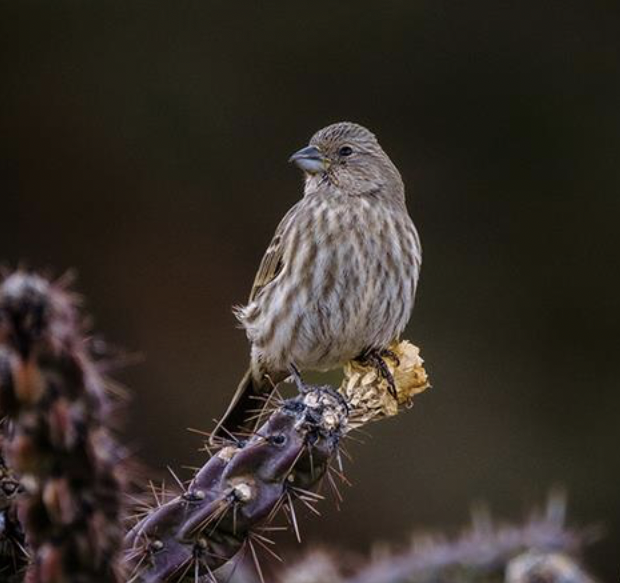
If you find yourself in a monastery do not go to another place, for that will harm you a great deal. Just as the bird who abandons the eggs she was sitting on prevents them from hatching, so the monk or the nun grows cold and their faith dies, when they go from one place to another.


Amma Syncletica is counseling us to not run from ourselves. She is encouraging us to stay faithfully with whatever new life is being hatched within us….
She is addressing a universal human temptation—to miss our lives by living completely on the surface. After all, our culture encourages competition and ambition, and we are highly mobile. If we are not careful, that mobility can create a kind of rootlessness that will injure us and those with whom we live and move and have our being. This is the kind of rootlessness that is internal, that is caused by our not staying with anything long enough to grow deep roots….

In the desert, men and women were counseled, “Go to your cell and your cell will teach you everything.”  … The cell was a sacred space, a place in which a woman could be with herself and the divine Presence and listen.  immersed in God’s presence.


The wisdom of the desert tempers our instinct to avoid boredom and discomfort:

Amma Syncletica’s bird metaphor speaks directly to one of the dilemmas of the spiritual life—that of coming to terms with the plain old ordinariness of spiritual practice and the life of prayer, of the whole of life becoming prayer…. We are enticed by a variety of means to leave our “eggs” and simply move continually from one interest to another. The result is that we don’t allow ourselves the opportunity to bring forth new life. The “eggs” die because they are not tended. We miss the deeper life of the Spirit because we are constantly moving from one interest to another rather than focusing on one thing.

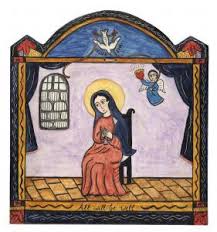
Julian of Norwich in her cell
Our ancient mothers knew that when boredom threatened, it could very well be the outward and visible sign of God’s secret, hidden, inner work within the human heart and soul. Consequently, they emphasized staying in the cell, in the little room of daily living, and letting that cell be their teacher….

Staying in the cell, or “sitting on the eggs,” means noticing our appetite for overstimulation.

The cell teaches us to slow down, … to notice what is right in front of us. The wisdom the desert mothers offer us is that by staying with ourselves, with our inner ups and downs, with our hurts and our fears, we will bring forth the new life that God is creating within us.