
“Prayer is accomplished by the contemplation of God alone, and by the warmth of love, through which the soul, molded and directed to love him, speaks very familiarly to God as to its own Father.”

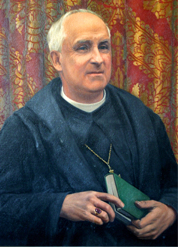
He was a Christian monk and theologian celebrated in both the Western and Eastern churches for his mystical writings. Cassian is noted for his role in bringing the ideas and practices of early Christian monasticism to the medieval West.
He was born around 360, most likely in the region of Scythia Minor (now Dobruja, a historical region shared today by Romania and Bulgaria), although some scholars assume a Gallic origin. The son of wealthy parents, he received a good education: his writings show the influence of Cicero and Persius
Cassian mentions having a sister in his first work, the Institutes, with whom he corresponded in his monastic life; she may have ended up with him in Marseilles. However he is most famous for his writings entitled Conferences.
Father John Main, O.S.B. (1926 – 82), in his book Word into Silence, writes:
“Abbot Chapman of Downside, describes the simple, faithful use of a mantra which he had discovered more from his own courageous perseverance in prayer than from teachers. He had rediscovered a simple enduring tradition of prayer that entered the West through Monasticism, and first entered Western Monasticism through John Cassian in the late fourth century. Cassian himself received it from the holy men of the desert who placed its origin back beyond living memory to Apostolic times.
“The venerable tradition of the mantra in Christian prayer is above all attributable to its utter simplicity. It answers all the requirements of the masters’ advice on how to pray because it leads us to a harmonious, attentive stillness of mind, body and spirit. It requires no special talent or gift apart from serious intent and the courage to persevere. ‘No one’, Cassian said, ‘is kept away from purity of heart by not being able to read, nor is rustic simplicity any obstacle to it, for it lies close at hand for all if only they will by constant repetition of this phrase keep the mind and heart attentive to God.’ Our mantra is the ancient Aramaic prayer, Maranatha, Maranatha. ‘Come Lord. Come Lord Jesus.’


It is not a mantra that is efficacious of itself as in India, but a word addressed to someone, the expression of a relationship, a cry for help, a link with him whom Augustine calls the ‘interior Master’. In his Conferences Cassian gives a formula that was to be retained by Western monasticism.
“Our thoughts wander from spiritual contemplation and run hither and thither. When we return to ourselves like people waking up, we look for something to revive our memory of God. But while we are seeking, time passes. Before we have found anything we are wandering again …
The cause of this confusion is quite clear: we do not possess a formula … to still our wandering mind … one thought succeeds another, in a perpetual flux …
Here is that formula that you are looking for. Every monk should accustom himself to using it in meditation, and that will enable him to banish other thoughts … It is a secret that the few survivors of the Fathers of the early days taught us. To keep yourself continually mindful of God’s presence you should set this formula before yourselves: ‘Haste thee, O God, to deliver me: make haste to help me, O Lord.’ (Psalm 70.1). This short verse expresses all the feelings that human beings can have. It adapts itself to every situation … in adversity, for deliverance; in prosperity, for it to continue without inducing pride; … at work, in your various occupations; on a journey you can also repeat it; … let sleep close your eyes on these words; meditate on them according to Moses’s precept ‘when you sit in your house, and when you walk by the way, and when you lie down, and when you rise’ (Deuteronomy 6.7).
When still very young he became a monk and soon gave himself to xeniteia, the spiritual wandering of one who is ‘a stranger and pilgrim on earth’.
He traveled to Palestine with an older friend, Germanus, with whom he would spend much of the next twenty-five years. There they entered a hermitage near Bethlehem. After remaining in that community for about three years, they journeyed to the desert of Scete in Egypt, which was rent by Christian struggles, where they visited a number of monastic foundations.
Approximately fifteen years later, about 399, Cassian and Germanus faced the Anthropomorphic controversy provoked in letter form by Theophilus, Archbishop of Alexandria.

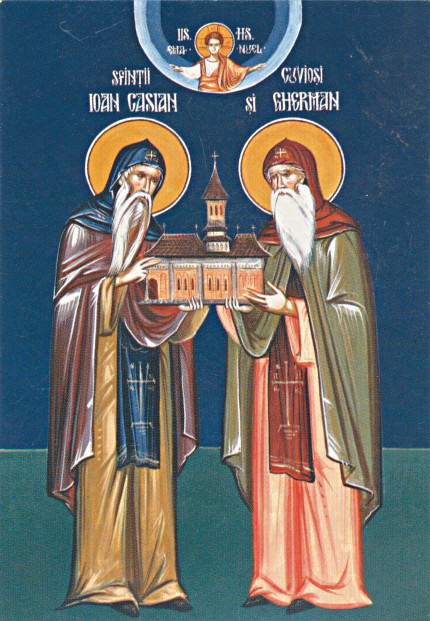
Cassian noted that the majority of the monks received the message of their patriarch “with bitterness”, and charged Theophilus with heresy for impugning the plain teaching of scripture.
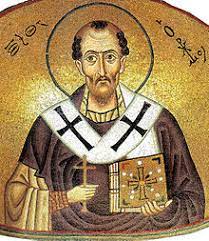
Following an unsuccessful journey to Alexandria to protest the matter, Cassian and Germanus fled with about 300 other Origenist monks. Cassian and Germanus went to Constantinople, where they appealed to the Patriarch of Constantinople, John Chrysostom, for protection. Chrysostom entrusted him with the supervision of the cathedral treasure and ordained him a deacon and he became a member of the clergy. When the patriarch was forced into exile from Constantinople in 404, the Latin-speaking Cassian was sent to Rome to plead his cause before Pope Innocent I.
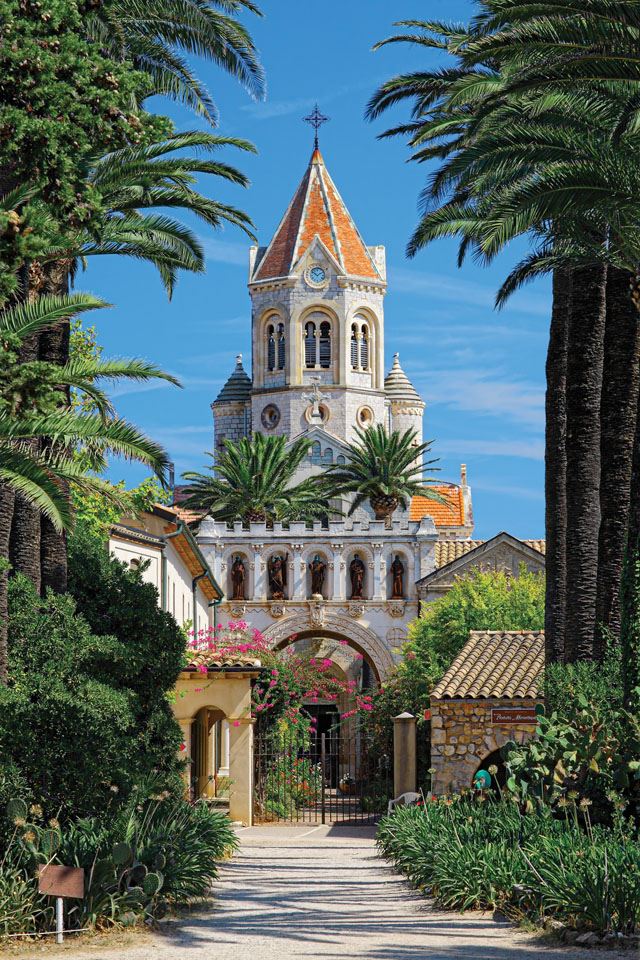
At Rome, where he came to know Leo the Great, Cassian was ordained priest. In 415 he was called to Provence as a witness to monasticism. At Marseilles he founded two monasteries, St Victor’s for men and St Saviour’s for women. In 417, for the bishop of Apt, he drew up his Cenobitic Institutions, in which he describes the Egyptian communities from which the bishop wanted to draw inspiration for his own foundations. Cassian then wrote, for the bishop of Frejus and particularly for Honoratus the abbot of Lerins and subsequently bishop of Aries, his very influential Conferences.

In the Conferences Cassian recommends a dialogue with God that is silent, relaxed and trustful, when a person ‘shuts the door of his room’, as Jesus requires, that is the door of his inner sanctuary, of his ‘heart-spirit’. He suggests frequent prayers but short ones because of their very intensity, to avoid distraction.
“We have to take particular care to follow the Gospel precept that bids us go into our inner room and shut the door to pray to our Father. This is how to do it.
We are praying in our inner room when we withdraw our heart completely from the clamour of our thoughts, and in a kind of secret dialogue, as between intimate friends, we lay bare our desires before the Lord.
Without opening our mouth, we call on the One who takes no account of words but considers the heart.
We are praying in secret when we speak to God with the heart alone, in such a way that even the enemy powers themselves cannot guess their nature. Such is the reason for the deep silence that it behoves us to keep in prayer … Thus our prayers should be frequent but short, for fear that if they are prolonged the enemy might have an opportunity to insinuate distraction into them. This is true sacrifice: ‘A broken and a contrite heart, O God, thou wilt not despise’ (Psalm 51.17). “
Father John Main writes: “It was in listening with total attention to the teaching of the Holy Abbot Isaac that Cassian was first fired with an enthusiasm for prayer and the firm resolve to persevere. Abbot Isaac spoke eloquently and sincerely but, as Cassian concludes: ‘With these words of the holy Isaac we were dazzled rather than satisfied, since we felt that though the excellence of prayer had been shown to us still we had not yet understood its nature and the power by which continuance in it might be gained and kept.’
Cassian allowed the suffering of the world to enter into him and he wrote beautifully on the subject:
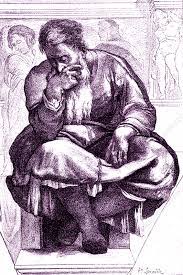
“There are tears of another sort, those we are made to shed by the hardness of heart and the sins of others. Samuel wept thus over Saul. So too in the Gospel we see our Lord weeping over Jerusalem; and in earlier times Jeremiah: ‘O that my head were waters, and my eyes a fountain of tears, that I might weep day and night for the slain of the daughter of my people’ (9.1) … These are the tears of the righteous man crushed under the weight of the troubles, the anguish and the sorrows of this world. This is shown clearly by the title of the psalm, ‘A prayer of the afflicted, when he is faint and pours out his complaint before the Lord’. The person thus introduced is that poor man of whom the Gospel says: ‘Blessed are the poor in spirit, for theirs is the kingdom of heaven’.
He inspired our reading of the Psalms:
“The psalms ought to be our own; they ought to enter into and illuminate our most tragic experiences; they ought to be our cry to God over all the contradictions of our destiny, our violence, our despair, our fervour; “Penetrated by the same feelings in which the psalm was composed, it is as if we became the authors of it and we run ahead of its thought rather than follow it. We grasp the meaning before reading the words. The sacred words reawaken our experience reminding us of the assaults we have undergone and still undergo every day, of the marks of our negligence or, on the contrary, of our fervour, blessings of divine visitation or wiles of the enemy, the havoc wrought by the forgetfulness that is so ready to creep into our soul, our frailty … and our blindness. All these feelings we find expressed in the psalms. They are the bright mirror in which we become more deeply conscious of what is happening to us. We are made sensitive by our own experience. It is no longer a question of what we have merely heard. We are in touch with the reality. We understand it completely. It is no longer simply entrusted to our memory; we give birth to it in the depth of our heart as an intuition that forms part of our being. Reading throws light on experience. By this method our soul arrives at the purity of prayer … The soul pours out its prayer to God with unspeakable groaning.”
Cassian considerably modified St Augustine’s most cherished theses on freedom and grace. In particular he transmitted to the West, with great discernment, the experience of Egyptian and Palestinian monasticism and the best of the spirituality of Origen and Evagrius. He put forward a wise combination of community life and the life of a solitary. He put ascesis at the service of love. His mysticism is a mysticism of light and of the divine light pervading the whole person, including the subconscious mind.
Cassian’s achievements and writings influenced Benedict of Nursia, who incorporated many of the principles into his monastic rule, and recommended to his own monks that they read the works of Cassian. Since Benedict’s rule is still followed by Benedictine, Cistercian, and Trappist monks, John Cassian’s thought still exercises influence over the spiritual lives of thousands of men and women in the Latin Church.
Cassian died in 435 at Marseille.
