
He was an influential theologian who supported the Nicene Creed and opposed the heresies of the early Christian church, fighting against both Arianism and the followers of Apollinaris of Laodicea.
Near Caesarea he organized a complete city of social service run by monks. The people gave it the name ‘Basiliad’. It contained a guest house, a hospice, a hospital, and there were free meals and lodging for the poorest workers. At the same time he increased the number of monastic communities as centres of fellowship. He developed liturgical life – the Eucharistic liturgy ‘of St Basil’ is still in use today in the Orthodox Church
Basil, together with his brother Gregory of Nyssa and his friend Gregory of Nazianzus, are collectively referred to as the Cappadocian Fathers. The Eastern Orthodox Church and Eastern Catholic Churches have given him, together with Gregory of Nazianzus and John Chrysostom, the title of Great Hierarch. He is recognized as a Doctor of the Church in the Roman Catholic Church. He is sometimes referred to by the epithet “revealer of heavenly mysteries


He was born in about 330 A.D. into a family of saints, the eldest of ten siblings, “a true domestic Church”, immersed in an atmosphere of deep faith. He studied with the best teachers in Athens and Constantinople. Unsatisfied with his worldly success and realizing that he had frivolously wasted much time on vanities, he himself confessed: “One day, like a man roused from deep sleep, I turned my eyes to the marvelous light of the truth of the Gospel…, and I wept many tears over my miserable life”.
Attracted by Christ, Basil began to look and listen to him alone. He devoted himself with determination to the monastic life through prayer, meditation on the Sacred Scriptures and the writings of the Fathers of the Church, and the practice of charity, also following the example of his sister, Saint Macrina, who was already living the ascetic life of a nun. He was then ordained a priest and finally, in the year 370, Bishop of Caesarea in Cappadocia in present-day Turkey
Through his preaching and writings, he carried out immensely busy pastoral, theological, and literary activities. With a wise balance, he was able to combine service to souls with dedication to prayer and meditation in solitude. He encouraged the foundation of numerous “fraternities”, in other words, communities of Christians consecrated to God. He urged them with his words and his writings, many of which have come down to us. Various legislators of ancient monasticism drew on his works, including Saint Benedict, who considered Basil his teacher. Indeed, Basil created a very special monasticism: it was not closed to the community of the local Church but instead was open to it. His monks belonged to the particular Church; they were her life-giving nucleus and, going before the other faithful in the following of Christ and not only in faith, showed a strong attachment love for him—especially through charitable acts. These monks, who ran schools and hospitals, were at the service of the poor and thus demonstrated the integrity of Christian life. In speaking of monasticism, the Servant of God John Paul II wrote: “For this reason many people think that the essential structure of the life of the Church, monasticism, was established, for all time, mainly by Saint Basil.”

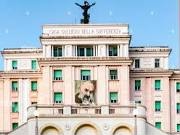
As the Bishop and Pastor of his vast Diocese, Basil was constantly concerned with the difficult material conditions in which his faithful lived; he firmly denounced the evils; he did all he could on behalf of the poorest and most marginalized; he also intervened with rulers to alleviate the sufferings of the population, especially in times of disaster; he watched over the Church’s freedom, opposing even the powerful in order to defend the right to profess the true faith. He bore an effective witness to God, who is love and charity, by building for the needy various institutions, virtually a “city” of mercy, called “Basiliade” after him. This was the origin of the modern hospitals where the sick are admitted for treatment.
Aware that “the liturgy is the summit toward which the activity of the Church is directed”, and “also the fount from which all her power flows”, and in spite of his constant concern to do charitable acts, he was also a wise “liturgical reformer”. Indeed, he has bequeathed to us a great Eucharistic Prayer [or anaphora] which takes its name from him:
His Directions on the Eucharist
To communicate also every day, to receive one’s share of the sacred body and precious blood of Christ is an excellent and beneficial practice, because the Lord himself says clearly, ‘He who eats my flesh and drinks my blood has eternal life’. Who, in fact, could doubt that to partake continually of life is to live fully? We on our part communicate four times a week, on Sunday, Wednesday, Friday and Saturday; but also on other days if the memorial of a saint is being kept. As for the need to take communion with our own hands, to which we may be reduced in time of persecution, if there is no priest or deacon, it is superfluous to show that this is in no way against the rule, since the practice is confirmed by immemorial usage attested by history … At Alexandria and all over Egypt each believer may keep the Eucharist at his home and give it to himself when he wishes. As soon in fact as the priest has offered the sacrifice and distributed the sacrament, anyone who has once received the whole is right to believe that when he takes part of it each day he is continuing to partake of the sacrifice and is receiving it from the hands of the priest who gave it to him. In church indeed the priest gives the amount for which he is asked. The person who receives it is free to keep it and put it to his mouth with his own hand.

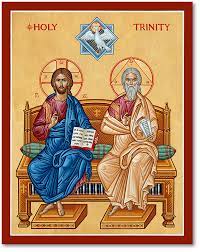
Basil opposed the heretics who denied that Jesus Christ was God. Likewise he maintained that the Holy Spirit is also God and “must be equated and glorified with the Father and with the Son”. Basil was one of the Fathers who formulated the doctrine on the Trinity: the one God, precisely because he is love, is a God in three Persons who form the most profound unity that exists: divine unity.
The Father is “the cause of being of all that exists”; above all, he is “the Father of Our Lord Jesus Christ”. Ascending to God through his creatures, we “become aware of his goodness and wisdom”. The Son is the “image of the Father’s goodness”. With his obedience and his Passion, the Incarnate Word carried out his mission as Redeemer of man.
Basil dedicated a whole book to the Holy Spirit. The Spirit enlivens the Church, fills her with his gifts, and sanctifies her. Basil exclaims: “Man, be mindful of your greatness, remembering the price paid for you: look at the price of your redemption and comprehend your dignity!”
He wrote: “Christians in particular, conforming their lives to the Gospel, recognize that all people are brothers and sisters; that life is a stewardship of the goods received from God, which is why each one is responsible for the other, and whoever is rich must be, as it were, an executor of the orders of God the Benefactor. We must all help one another and cooperate as members of one body.” No one “must possess more than his neighbor”.
In times of famine and disaster, the holy Bishop exhorted the faithful with passionate words “not to be more cruel than beasts… by taking over what people possess in common or by grabbing what belongs to all”. “All the destitute look to our hands just as we look to those of God when we are in need.” Therefore, Gregory Nazianzen’s praise after Basil’s death was well-deserved. He said: “Basil convinces us that since we are human beings, we must neither despise men nor offend Christ, the common Head of all, with our inhuman behavior toward people; rather, we ourselves must benefit by learning from the misfortunes of others and must lend God our compassion, for we are in need of mercy”. These words are very timely. We see that.
Saint Basil is truly one of the Fathers of the Church’s social doctrine.

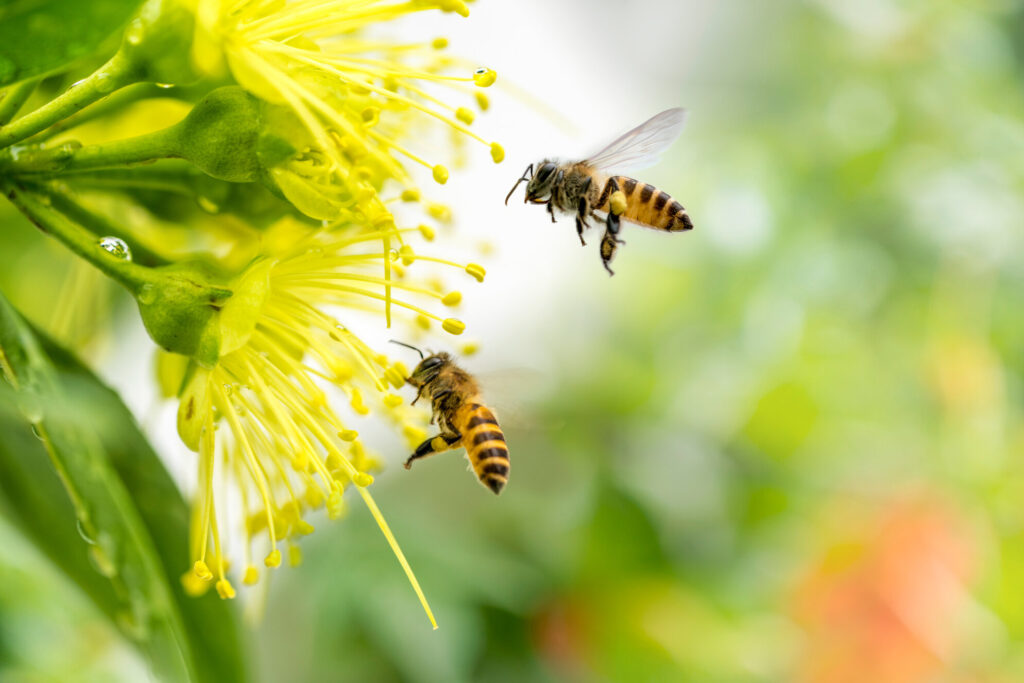
He was also concerned with that chosen portion of the People of God, the youth, society’s future. He addressed a Discourse to them on how to benefit from the pagan culture of that time. He recognized with great balance and openness that examples of virtue can be found in classical Greek and Latin literature. Such examples of upright living can be helpful to young Christians in search of the truth and the correct way of living.
With the famous image of bees that gather from flowers only what they need to make honey, Basil recommends:
Just as bees can take nectar from flowers, unlike other animals which limit themselves to enjoying their scent and color, so also from these writings … one can draw some benefit for the spirit. We must use these books, following in all things the example of bees. They do not visit every flower without distinction or seek to remove all the nectar from the flowers on which they alight, but only draw from them what they need to make honey and leave the rest. And if we are wise, we will take from those writings what is appropriate for us and conforms to the truth, ignoring the rest.
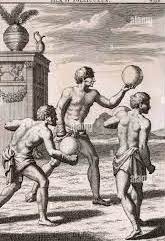
Basil recommended that young people grow in virtue, in the right way of living: “While the other goods… pass from one to the other as in playing dice, virtue alone is an inalienable good and endures throughout life and after death”
“A fraternal community then is a stadium where athletes are in training, a good path for progress, a continual stimulus, a constant concern for God’s commandments. Its purpose is the glory of God according to our Lord’s commandments.
But it also follows the example of the saints, of whom the Acts of the Apostles tell us that ‘all who believed were together and had all things in common’, and again, ‘The company of those who believed were of one heart and soul, and no one said that any of the things which he possessed was his own, but they had everything in common’”.

St Basil recalls the important part played by women among Christ’s disciples. ‘Apostles of the apostles’ the Byzantine liturgy calls the women who brought spices to the tomb and were the first witnesses of the resurrection.
“Women also belong to Christ’s army by the strength of their souls … Many women have distinguished themselves no less than men in the spiritual warfare, and some of them more … It was not only men but also women who followed Jesus, and he accepted help from women as much as from men.”
We look toward the East to pray because we are seeking again our ancient native land, the paradise that God planted in the East towards Eden. We pray standing up on Sunday, because, being risen with Christ and seeking the things above, we remind ourselves of the grace that has been given to us, but it is also because this day is in some way an image of the age to come … This day being the eighth day symbolizes the fullness that will follow the present time, the day that never closes. The Church should bring up her children to pray standing as a reminder of life without end. We should not forget to make ready our food for the journey … The upright posture … makes our soul, emigrate from the land of the present to that of the future. By contrast, every time we kneel and get up again we show that sin has cast us to the ground and the love of our Creator has called us back to heaven.


We declare that we know God in his energies but we hardly claim to approach him in his very essence. For his essence remains inaccessible, whereas his energies reach down to us.
Peter and the Sons of Thunder saw Beauty on the mountain, Beauty that was shining brighter than the brilliance of the sun. Thus they were judged worthy to see with their own eyes the pledge of his coming in glory.
Dear brothers and sisters, writes Pope Benedict XVI, I think one can say that this Father from long ago also speaks to us and tells us important things: in the first place, attentive, critical, and creative participation in today’s culture. Then, social responsibility: this is an age in which, in a globalized world, even people who are physically distant are really our neighbors; therefore, friendship with Christ, the God with the human face. And, lastly, knowledge and recognition of God the Creator, the Father of us all: only if we are open to this God, the common Father, can we build a more just and fraternal world.