

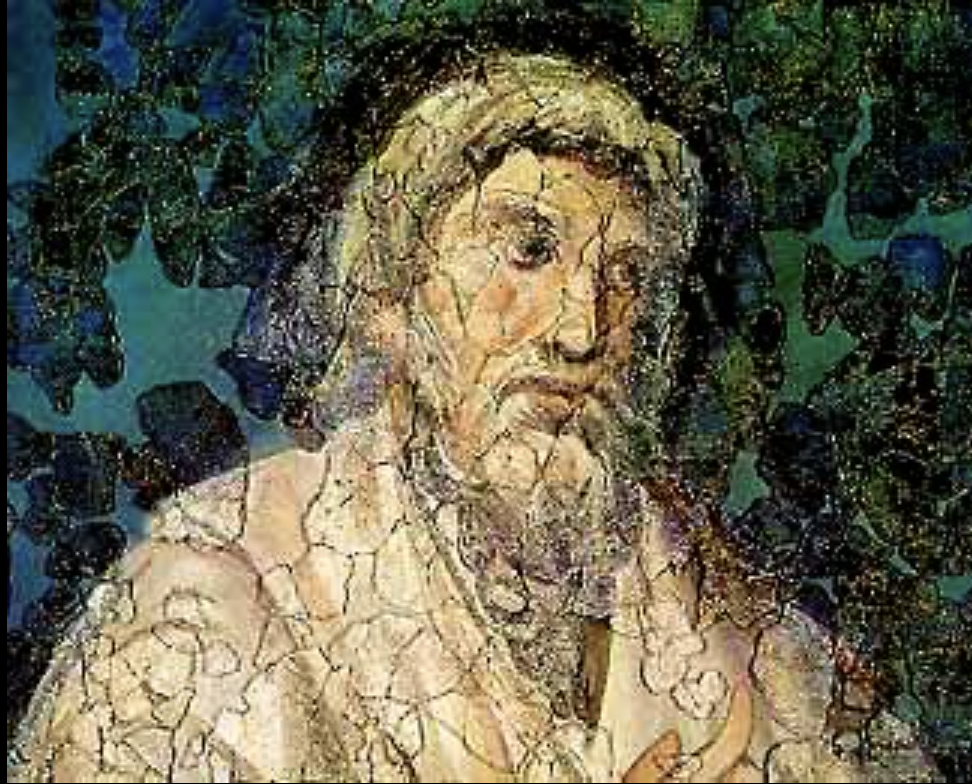
He was a theologian and statesman who served as Bishop of Milan from 374 to 397. He expressed himself prominently as a public figure, fiercely promoting the Christian faith against Arianism and paganism.
He left a substantial collection of writings, of which the best known include the ethical commentary De officiis Ministrorum , and the exegetical Exameron.
His preachings, his actions and his literary works, in addition to his innovative musical hymnography, made him one of the most influential ecclesiastical figures of the 4th century.
Along with those of Cicero, Lactantius ( the “Christian Cicero”), Augustine and Jerome, his work was among the first to be published after the discovery of the printing press.
Ambrose was serving as the Roman governor of Aemilia–Liguria in Milan when he was unexpectedly made Bishop of Milan in 374 by popular acclamation. As bishop, he took a firm position against Arianism and attempted to mediate the conflict between the emperors Theodosius I and Magnus Maximus.
Tradition credits Ambrose with developing an antiphonal chant, known as Ambrosian chant, and for composing the “Te Deum” hymn. His authorship of the well-known “Veni redemptor gentium“, is secure.
He also had notable influence on Augustine of Hippo (354–430), whom he helped convert to Christianity.
Western Christianity identified Ambrose as one of its four traditional Doctors of the Church. He is venerated as the patron saint of Milan and beekeepers.
Leon Clement writes: “Of all the Latin Fathers, Ambrose is without doubt the one whose thought is most harmoniously balanced. He combined the virtues of a Roman statesman with a deep faith, and a knowledge of Greek theology with the pastoral and moral sense of Latin Christianity.”
He came from a family of the Roman nobility that had been Christian for generations and took pride in the fact that its members were numerous distinguished officials as well as Soteris, the martyr.
Born at Trier, (his father who died at an early age was Praetorian Prefect for Gaul), Ambrose studied law and rhetoric at Rome. He made a quick career for himself, first as a legal advocate and orator at the court of the prefecture of Sirmium in present day Serbia, then as advisor to Probus, a powerful prefect in Africa, and already in 370 as a barely 33-year-old as consulate governor of the province of Amelia-Liguria, with Milan as the jurisdictional seat.
In this capacity and while he was only a catechumen, he went to Milan cathedral to mediate between Arians and the upholders of the dogma of Nicaea and to settle the dispute. While he was there a child shouted, “Ambrose Bishop!” and “as a result in miraculous and unbelievable unity all spontaneously agreed that he should be the new bishop of the city. He was not yet even baptized.
Having become bishop, he distributed his fortune to the poor, whose defender he became thenceforward. He asserted the spiritual independence of the Church against the State – ‘the Emperor is in the Church and not above it’ – he frustrated an attempt at pagan restoration at Rome; he contributed peacefully to the disappearance of Arianism on both coasts of the Adriatic; he counselled princes; and in 390 he obliged the Emperor Theodosius to do public penance for having suppressed a riot at Thessalonica by a massacre.
Like Basil the Great, he gave his estate to the poor and except for Sundays and Holy Days ate only one meal per day, “so that he might be able to follow the Lord Christ like a poor soldier with a light pack.”


Very conscious of his responsibility as a privileged witness to the faith, Ambrose, from the time that he was consecrated, gave himself to study under the direction of a learned priest, Simplician, who was to be his successor. He read Philo and Plotinus, and also the Greek Fathers of his own century, Athanasius, the Cappadocians, and Cyril of Jerusalem; and he received much, though not without exercising the requisite discernment, from the spiritual exegesis of Alexandria, that of Origen and Didymus.
His spirituality is deeply ecclesial, as is shown by the two studies that he consecrated to the ‘mysteries’. The marriage of the soul to Christ takes place within that between Christ and his Church; the Church is ‘virgin in her sacraments, mother of her people’. Like the Greek Fathers, under the influence of the contemporary monastic movement, he valued spiritual virginity very highly, but he is able to speak of ascesis with delicacy, humanity, and evangelical freedom and moderation. He is concerned with the formation of clerics able to teach the laity elementary practical wisdom.
In his letter On Virginity he wrote: In Christ we have everything … If you want to heal your wound, he is the doctor. If you are burning with fever, he is the fountain. If you are in need of help, he is strength. If you are in dread of death, he is life. If you are fleeing the darkness, he is light. If you are hungry, he is food: ‘O taste and see that the Lord is good! Happy are they who take refuge in him’ (Psalm 34.8).
And in On the Sacraments he wrote: You were asked, ‘Do you believe in God the Father almighty?’ You answered, ‘I believe’, and you were immersed in the water, that is, buried. A second time you were asked, ‘Do you believe in our Lord Jesus Christ and in his cross?’ You answered, ‘I believe’, and you were immersed in the water and thereby you were buried with Christ. A third time you were asked, ‘Do you believe in the Holy Spirit?’ and you were immersed a third time, in order that the threefold confession might destroy your repeated falls in the past.
On Psalm 118 he wrote: He is the bread of life. Whoever eats life cannot die … Go to him and take your fill, for he is the bread of life. Go to him and drink, for he is the spring. Go to him and be enlightened, for he is the light. Go to him and become free, for where the Spirit of the Lord is, there is freedom … ‘I am the bread of life. Whoever comes to me shall not hunger, and whoever believes in me shall never thirst’ (John 6.35).


It is obvious that the preacher’s personal testimony and the level of exemplarity of the Christian community condition the effectiveness of the preaching. In this perspective, a passage from Saint Augustine’s Confessions is relevant. He had come to Milan as a teacher of rhetoric; he was a sceptic and not Christian. He was seeking the Christian truth but was not capable of truly finding it. What moved the heart of the young African rhetorician, sceptic and downhearted, and what impelled him to definitive conversion was not above all Ambrose’s splendid homilies (although he deeply appreciated them). It was rather the testimony of the Bishop and his Milanese Church that prayed and sang as one intact body. It was a Church that could resist the tyrannical ploys of the Emperor and his mother, who in early 386 again demanded a church building for the Arians’ celebrations. In the building that was to be requisitioned, Augustine relates, “the devout people watched, ready to die with their Bishop.”
This testimony of the Confessions is precious because it points out that something was moving in Augustine, who continues: “We too, although spiritually tepid, shared in the excitement of the whole people”.
Augustine learned from Bishop Ambrose to believe and to preach. We can refer to a famous sermon of the African: “Therefore, all clerics, particularly priests, deacons or catechists should immerse themselves in the Scriptures by constant sacred reading and diligent study. For it must not happen that anyone becomes an empty preacher of the Word of God to others, not being a hearer of the Word in his own heart”.
In the sixth book of the Confessions, Augustine tells of his meeting with Ambrose, an encounter that was of great importance in the history of the Church. Whenever he went to see the Bishop of Milan, there was always a long queue waiting for consolation and hope. When Ambrose was not with them, he was either restoring his body with the necessary food or nourishing his spirit with reading. Here Augustine marvels because Ambrose read the Scriptures with his mouth shut, only with his eyes. Indeed, in the early Christian centuries reading was conceived of strictly for proclamation, and reading aloud also facilitated the reader’s understanding. That Ambrose could scan the pages with his eyes alone suggested to the admiring Augustine a rare ability for reading and familiarity with the Scriptures.


Pope Benedict XVI wrote: Ambrose died in Milan in the night between 3 and 4 April 397. It was dawn on Holy Saturday. The day before, at about five o’clock in the afternoon, he had settled down to pray, lying on his bed with his arms wide open in the form of a cross.
Thus, he took part in the solemn Easter Triduum, in the death and Resurrection of the Lord. “We saw his lips moving,” said Paulinus, the faithful deacon who wrote his Life, “but we could not hear his voice.”
The situation suddenly became dramatic. Honoratus, Bishop of Vercelli, who was assisting Ambrose and was sleeping on the upper floor, was awoken by a voice saying again and again, “Get up quickly! Ambrose is dying …”. “Honoratus hurried downstairs”, Paulinus continues, “and offered the Saint the Body of the Lord.
As soon as he had swallowed it, Ambrose gave up his spirit, taking the good Viaticum with him. His soul, thus refreshed, now enjoys the company of Angels”.
On that Holy Friday 397, the wide open arms of the dying Ambrose expressed his mystical participation in the death and Resurrection of the Lord.
This was his last catechesis: in the silence of words, he continued to speak with the witness of his life.
Like the Apostle John, Bishop Ambrose — who never tired of saying: “Omnia Christus est nobis! To us Christ is all!” — continues to be a genuine witness of the Lord. Let us thus conclude our Catechesis with his same words, full of love for Jesus: “Omnia Christus est nobis! If you have a wound to heal, he is the doctor; if you are parched by fever, he is the spring; if you are oppressed by injustice, he is justice; if you are in need of help, he is strength; if you fear death, he is life; if you desire Heaven, he is the way; if you are in the darkness, he is light…. Taste and see how good is the Lord: blessed is the man who hopes in him!” (De Virginitate 16, 99).
Let us also hope in Christ. We shall thus be blessed and shall live in peace.
He wrote on the Our Father: “If you receive the bread each day, each day is today for you. If Christ is yours today, he rises for you every day. How can this be? “You are my Son, today I have begotten you.” Therefore, “today” is when Christ rises.”