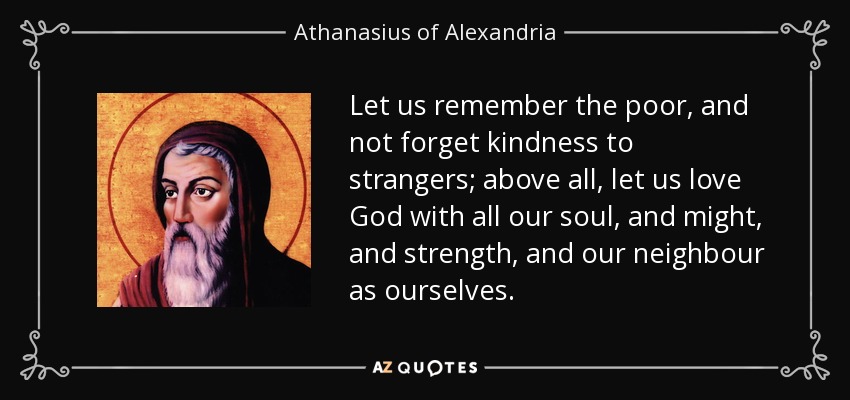
Only a few years after his death, this authentic protagonist of the Christian tradition was already hailed as “the pillar of the Church” by Gregory Nazianzen, the great theologian and Bishop of Constantinople (Orationes 21, 26), and he has always been considered a model of orthodoxy in both East and West. As a result, it was not by chance that Gian Lorenzo Bernini placed his statue among those of the four holy Doctors of the Eastern and Western Churches—together with the images of Ambrose, John Chrysostom, and Augustine—which surround the Chair of Saint Peter in the marvelous apse of the Vatican Basilica.
Athanasius was undoubtedly one of the most important and revered early Church Fathers. But this great saint was above all the impassioned theologian of the Incarnation of the Logos, the Word of God who—as the Prologue of the fourth Gospel says—“became flesh and dwelt among us” (Jn 1:14).
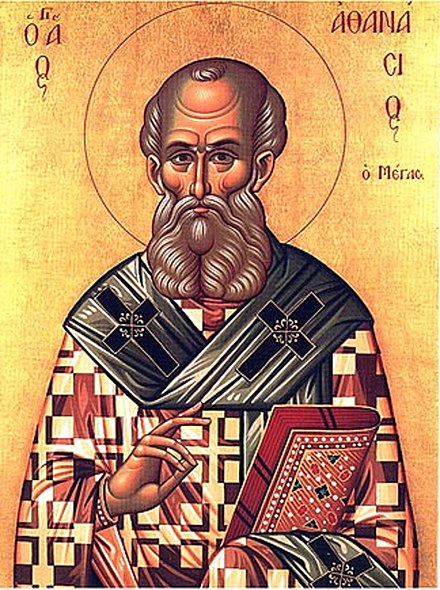
For this very reason Athanasius was also the most important and tenacious adversary of the Arian heresy, which at that time threatened faith in Christ, reduced to a creature “halfway” between God and man, according to a recurring tendency in history which we also see manifested today in various forms. In all likelihood Athanasius was born in Alexandria, Egypt, in about the year 300 A.D. He received a good education before becoming a deacon and secretary to the Bishop of Alexandria, the great Egyptian metropolis. As a close collaborator of his Bishop, the young cleric took part with him in the Council of Nicaea, convoked by the Emperor Constantine in May 325 A.D. to ensure Church unity.
At Nicea in November 2025 Pope Leo XIV joined around 27 other leaders of Christian Churches to commemorate the 1,700th anniversary of this First Ecumenical Council in the Church’s history.

The Nicene Fathers were able to address various issues and primarily the serious problem that had arisen a few years earlier from the preaching of the Alexandrian priest Arius.
With his theory, Arius threatened authentic faith in Christ, declaring that the Logos was not a true God but a created God, a creature “halfway” between God and man who hence remained for ever inaccessible to us. The Bishops gathered in Nicaea responded by developing and establishing the “Symbol of faith” [“Creed”]which, completed later at the First Council of Constantinople, has endured in the traditions of various Christian denominations and in the liturgy as the Niceno-Constantinopolitan Creed. In this fundamental text—which expresses the faith of the undivided Church and which we also recite today, every Sunday, in the Eucharistic celebration—the Greek term homoousios is featured, in Latin consubstantialis: it means that the Son, the Logos, is “of the same substance” as the Father; he is God of God; he is his substance. Thus, the full divinity of the Son, which was denied by the Arians, was brought into the limelight.
Tyrannius Rufinus reports that Bishop and Alexander had come to know Athanasius in his childhood at the sea shore. His attention was drawn to him when he played “baptism” with his playmates, assuming the role of the bishop. When Alexander investigated this in detail, he realised that Athanasius had accurately performed the rite; so Alexander acknowledge the baptism to be carried out legitimately after consulting with his parents, Alexander placed Athanasius in the care of the priests for his training and so he grew up “in the temple like Samuel”.
Whether this story needs to be referred to the realm of legends depends on the date of birth one accepts for Athanasius. Since Alexander became Bishop, Athanasius “the child” would’ve been either 13 or at least 18 years old.

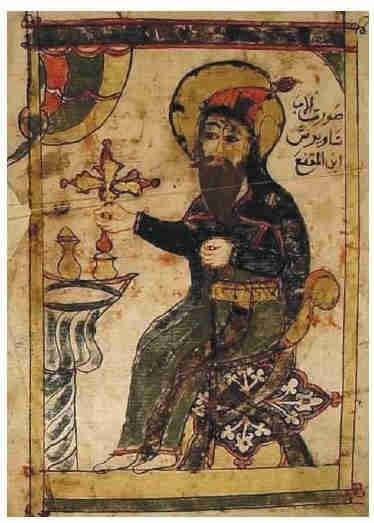
When he woke up he always chased the girls away.
In her desperation the mother went to a well-known magician in the city who conversed with Athanasius and then informed the mother that her endeavours were in vain and would remain so because her son had turned to Christianity, where he would become a great man.
In order not to lose her son she went to Bishop Alexander with him and he baptised both of them.
After the mother’s death, Alexander received Athanasius as a son, educated him, and later ordained him as a deacon and made him his secretary.
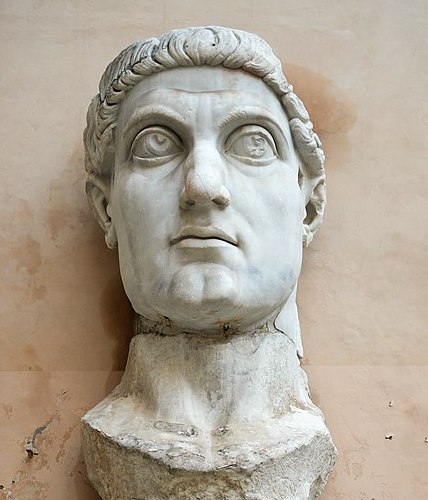
In 328 A.D., when Bishop Alexander died, Athanasius succeeded him as Bishop of Alexandria. He showed straightaway that he was determined to reject any compromise with regard to the Arian theories condemned by the Council of Nicaea. His intransigence — tenacious and, if necessary, at times harsh — against those who opposed his episcopal appointment and especially against adversaries of the Nicene Creed, provoked the implacable hostility of the Arians and philo-Arians. Despite the unequivocal outcome of the Council, which clearly affirmed that the Son is of the same substance as the Father, these erroneous ideas shortly thereafter once again began to prevail — in this situation even Arius was rehabilitated and they were upheld for political reasons by the Emperor Constantine himself and then by his son Constantius II. Moreover, Constantine was concerned not so much with theological truth but rather with the unity of the Empire and its political problems; he wished to politicize the faith, making it more accessible — in his opinion — to all his subjects throughout the Empire.
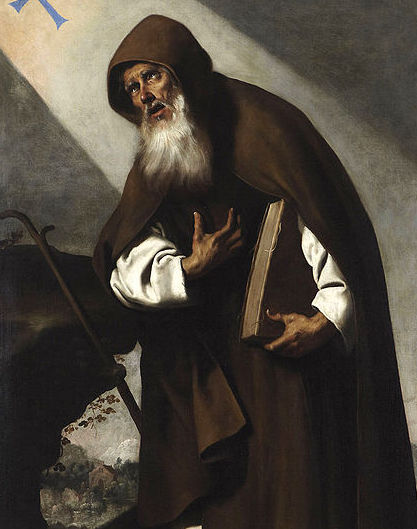
Thus, the Arian crisis, believed to have been resolved at Nicaea, persisted for decades with complicated events and painful divisions in the Church. At least five times—during the thirty years between 336 and 366 A.D. — Athanasius was obliged to abandon his city, spending seventeen years in exile and suffering for the faith. But during his forced absences from Alexandria, the Bishop was able to sustain and to spread in the West, first at Trier and then in Rome, the Nicene faith as well as the ideals of monasticism, embraced in Egypt by the great hermit Anthony with a choice of life to which Athanasius was always close.
Saint Anthony, with his spiritual strength, was the most important champion of Saint Athanasius’ faith. Reinstated in his See once and for all, the Bishop of Alexandria was able to devote himself to religious pacification and the reorganization of the Christian communities. He died on 2 May 373, the day when we celebrate his liturgical Memorial.
The most famous doctrinal work of the holy Alexandrian Bishop is his treatise: De Incarnatione, On the Incarnation of the Word, the divine Logos who was made flesh, becoming like one of us for our salvation. In this work Athanasius says with an affirmation that has rightly become famous that the Word of God “was made man so that we might be made God; and he manifested himself through a body so that we might receive the idea of the unseen Father; and he endured the insolence of men that we might inherit immortality” (54, 3). With his Resurrection, in fact, the Lord banished death from us like “straw from the fire” (8, 4). The fundamental idea of Athanasius’ entire theologic battle was precisely that God is accessible. He is not a secondary God; he is the true God, and it is through our communion with Christ that we can truly be united to God. He has really become “God-with-us”.
Among the other works of this great Father of the Church—which remain largely associated with the events of the Arian crisis—let us remember the four epistles he addressed to his friend Serapion, Bishop of Thmuis, on the divinity of the Holy Spirit, which he clearly affirmed, and approximately thirty “Festal” Letters addressed at the beginning of each year to the Churches and monasteries of Egypt to inform them of the date of the Easter celebration but, above all, to guarantee the links between the faithful, reinforcing their faith and preparing them for this great Solemnity.
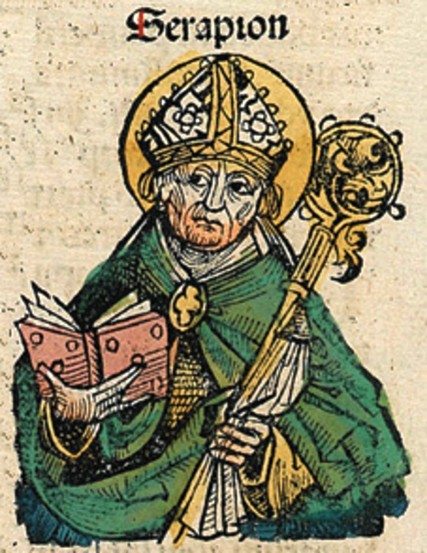

Lastly, Athanasius also wrote meditational texts on the Psalms, subsequently circulated widely, and, in particular, a work that constitutes the bestseller of early Christian literature: The Life of Anthony, that is, the biography of Saint Anthony Abbot. It was written shortly after this saint’s death precisely while the exiled Bishop of Alexandria was staying with monks in the Egyptian desert. Athanasius was such a close friend of the great hermit that he received one of the two sheepskins which Anthony left as his legacy, together with the mantle that the Bishop of Alexandria himself had given to him. The exemplary biography of this figure dear to Christian tradition soon became very popular, almost immediately translated into Latin, in two editions, and then into various Oriental languages; it made an important contribution to the spread of monasticism in the East and in the West. It was not by chance that the interpretation of this text, in Trier, was at the center of a moving tale of the conversion of two imperial officials which Augustine incorporated into his Confessions (cf. 8, 6, 15) as the preamble to his own conversion.
Moreover, Athanasius himself showed he was clearly aware of the influence that Anthony’s fine example could have on Christian people. Indeed, he wrote at the end of this work:
The fact that his fame has been blazoned everywhere, that all regard him with wonder, and that those who have never seen him long for him is clear proof of his virtue and God’s love of his soul. For not from writings or from worldly wisdom or through any art was Anthony renowned, but solely from his piety toward God. That this was the gift of God no one will deny. For from whence into Spain and into Gaul, how into Rome and Africa, was the man heard of who dwelt hidden in a mountain, unless it was God who makes his own known everywhere, who also promised this to Anthony at the beginning? For even if they work secretly, even if they wish to remain in obscurity yet the Lord shows them as lamps to lighten all, that those who hear may thus know that the precepts of God are able to make men prosper and thus be zealous in the path of virtue. (Life of Anthony 93, 5-6)
Yes, brothers and sisters! We have many causes for which to be grateful to Saint Athanasius. His life, like that of Anthony and of countless other saints, shows us that “those who draw near to God do not withdraw from men, but rather become truly close to them”
From the Discourse Against the Pagans
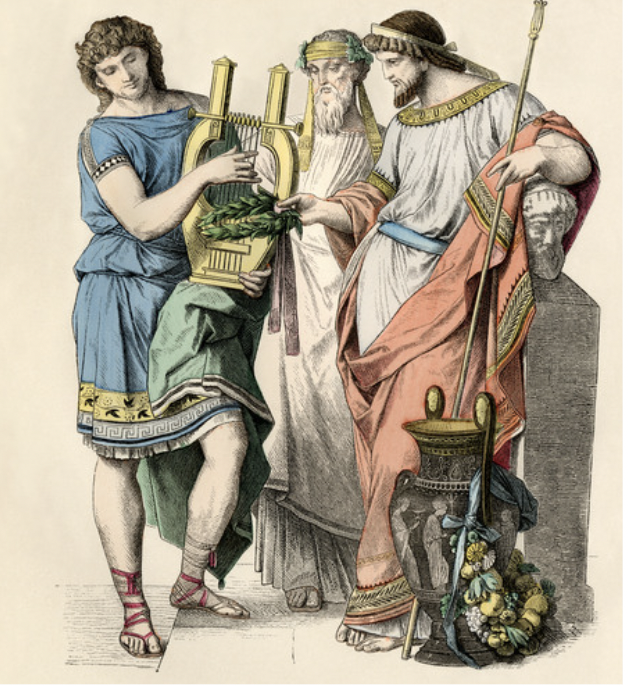
Think of a musician tuning his lyre. By his skill he adjusts high notes to low and intermediate notes to the rest, and produces a series of harmonies. So too the wisdom of God holds the world like a lyre and joins things in the air to those on earth, and things in heaven to those in the air, and brings each part into harmony with the whole. By his decree and will he regulates them all to produce the beauty and harmony of a single, well-ordered universe. While remaining unchanged with his Father, he moves all creation by his unchanging nature, according to the Father’s will. To everything he gives existence and life in accordance with its nature, and so creates a wonderful and truly divine harmony.
To illustrate this profound mystery, let us take the example of a choir of many singers. A choir is composed of a variety of men, women and children, of both old and young. Under the direction of one conductor, each sings in the way that is natural for him: men with men’s voices, boys with boys’ voices, old people with old voices, young people with young voices. Yet all of them produce a single harmony.
Or consider the example of our soul. It moves our senses according to their several functions so that in the presence of a single object they all act simultaneously: the eye sees, the ear hears, the hand touches, the nose smells, the tongue tastes, and often the other parts of the body act as well as, for example, the feet may walk.
Although this is only a poor comparison, it gives some idea of how the whole universe is governed. The Word of God has but to give a gesture of command and everything falls into place; each creature performs its own proper function, and all together constitute one single harmonious order.
Quotes by Athanasius
The Word made himself ‘bearer of the flesh’ in order that human beings might become ‘bearers of the Spirit’.
Let us cherish fasting, for fasting is the great safeguard along with prayer and almsgiving. They deliver human beings from death. Just as Adam was driven out of paradise for having eaten, refusing to trust, so it is by fasting and faith that they who wish to enter paradise do so.