Chapter 12. The Religions of China
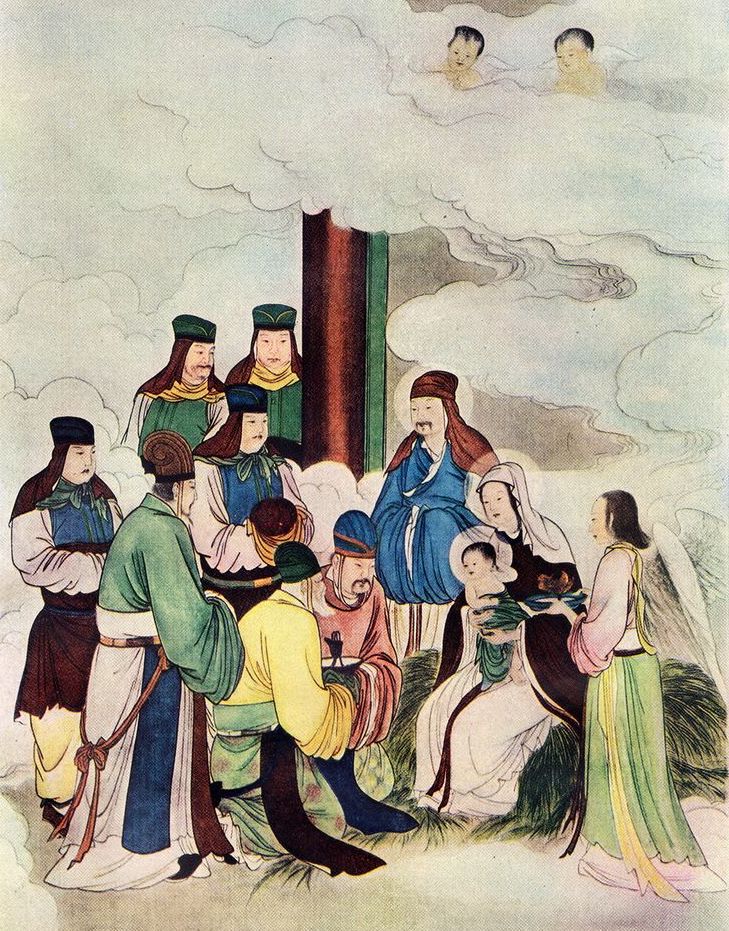
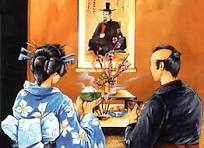
The religions of China constitute my moral and religious background, and hence they form an integral part of the development of my spiritual life. They are an important portion of the natural dowry with which God had endowed me in preparation for my marriage with Christ. I often think of myself as a Magus from China who lays before the Divine Infant in the arms of the Blessed Virgin the gold of Confucianism, the musk of Taoism, and the frankincense of Buddhism. At a single touch by His hands, whatever is false in them is purified, and whatever is genuine is transmuted into supernatural values.
What a wonderful privilege it is to have been born in China in my generation! To be steeped in the old tradition and later to come into contact with the spirit of Christianity makes one feel like a contemporary of the first Disciples of Christ, who had more or less fully lived their lives under the dominion of Law and were suddenly introduced into the Reign of Grace. Far be it from me to assert that my cultural and spiritual heritage was on a par with the Old Testament. What I do assert is that, in an analogical way, the three religions of China served as my tutors, bringing me to Christ.
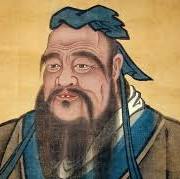
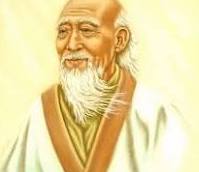
God used parts of the teachings of Confucius, Lao Tzu and Buddha as instruments to open my eyes to the Light of the world.
Here is a sketch of the three religions, paying particular attention to those aspects, which in one way or another prepared my mind to recognize the True Lord and the Holy Trinity.
Confucianism
The idea of filial piety is so deep-rooted in the Chinese mind that when a Chinese becomes a Christian he naturally would apply it to his relations with God.
The great Chinese Benedictine Dom Lou Tseng-Tsiang wrote: “If Providence permits me, I hope one day, in the light of filial piety, to approach with very profound reverence the most considerable fact in the history of mankind. I shall attempt to describe to my compatriots and my friends how the revelation and the redemption of Jesus Christ have seemed to me. That redemption is the great meeting-place of the ways, the unique point where the filial piety of children and men is opened upon a divine filial piety, which Jesus Christ has shown us, and which reunites the human creatures with our Father who is in Heaven.”
Thus Dom Lou has contributed a great deal toward the realization of the ideal set forth by Monsignor Celso Contantini:To conserve and deepen the ancient national Chinese culture, by giving it the rejuvenation of Christianity.
Taoism
As soon as we pass beyond Confucianism to Taoism, we are plunged into the sea of mystery. By the word “Tao” is meant Ultimate Reality which cannot be expressed in words.
As Leon Bloy has put it, “when one speaks lovingly of God, all human words are like so many blind lions seeking a spring in the desert.”
Lao Tzu would have agreed with À Kempis who said: “In thy chamber shalt thou find what abroad thou shalt too often lose.”
I agree entirely with Reverend Edward Leen that even one’s own holiness “is not to be pursued as an end,” but “must remain simply as a means to God.”
Buddhism
Every Chinese, up to my generation, was an implicit Buddhist.
Buddha preached the doctrine of the Middle Path, steering between the Charybdis of sensual indulgence and the Scylla of excessive asceticism.
He was really more a moral teacher than a religious teacher. He had no knowledge whatever of divine grace. To my mind, he did not find the truth. His was a glorious failure.
C. G. Jung says, “Zen is one of the most wonderful blossoms of the Chinese spirit, which was readily impregnated by the immense thought-world of Buddhism.”
Why did not the Chinese worship God directly? The answer is that they regarded God as too high for them.
When I became a Christian in 1917, I felt as though I had become an emperor overnight, because now I could worship God directly, having been empowered to be a son of God.
Chapter 13. The Lotus and the Mud
Ideals like lotus flowers, can only grow from the mud of matter.
I have gradually come to realise that life is a dream, but that something real and earnest may come out from a dream. In this chapter I re-examine Taoism, Confucianism and Buddhism. The average Chinese up to my generation was, at bottom, a Buddhist in his soul. Confucianism constituted the positive element and Taoism the negative element. The former represents tension, the latter relaxation; but both of them have to do with this world, whereas Buddhism aspires to a transcendence from this world to a sphere beyond the rhythm of life. In order to make this comparison clearer I will give some examples from Chinese poetry.
Here is “The Song of a Wandering Son” composed by the Confucian, Ming Jiao.
“Thread in the hand of a tender mother
Clothes on the body of a wandering son,
Before I left she added one stitch after another
Lest I might be tarrying in my journey.
Ah me ! How could the heart of an inch-long grass
Requite the sunshine of a whole Spring.”
This poem makes you see that filial peity is not a duty, but a spontaneous expression of human nature.
Here is a piece of Taostic inspiration by Chu Tun-ju:
Talk not to me about the past and the future –
Your old man’s heart has no room for such gossips.
I neither cultivate the Tao, nor curry the favour of the Buddha.
Nor follow the footsteps of the restless Master K’ung.
I am too lazy to argue with you, Sir !
Let others laugh !
I am like this because I am like this !
When the play is over.
I just doff my costume and give it to the fool.
Although earlier in this poem he spoke of “the beyond”, he was really not very far from the realm of things.
Buddhists introduce us into a region which is at once deeper and higher, where we begin to doubt our doubts, to have misgivings about our misgivings and to divine that there may be a Mind beyond the cosmos. Take this poem by the Buddhist monk, Hsuan-chueh:
Let them slander, let them abuse !
Who tries to burn the sky only wearies himself out.
When I hear the words, I feel like drinking the sweet dew.
They purge me ! I suddenly enter into the Ineffable !
If you are able to regard gossip as charity,
The slanderer may serve as your spiritual guide.
Let no bad words provoke hatred in you .
Otherwise how can one reveal the supernatural power of loving patience?
Chapter 14. Mental Roamings
In 1935 friends and I founded the literary magazine T’ien Hsia. I had seen a scroll with the words’Tien Hsia Wei Kung’ which means ‘everything under heaven shall be shared with all the people.’
I am not a learned man, but a learning man. As I read my writing from 1935 to 37, when I embraced the Catholic Faith, I marvel at the infinite goodness, wisdom and patience of God in preparing me for my conversion. He was playing hide and seek with me just as a father would do with his little boy. It seems that He wanted to broaden my mind to lift up my heart to season my zeal with humour and finally to make me rely upon His grace. I am reminded of Francis Thompson’s The Hound of Heaven.
Materially, intellectually, socially and politically I was enjoying exceptional prosperity; but spiritually I felt a yawning abyss of nothingness, only God could fill.
I wrote: “My conception of life is spiral. Man respires, aspires, perspires, inspires and finally expires.” Without God’s grace I could never have returned to him, but the abyss of my nothingness touched the abyss of his mercy.
Chapter 15. Return of the Prodigal
Leon Bloy wrote to Jacques Maritain, before his conversion:
“You are seeking, you say, O professor of philosophy, Cartesian, you believe the truth is something one seeks. You believe that with a certain degree of effort a person with black eyes could manage to acquire green eyes spangled with gold. You eventually understand that one finds what he desires, only on that day, when he has most humbly renounced seeking, what is under his hand, unbeknown to him. I declare that I never found anything, unless one wishes to describe, as a discovery, the fact of tripping blindly over a threshold and being thrown flat on one stomach into the House of Light.”
This would happen to me.
In 1937 during the Sino-Japanese war, I managed to rescue some books from my apartment in Shanghai. They were The Bible, Varieties of Religious Experience by William James, The World’s Best Prose by Carl Van Doren, The Life of Christ by Giovanni Papini and T.S. Elliott: Selected Essays.
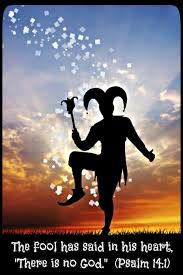
I opened the Bible at random and read psalm 14.
The fool has said in his heart, there is no God.
They are corrupt they have done abominable works,
There is none that doeth good.
Jehovah looked down from heaven upon the children of men.
To see if there were any that did understand,
That did seek after God.
They are all gone aside, they are together become filthy;
There is none that doeth good,
No, not one.
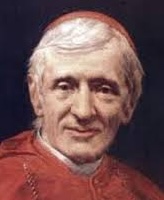
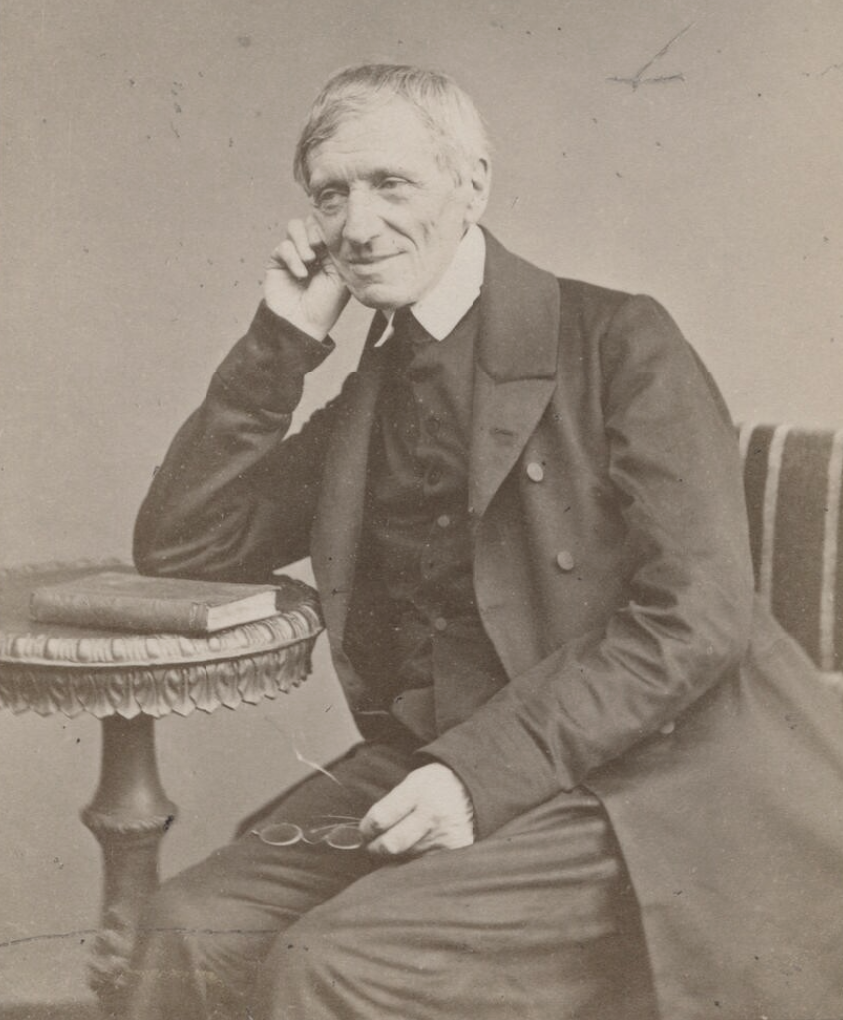
To be converted , one must first know himself to be perverted. I closed the Bible, like a child who had been hurt. I wanted something lighter, so again at random I opened Carl Van Doren’s World’s Best Prose and landed on the queer title “Infallibility” from Cardinal Newman’s Apologia Pro Vita Sua:
Starting then with the being of a God, I look out of myself into the world of men and there I see a sight, which fills me with unspeakable distress. The world seems to give the lie to that great truth of which my whole being is so full. It is as if I looked into a mirror and did not see my face. I have the same feeling as that which comes upon me when I look into this living, busy world and see no reflection of its Creator.
Were it not for this voice speaking so clearly in my conscience of my heart, I should be an atheist or a pantheist or a polytheist. The sight of the world is nothing else then the prophet scroll full of “lamentations and mourning and woe.”
Since there is a God, the human race is implicated in some terrible Aboriginal calamity. Thus the doctrine, of what is called original sin, becomes to me almost certain as the world exists and as the existence of God.
Supposing then it is the will of the Creator to interfere in human affairs and to retain a knowledge of Himself, it isnot surprising that He should introduce a power into the world invested with the prerogative of infallibility in religious matters.
When I find that this is the claim of the Catholic Church, I feel no difficulty in admitting the idea. I am brought to speak of the Church’s infallibility, as a provision adapted by the mercy of the Creator to preserve religion in the world and to restrain that freedom of thought, which in itself is one of the great natural gifts and to rescue it from its own suicidal excesses. …. A power, possessed of infallibility in religious teaching is happily adapted to be a working instrument in the course of human affairs, for smiting hard and throwing back the immense energy of the aggressive, capricious, untrustworthy intellect.
What struck me most was this statement:
The Catholic Church holds it better for the Sun and the moon to drop from heaven, for the Earth to fall and for all the many millions on it to die of starvation in extreme agony, as far as temporal affliction goes, than that one soul should be lost.
This jerked my mind into a sphere of which I had no idea. I knew next to nothing of the Catholic Church. Determined to learn more, I was compelled to turn my eyes from the suffering of the external world to the soul within and its sins and miseries. One has to return to oneself before one can return to God. The Prodigal son “came to himself” before he went back to his father.
Next I read The Life of Christ by Giovanni Papini. He wrote:
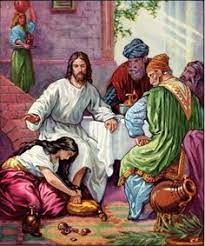
First to worship Jesus were animals not men. Among men he sought out the simple hearted: among the simple hearted he sought out children. Simpler than children, and milder, the beasts of burden welcomed Him.” This appealed to my Oriental sense of the lovableness of animals; but the pages that moved me most deeply were those dealing with the anointing of Jesus by the “sinning woman”.
She was no longer a woman for hιre. She had heard Jesus speak and was no longer the public woman, flesh on sale for masculine desire. Her lips no longer knew the taste of rouge. Her eyes had learned to weep.
She went into the house with her flask of Alabaster, pressed to her breast, timid and shrinking, as a little girl on her first day of school, as a released prisoner in his first moment outside the prison. She broke the seal of the little alabaster flask and poured half the oil on the head of Jesus. With loving hands she spread the transparent ointment on the curls till every hair was softened, silky and shining. The whole room was filled with fragrance; every eye fixed on her with his astonishment.
She knelt by the feet of the Peace-bringer. She poured the remaining oil into her hands and gently, gently rubbed the right foot and the left, with the loving care of the young mother, who bathes her first child, for the first time. Then she could restrain no longer, the great burst of tenderness, which filled her heart and made her throat ache and brought tears to her eyes. Weeping freed her heart.

Hardly had I finished reading this, when I burst into a violent fit of weeping myself. I said: “God has endowed me with beauties of soul and intellect; and I have wasted them on the search for worldly honours and material riches.” Having finished Papini’s book I took up William James’ The Variety of Religious Experience. I found that my soul beloned to the category which he called ‘the sick soul’ rather to what he called ‘the healthy-minded’. He wrote:
All natural goods perish. Riches take wings; fame is a breath; love is a cheat; youth and health and pleasure vanish. The purely naturalistic look at life, however enthusiastically it may begin, is sure to end in sadness. It is as if mankind is living on a frozen lake surrounded by cliffs over which there is no escape. Little by little the ice is melting and man will be drowned. The merrier the skating, the warmer and more sparkling the sun by day and the bonfires at night, the more poignant the situation. Every individual existence goes out in a lonely spasm of hopeless agony.
Man must die to an unreal, life before he can be born into the real.
Was this not a most faithful portrait of the state of my own soul? What could be more profitable and uplifting for a man in my state than to be a fellow-pilgrim of Dante, starting from Hell, going through Purgatory and finally having a nice promenade in Paradise. In a few days I completed the journey and returned to earth a happier man. How I felt can only be described in his own words.
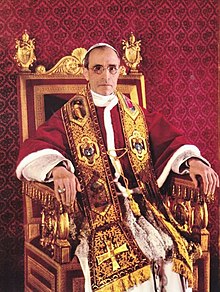
When, years later, Pope Pius XII said to me: “We welcome your Excellency, as a loyal son of the Church, whose journey to the Catholic faith was illumined by Dante’s Divine Comedy,” I was simply astounded that the Holy Father knew my secret.
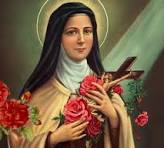
In November 1937 Nanking had fallen and Shanghai was isolated. As I had been writing and broadcasting against the Japanese military, my old friend Yuan Chia-huang, suggested I should take refuge in his house for a few days and slip away quietly to Hong Kong. He and his wife were devote Catholics and every evening they said the rosary with their children. Seeing a picture of Saint Therese of Lisieux, I asked Yuan, “Is this the Blessed Virgin?” Astonished by my ignorance, he gave me a pamphlet on her life and thought.
I read: “I feel even if I had on my conscience all the crimes that I could commit, I would lose nothing of my confidence. I would throw myself with my heart with repentance into the arms of my Saviour. I recall his love for the Prodigal son, I have heard his words to Saint Mary Magdalene, the woman taken in adultery and the woman of Samaria. There is no one who can make me afraid. I know well what to believe concerning his majesty and his love.”
I then read her Story of a Soul. I said to myself, “If this book represents Catholicism, I don’t see why I should not be a Catholic.” There I found the synthesis between all pairs of opposites, such as humility and audacity, freedom and discipline, joys and sorrows, duty and love, strength and tenderness, grace and nature, folly and wisdom, wealth and poverty.
She seemed to me to combine the heart of the Buddha, the virtues of Confucius and the philosophy detachment of Lao-Tse. It was on reading this book that I decided to become a Catholic. Grace had touched my heart.
When I told Yuan, he said, “How wonderful is God’s grace! We have been praying for your conversion for the last 10 years.”
All my life I had been searching for a mother and at last I had found her in the Catholic Church and this in a triple sense. God is my mother, the Church is my mother and the Blessed Virgin is my mother and these three mothers have merged into one motherhood, in which I live, move and have my being.
Chapter 16. The Kindergarten of My Catholic Life
My time in Hong Kong was the kindergarten of my Catholicism. May God grant that I ever remain a little child.
Not all the pages of one’s life will ever be read on earth. All that I want to testify is that a Catholic is never alone in the world. He never suffers or enjoys alone, although he may be living in a desert. He has numberless relatives in Heaven and on earth, many of whom he does not even know. He is an integral member of the Mystical Body of Christ.
By nature I am an extremely changeable man, but I don’t rely only on my nature but on His Grace, which has changed my natural changeableness into a feeling tentacle for discovering every day new beauties of Christ and of his Church thus ministering unto my constancy. Has Paul not said, “For when I am weak then I am strong”? Shall I not say, “When I am changeable then I am constant”? The Lord has transmuted my natural fickleness into supernatural fidelity!
I was completely enamoured of Saint Therese of Lisieux. I wrote an article about her called The Science of Love.
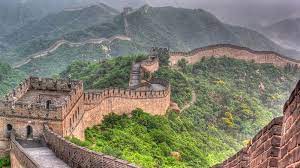
A reviewer responded: “It would be good news for Saint Therese to hear that she has taken a flying leap over the Great Wall of China and found response in the heart of one of the noblest sons of ancient Tartary. Let her report to the Mother Superior of the Carmel at Lisieux that she has caught a Tartar! The angels of Heaven would smile so angelically at the old joke.”
Chapter 17. Escape from a Lion’s Den
“Excuse me for going away without saying Goodbye!
Loyalty requires the skipping of minor courtesies.”
This was part of the letter I wrote to a Japanese officer, as my family and I, disguised as poor laboureres, escaped from Hong Kong. We took a truck and then a boat to Ping Shan. There I kissed the ground with tears of joy, because that was the beginning of Free China. We traveled through many villages along East River, visiting as many churches as possible, until we arrived at Guilin, where Monsignor Romanielli wrote this poem:
Doctor Wu, you are so true
To the spirit of fighting men.
Whiskers long: from a lion’s den,
Hidden with Mary’s mantle of blue,
You led your brood of five and ten,
Over water, road and fen,
Into the land of free men.
That is why I rejoice with you.
Chapter 18. The Poetry of Life
Guilin was a natural setting for poetry. When I visited Chungking, Generalisimo Chiang Kai-Shek insisted on paying me a sufficient salary for a year to support my large family, to translate the psalms into Chinese. Back in Guilin I danced for joy at being paid for riding my hobby-horse; and I started with psalm 35.
God has prepared me not only by my interest in poetry and my love for the psalms, but also by giving me a knowledge of the workings of His grace, subjected me to various heartrending trials, by infusing in me a sincere contrition for my sins, a taste of His sweetness and a love for nature. He had also given me the heart of a child with a fresh sense of wonder. When the psalms were joyful, the whole universe seemed to ring with laughter.
Let the heavens be glad,
And let the Earth rejoice;
Let the sea roar and the fullness thereof;
Let the field exult and all that is therein
Then all the trees of the forest shall be joyful before the Lord,
For he comes, for he comes to rule the earth.
When the psalms were sad, the whole universe seemed to mope with them.
I enjoyed some of the images in the imprecatory psalms:
May they pass like the snail that melts away,
Like the aborted foetus of a woman which sees not the sun.
Some of the psalms in praise of creation are exquisite nature poems, which appealed to me as very Chinese. What a wonderful rural piece this is:
In translating I had 3000 years of Chinese literature to draw upon. Chinese vocabulary for describing the beauties of nature is so rich that I seldom failed to find a word or phrase and sometimes even a whole line to fit the scene. Perhaps the most oriental trait to the psalms is the pervading philosophy of retributive justice.
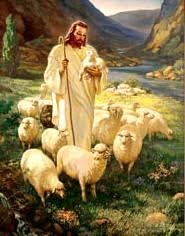
The psalm that I like best is that the good Shepherd which has revealed to me the three stages of my interior life. The course I have been giving in the University of Hawaii is based on it. The first stage is usually called the age of the beginners or the purgative.
The second stage is usually called the illuminative.
The third stage is the unitive:
I also particularly like psalm 107 which seems to sum up both the interior and exterior course of my life.
Was I not a lonely wanderer in a desolate world? Traveling has its advantages, the chief of which is that it drives home to you that you are but a traveller on earth. Your wife, your children , your friends, are really no more than your chance acquaintances. Your body or even your personality is something you have casually acquired. You are a guest in the world without a host, for all the people you meet are as much guests as you are.
Chapter 19. A Chinese Tunic for Christ
During the two years 1942 to 44, when I was translating the New Testament and the Psalms, I wept only once. It was at John, chapter 19: Now the tunic was without seam, woven in one piece from the top. They therefore said to one another: “Let us not tear it, but let us cast lots for it.” I burst out weeping. This seamless tunic had been woven by the motherly hands of the Blessed Virgin and worn by her grateful Son, Who was now hanging on the cross. My lightning-like flash of intuition made me weep. Whatever Our Lady had woven could not be divided. Wherever Our Lady is, there is seamless unity.
Later I read in Lagrange’s Gospel of Jesus Christ: “Ever since the time of Saint Cyprian, the tunic has been regarded by the faithful, as the symbol of the Church, which must remain undivided. Woe to those who stir up schism and render her apart !”
I often prayed to the Blessed Virgin for my translation: “Holy Mother help me to weave the Chinese tunic for your Son. Make it a seamless robe, beautiful and wearable. Give it an oriental touch. Perfume it with frankincense, preserve it with musk, line it with gold.”
In the spring of 1944 the Japanese launched a great offensive westward into the provinces Hunan and Kwangsi. By the grace of God, my family escaped to Guiyang, where we lived together and I continued to work on my translation. The seminary of the Lo Chung Kuan, (“Pass of the Fullness of Joy”) on the mountain invited me to work up there, while my family lived at the foot of the mountain.
In the winter my family moved to Chungking, where I was pleased to note that President Chiang kai-shek marked a passage from my translation of St John’s Gospel that appears to advocate democracy: “You know that those are regarded as rulers among the Gentiles led over them; and their great men exercise authority over the; but it is not so among you. On the contrary whoever wishes to become great shall be your servant and whoever wishes to be first among you shall be the slave of all.”
In 1945 I went to San Francisco to attend the United Nations Conference. On August 15 outside the hall I had a tremendous sound of firecrackers. ” What is it?” I asked. “We are celebrating the victory”, was the reply. It was the Feast of the Assumption of Our Lady. On 8 September 1946, Our Lady’s birthday, I was appointed Chinese Ambassador to the Vatican. Back in Chungking my friend Professor Paul Linebarger had written:
“Dr. Wu is one of the most extraordinary passages of the modern world. He has taken all knowledge – East Asiatic and Western – for his province. He writes a spirited graceful English and is capable of discussing anything from modern politics or abstruse points of Anglo American law to ancient Chinese hedonism or the philosophical implications of the autobiography Saint Therese of Lisieux. Dr. Wu in a bomb-shelter possesses much of the moral poise and profound personal assurance for which Westerners is like T. S. Eliot seek in vain.
I received a very good review from two Protestant missionaries. Considering the narrow confines Mr Wu has set himself by conforming to the rules of Chinese poetry, whereby he had to divide his lines into 3, 4, 5 and 7 characters in each line, and at the same end time see to it that the last characters of each first, second and fourth line in each verse of four lines rhymed properly, he has produced a work of literary art beyond all praise. That his language is, in spite of its poetic artificiality, lucid, and a fair rendering of the Hebrew original is a feat, of which he may be proud.”
And Dom Lu wrote: “I don’t see any reason why this translation should not become the authorized version. His use of classical phrases and idioms furnishes the key to a living synthesis of the East and the West, a synthesis like a seamless cloth, like the pieces of coal melted into one fire in the furnace of divine love. Could all this have been attained without the inspiration of the Holy Ghost?”
Chapter 20. The Diplomacy of Love
On Quinquagesima Sunday, 16th of February 1947, I presented my credentials to the Holy Father Pius XII. It was the first time in the diplomatic history of the Holy See that a Catholic ever represented a non-catholic nation. After resenting my letters of credit I made a speech.
My mission is nothing less than to confirm and increase the intimate relation between the greatest spiritual power of human society and the people of the oldest oriental culture. The wedding between the two will be such a momentous event in the history of this World that the marriage of Cana would be viewed in the light of eternity as it’ prefiguration.
His Holiness replied:
We heartily welcome your Excellency as a son and representative of people of more than 400 millions, whose country was the cradle of Asia’s oriental civilization. After thousands of years and despite all sorts of trials and fortunes, they have kept their vigour and their youth – for which not a few other nations could envy them; and aware of their reserves of material and spiritual energy they look to the future with that calmness and security, which is characteristic only of the strong and brave.
A few weeks later Monsignor Montini appointed a day for my whole family to be photographed with His Holiness. I said, “Don’t you think it would be better to skip photographing? The Holy Father is busy enough and if every diplomat wants to have his family photographed with His Holiness, it would add an unnecessary burden upon him.” What was my surprise when the Monsignor replied, “Don’t worry about that. A diplomat must have at least 13 children before he can cite the present case as a precedent.”
Chapter 21. My Last Trip to China
In February 1949 I received a telegram from Dr Sun Fo, who was then the Prime Minister of China, calling me back for urgent consultation. The Reds were nearing Nanking and so it was dangerous to return to China, but I did not want to play the coward by refusing this challenge. Dr. Sun Fu asked me to choose between being Minister of Education or of Justice, and I chose Justice; but I said I had three conditions:
He agreed.
When I told my friends, they exclaimed: “If you go into this with this spirit, the spirit of a martyr, let it be known that we are no cowards either. We will help you all we can.” Those days were one of the happiest periods of my life and although I had left my wife and children in Rome, I realised that to be a Catholic is to be a member of a big family, a family co-terminus with the whole universe. After a few days the cabinet fell before Dr. Sun had time to put up my name. Friends advise me to go back to Rome immediately; but how could I leave China without saying goodbye to my good friend, President Chiang Kai-shek, visiting all the places that were dear to me, such as the schools had attended, the house I was born in, the relatives I had not seen for years and finally the Catholic churches of Ningpo.
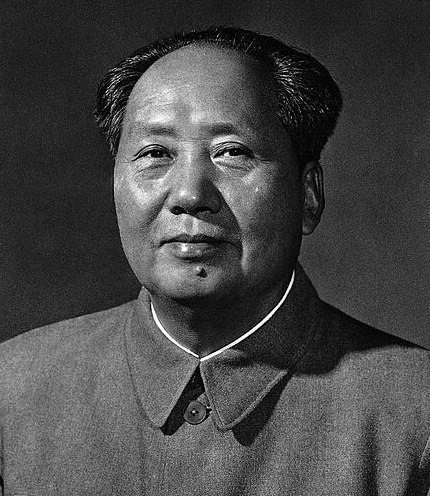
In December 1949 the Communists took over the government of China under the leadership of Mao Zedong.
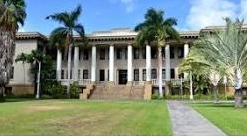
Back in Rome I was invited by Dr Gregg Sinclair to become Visiting Professor of Chinese philosophy at the University of Hawaii. I was willing to quit diplomatic life, because there were too many parties and other functions to leave any time for private study; and study after all has been the dominant interest of my life.
My stay in Honolulu has been most fruitful in intellectual and spiritual life and friendships. It is the beginning of a new chapter of my life.
Epilogue – God has been gracious
In the Chinese soul one quality stand out above others and that is the sense of gratitude. The institution of ancestor worship is based upon gratitude towards the origin of one’s physical being.
When a Chinese is converted, gratitude constitutes the dominant note of his spirituality. I think it is true in my own case.
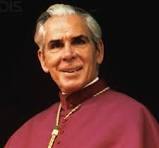
The Chinese trust in heaven is bred in the bones and runs in the blood. There is a saying on the lips of every Chinese: “Men have a thousand plans but heaven has only one .” It is true that many Chinese tend towards fatalism, without the light of Revelation. A Chinese is in danger of becoming a fatalist, just as an Occidental, who has forgotten his Christianity, is in danger of becoming an activist. Fulton Sheen observed: “It is apt to be an error of the Eastern World to think that God does everything and man does nothing; it is apt to be the error of the Western World to believe that man does everything and God does nothing.”
He later added: “Unhappiness is always unused or ill used spiritual energy and man has with himself so many energies made for God that lacking God these energies cannot be satisfied.”
Pilgrimage is neither eastwards nor westwards; but inwards; and this is what I called moving beyond East and West.
In dealing with the Orientals, one cannot too much emphasize that God is more motherly than a mother. The Chinese respect the father but love the mother. One of the things that attracted me so strongly to Saint Therese of Lisieux is that she knew well the maternal quality of the God of love; as she said, “I had felt that Our Lord is more tender than a mother and I have sounded the depths of more than one mother’s heart. Fear makes me shrink, whereas under love’s sweet rule I not only advance; I fly!”
When I read it, I said to myself how Chinese she is. She is one of the reasons why I feel so much at home in the Catholic Church. Most of the priests and sisters I have met, have been so motherly to me. This is particularly true of priests in the in the confessional.
If one feels at home with the Universe, one naturally acquires a serenity and a playfulness, like a baby at the breast of its mother. All the interesting personalities in the history of China are just big babies. Confucius for instance played music and sang when he was surrounded by his enemies and his life was in jeopardy.
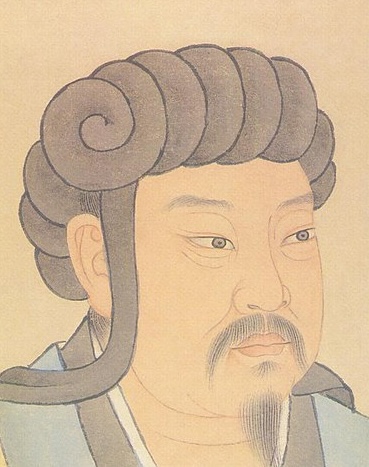
The great scholar-general, Chu-ko Liang, so the legend has it, once saved himself by a wonderful ruse. He had no soldiers at hand and he was literally driven to the wall by his enemies. He mounted the wall and sat in a conspicuous place playing music in the most leisurely manner imaginable. Ηe beckoned with his hands to the enemy saying, “Please come in.” The enemies were frightened suspecting that the city was full of soldiers in ambush, and took their heels immediately.
It is in the light of this spontaneous playfulness that we can understand the queer actions of the Zen masters and the Taoists. When Hui-chih, the son of Wang Hsi-chi, who is regarded as the greatest calligrapher of China, was travelling by boat, he saw Huan Yi, the famous flute player traveling by land, along the bank of the rive;r and he sent a messenger to request him to play the flute . Huan Yi, who had heard of Hui-chih, and had an admiration for him, descended from his chariot and played the flute three times. When the music was finished, he immediately ascended his chariot and went away. The two men did not exchange a single word.
This kind of romance, typically Chinese, is not entirely alien to the spirit of Catholicism. In fact a true Catholic may enjoy the peace and happiness of the Pantheist at the very source.
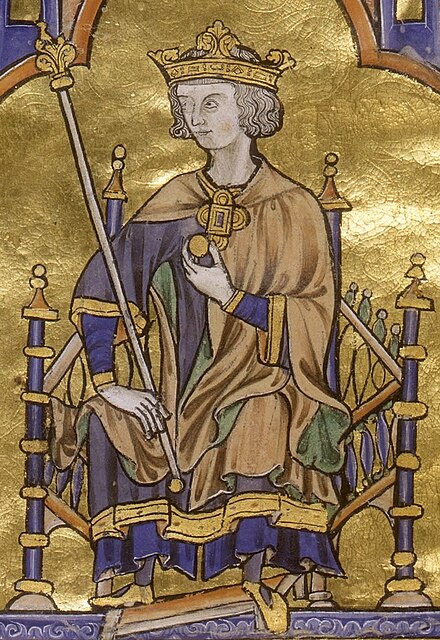
Recently running through Maisie Ward‘s, The Splendour of the Rosary, I was thrilled to find a similar meeting between St. Louis King of France and brother Giles, disciple of Saint Francis. Louis traveled incognito to meet Giles in Perugia. Knowing by inspiration that it was the King of France, Giles left his cell and ran to meet him. Without speaking a word the two knelt down together with the greatest devotion embraced and kissed each other with as much familiarity.
As Giles later explained to his brothers, ” By divine operation, we looked each in the other’s heart, on what we would’ve said to one another. I knew it far better than if we had spoken with the mouth and with more consolation, because of the defect of the human tongue, which cannot clearly express the secrets of God.”
Finally the Catholic devotion to the Blessed Virgin has been prefigured in all the religions of the East. The Oriental love for the mother – whatever form she may take – is apt to be a lifelong passion.
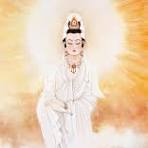
One of the reasons why Buddhism has been so popular in China is the cult of the feminine deity, Kuan Yin. Whether at sea or on land, the Chinese people appeal to her for help in times of danger and distress.
It is significant that originally Kuan Yin, the Chinese for Avalokita, was a man God. It was only later that he was metamorphosed, in popular imagination, into a goddess of mercy. She has served in China as the tender mother of the poor and helpless.