

At the beginning of the famous encounter between St. Juan Diego and Our Lady of Guadalupe, as Diego ascends Tepeyac Hill, he is suddenly surrounded by beautiful music and wondrous sights, whereupon he asked himself, “Where am I? Could this be the place that our ancestors spoke of – the Flower World Paradise in the land of heaven?”
With these words Diego ties his encounter to an ancient indigenous belief system – a spiritual floral domain named “Flower World”. This startling history was recently uncovered by anthropologists and archaeologists. In referencing this flowery paradise San Diego opens up a fascinating link dating back to the very cradle of American civilisation.
This above quote is from the recently published book, “Guadalupe and the Flower World Prophecy” by Joseph Julian Gonzalez and Monique Gonzalez. It is based on many years of assiduous research and I highly recommend it.
The illustrations are by Lucia Sferra.
Ancient Mesoamerica and the Flower World before the Guadalupe Event
“Where am I? Where do I find myself? Could it be that I am in the place of our ancient ancestors, our grandparents told about, in the land of the flowers, in the land of corn, of our flesh, of our sustenance, possibly in the land of heaven?” So said Don Diego according to the Nican Mopahua, the history of the apparition of Our Lady of Guadalupe, written in the Nahua language in the 17th century.
Juan Diego had found himself in a world of incredible music and enticingly beautiful birds, ike the Jingle-bell and the Trogon, singing gorgeous songs that echoed off the hills. Judging by his shocked reaction there can be no doubt that he had prior knowledge of this wondrous place, that he identified as Tonacatlaplan, the Nahua language for “place of sustenance”: a place of energy, power and creativity, from which everything originates.


The Flower World of the Mesoamerican Indians was expressed in the songs of the indigenous peoples. Many of them contained imagery that conveyed a timeless world of astounding beauty.
There were four major Mesomerican civilisations responsible for the development of the Flower World, until the time of the Spanish arrival: the Olmec (1500 – 400BC), the Mayan (900BC – 950AD), Teotihuacanos (250BC – 600AD) and the Nahua (600 – 1521AD)
The most significant crop for earlier Americans was maize. Ancient Mesomerican societies discovered that in planting sunflowers alongside maize, they could attract pollinaters, such as hummingbirds, butterflies and insects, who assisted in increasing productivity. The humming birds were spiritually significant.
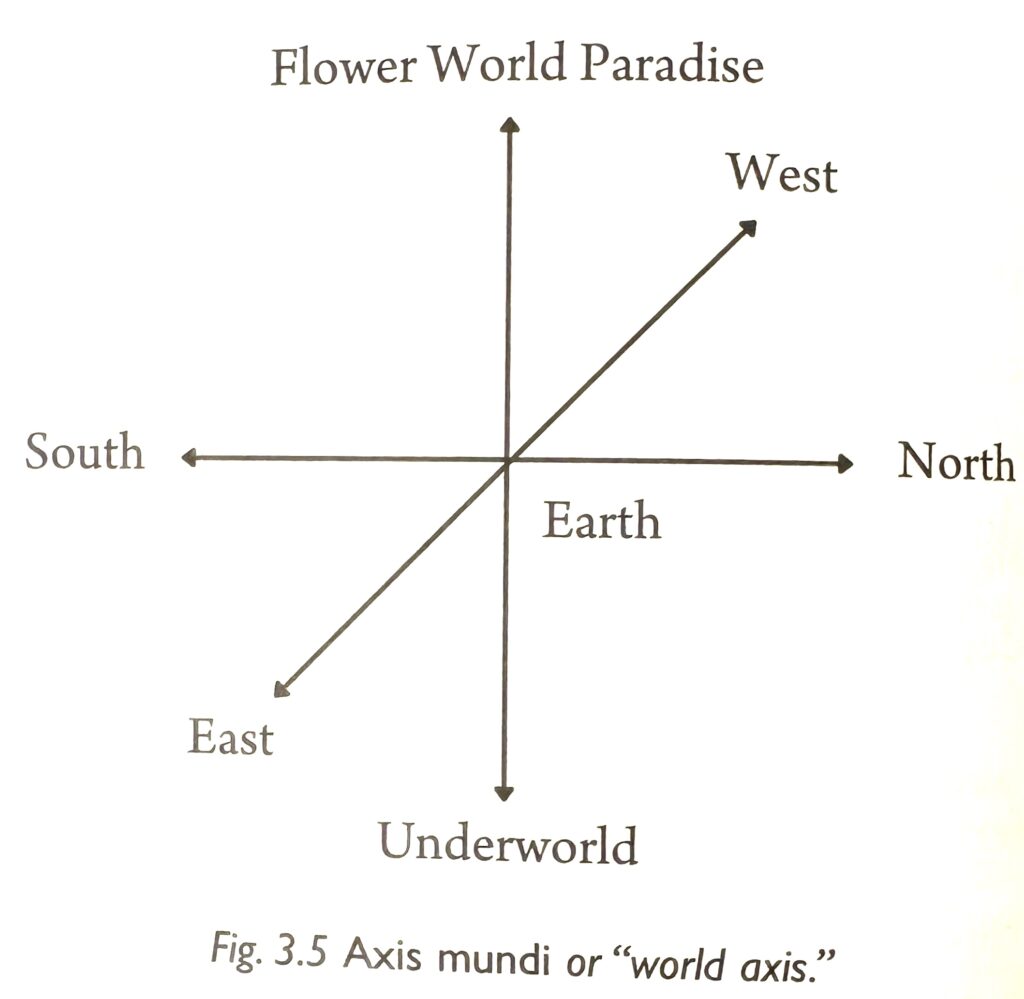
The maize fields also served as a symbol of the axis mundi. Olmec maize fields were planted in quincunx pattern, in a four directional manner to represent the ordered world – the four boundaries of the field surrounding the fertile life-giving centre. In shaping their fields this way, they connected the earthly maize fields with divine sustenance; and so maize fields and the symbolism derived from them were sacred.

The Olmec Civilisation
If there was to be a passage from paradise to earth, the Olmec understood that it must exist within a mountain, through the passage of the flower, to a special cave. Mountains positioned over a cave, with accompanying subterranean springs, functioned as large-scale images of the axis mundi. These caves were treated as a “caves of origin”, the birthplace of the sun, moon and humanity itself.
The cave was believed to offer a direct passage to a parallel spirit world. In other words the cave inside the mountain acted like a wormhole, metaphysically leading us to and from the highest point of the mountain, the symbolic representation of the heavenly plane.
However to reach that portal, the gateway to the paradise of Flower World, one first had to pass through the terrifying maw of a giant animal. In other words one had to face death before passing on to paradise.

The Maya Civilisation
In this epoch the flower mountain is depicted as blossoming with flowers, often with celestial ancestors walking upon it.
The cave of origin can be found not only in vessels, but throughout Maya archaeological sites. It was also associated with fertility and creation.
The Mayas defined the path of the Sun – the movement from east to west – as the obligatory direction that a person must follow toward the flower world paradise.
A classic Maya death vase depicts Flower mountain as a stepped pyramid with the open mouth of a supernatural animal that resembles the cave maws from the Olmec period.
The image of a decaying corpse under the stepped pyramid would have implied that the deceased ruler, within his tomb, now resides in his ultimate dwelling place in the Flower World.


Teotihuacan or City of Gods
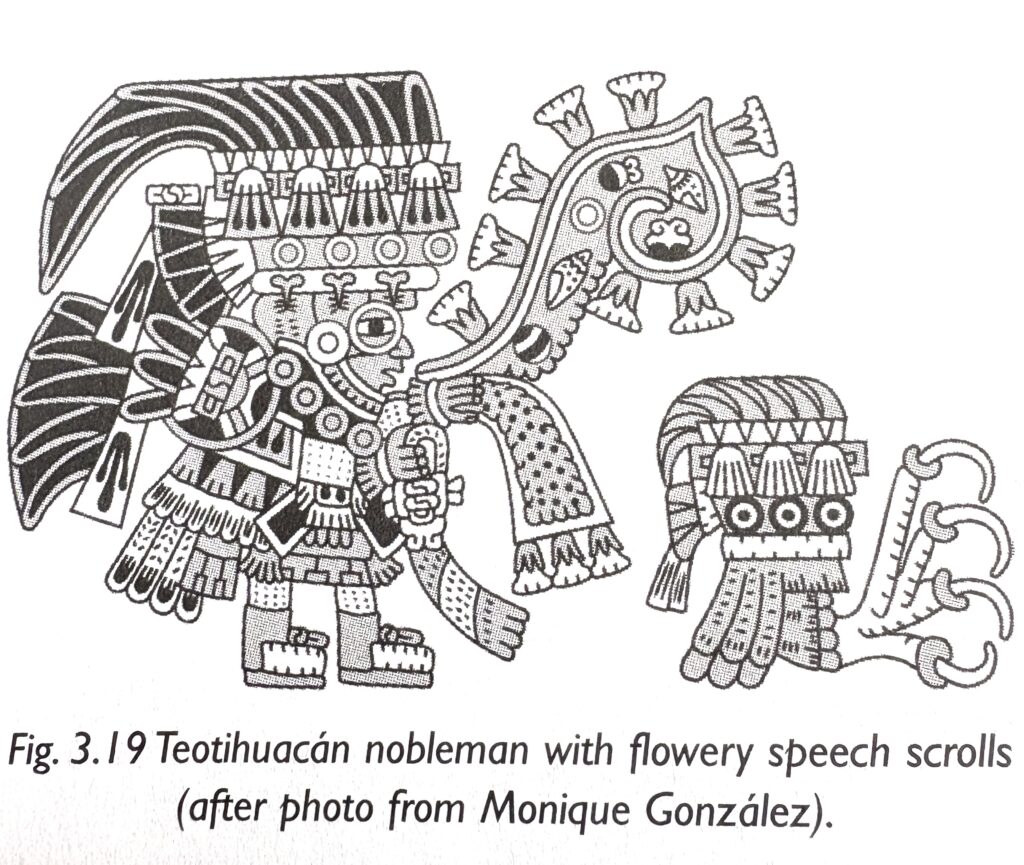
Some of the most vivid and gorgeous examples of artwork are revealed in ruined apartment complexes. These buildings contain murals depicting mythological animals and religious settlements. This nobleman shows a multitude of flowers sprouting from his speech scroll, where he is singing of divine truths and of the metaphorical fragrance of truth and beauty.

Another mural depicts a mountain covered with flowers, butterflies, hummingbirds and people, as well as a river flowing out of a cave like maw in the centre of the mountain

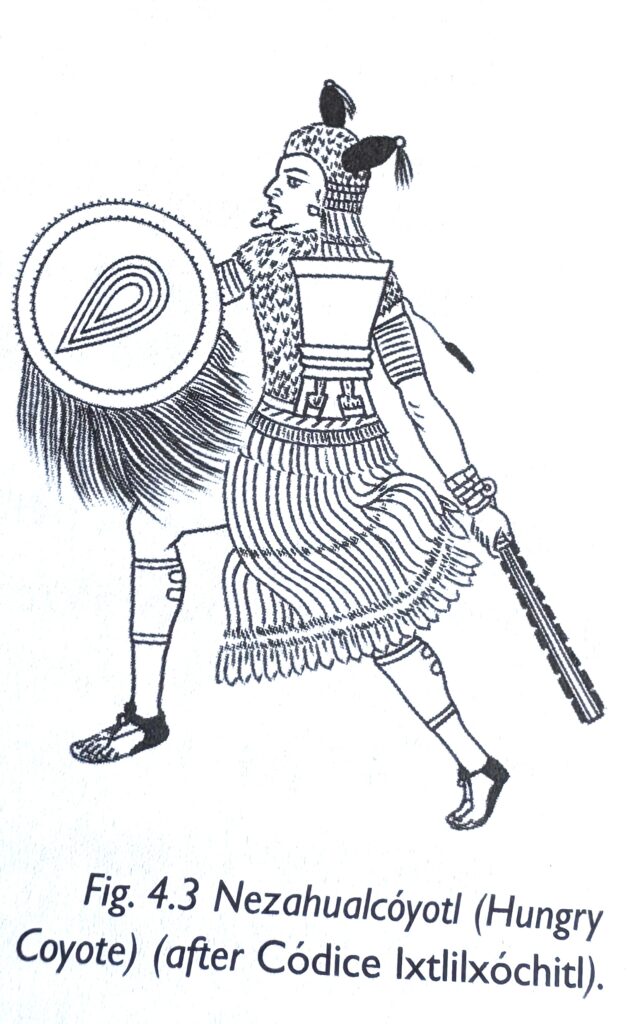
In the Nahua Period there were four philosophical ideas which we shall call pillars:
There were multiple Nahua groups but we shall concentrate on just two;
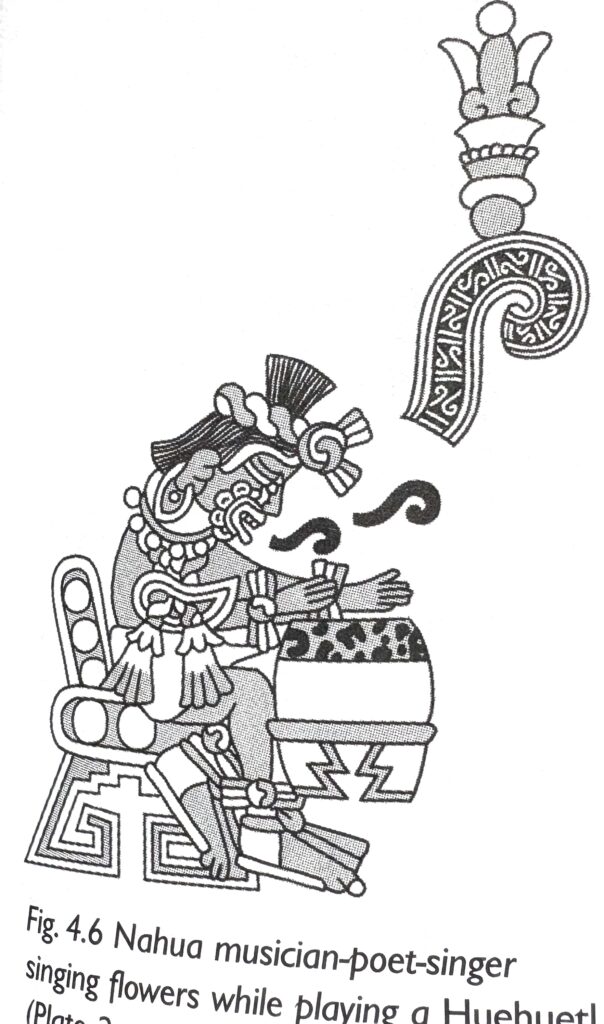
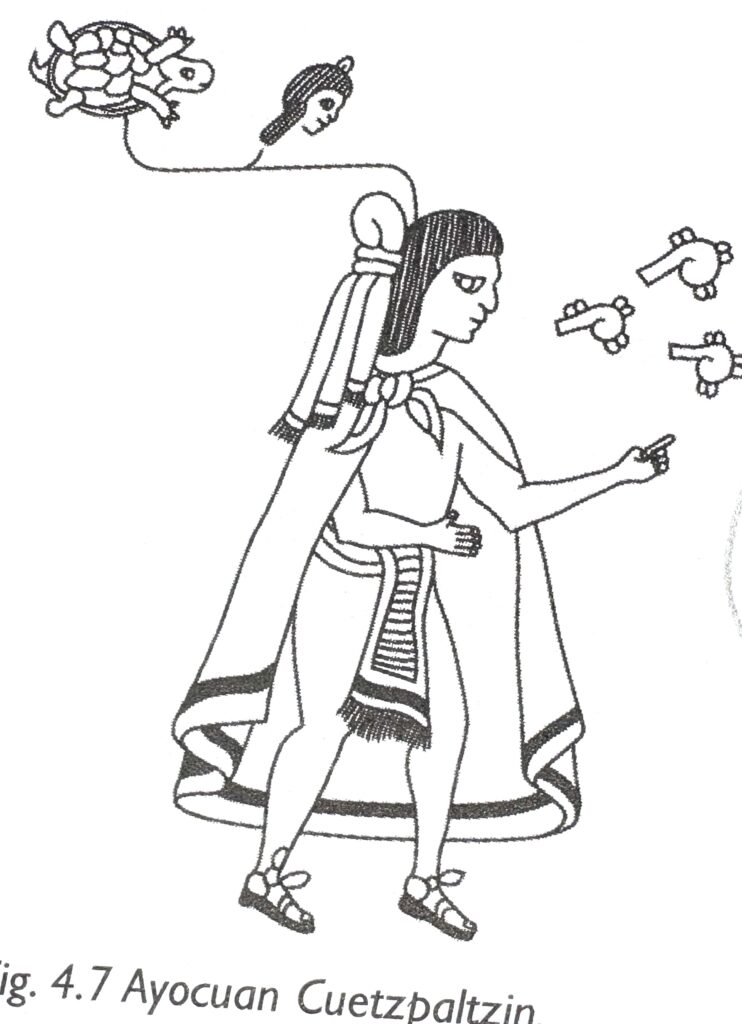
The Nahua believed that singing about beauty in the metaphor of the flower was a way in which an individual could pass beyond this world into ultimate reality. The exploration of divine truth through beauty was combined with the act of creating beauty through song and both were felt through the heart, which was rooted in God. The act of creating art was therefore not just the whimsical preoccupation of fanciful artists. It was the way to receive messages from heaven.
While the Nahua worshipped pagan gods, they also believed in a larger supreme force that united everything under its umbrella. It was known as the God of far and near.
They also pondered their worthiness to enter heaven. According to the Franciscan monks who witnessed them, their performance of “merit songs” was done with “extreme gravity and emotional profundity, for with the heart and with the senses of the body, they use many wiggles of the head, the arms and the feet, as with the whole body.”
Missionary Catechesis (1524 – 1531)
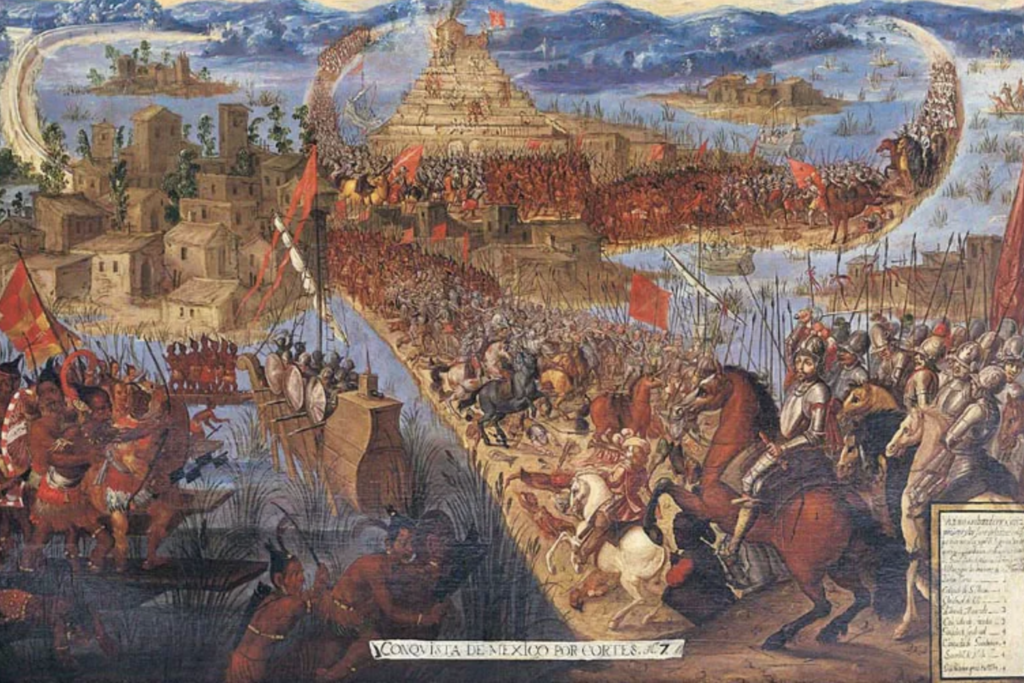
Hernan Cortez and his men first entered Mexico in November 1519. At that time the Spanish numbered from 900 to 3000, whereas the Mexica numbered approximately 200,000 people within the 5.2 Square mile city area. So Cortez made allies with Mexica’s enemies and this indigenous Spanish alliance was able to defeat the Mexica in August 1521.
Following the conquest the Spanish faced an even more important task: the conversion of souls.
The Franciscan Missionaries didn’t realize that the Nahua possessed a fully developed philosophy that shaped their entire civilization. Because they had witnessed the Mexica’s barbaric human sacrifices, the missionaries thought they were dealing with simple minded pagans .
The Franciscans worked to learn the Nahuatl language and culture. They built schools and convents and they traveled long distances in their attempts to reach as many indigenous as they could to spread the gospel.
The first Archbishop of Mexico City, Juan de Zumarraga had a difficult task ahead of him. The Pope had appointed him, not only Bishop of New Spain, but also “Protector of the Indians”. In the 1520s the new Spanish regime was exploiting and abusing the indigenous peoples out of a lust for power and gold. Nuno de Guzman, for example, the first president of the administrative court, appointed to handle disputes between the Spanish and the natives, quickly built a reputation for violence, theft and sexual abuse of indigenous women. Over time, he made so many enemies that he was eventually removed from all his posts and thrown into jail.
Convincing the indigenous to give up polygamy, concubinage and slave labour was difficult because the Nahua had entire economic and governmental systems built around them. Meanwhile the immoral behaviour of the Spanish soldiers, who claimed to be Christian was deeply hypocritical and presented Christianity as having no integrity.
Only a few converts were made. However among them was Don Diego and his wife.


The fact that the friars were asking them to accept and believe in a totally new religion and a new God, divorced from their past and their ancestors, both disturbed and terrified them.
The concept of life after death and the word heaven while carrying a great deal of weight for the Christians has little or no context, if you don’t already have a thorough understanding of Jesus Christ as God and all this entails.
The Nahua believed that they already understood and were confused by the friars’ insisting that they did not. In the following lines they endeavour to show the friars the truth of what they knew about the Flower World Paradise: “There is germination, there is greening in his house, there is never hunger, there is no disease or poverty, where we can find flowers, tobacco, the jades, fine feathers, precious metals.
Christians believed that incarnate truth came down from heaven and became man, while the Nahua understood that flowers as a symbol for truth must be brought down from the divine realm to the earthly plane via flower and song. Both parties understood that truth must come down from heaven above to the earth below.
Worthiness
What does it mean to be worthy? To answer this question the Francescans began with an explanation of the creation story of the fall of Adam and Eve, centered around the concept of paradise lost, where humanity resides in a sinful and fallen world due to their transgressions. Interestingly a similar sentiment is echoed in the myth presented in the famous song poem the Cuicapeuhcayotl (Origin of songs), where the singer and all individuals are deemed unable to enter the flower world paradise, because of the burden of sin they carry.
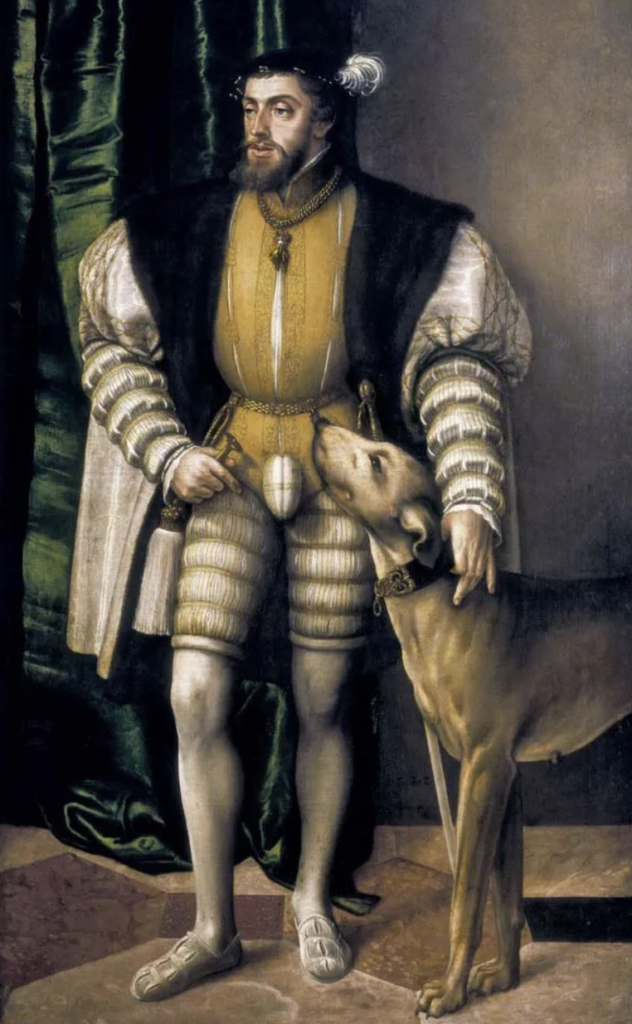
Unfortunately the Spaniards were unaware of this potential bridge and therefore couldn’t lead them to Christianity. Their two completely different ways of expressing divine things led to a breakdown in their communication and the evangelical efforts of the first decade seemed an utter failure. Bishop Zumarraga wrote to the Emperor Charles V in August 1529: “I think it well to inform your Majesty of what is happening now, because it is something so important that if God does not intervene to provide an instant remedy, this land is on the verge of being lost forever.”

The Guadalupe Event – the Loving Cunning of Our Lady
Don Diego’s Nahua name Cuauhtlatoatzin means “one who speaks like the eagle.” From an early age he would’ve learnt the songs of his people and being trained in the flower song traditions, thoroughly memorizing and performing them through song and dance. As a teenager he would’ve lived through an extremely turbulent time. He was 13 when as many as 80,000 people were sacrificed. Yet at the same time an artistic age was blossoming.
He owned a house and land, and while he was not of the elite, he was economically comfortable. By the time of the Guadalupe event he was 57 years old and a widower, his wife having died two years prior. After his encounter with Our Lady he enjoyed a powerful reputation for holiness and was called “the Pilgrim.”
A small book called the Nican Mopohua (meaning Here it is told) published in 1649 gives an account of the Guadalupe Event. Before this a Nahua Commoner would have heard it as a song performed with a singer, dancers and drummer, designed to make an emotional impact.
After so many years living in the ordinary world Diego stepped out of it. As he walks the 14 miles to Mass, he prepares to receive the Eucharist, contemplating in his heart the truth embodied in Jesus. He connects Jesus to ultimate truth and beauty. In this way he is similar to the singer at the beginning of the ancient Song of Origin. His passion for beauty leads him to higher truths which are symbolized by the flowers.
The Nican Mopohua recounts: when the singing of the bird suddenly stopped, he heard someone calling him from the top of the hill: “Juan, dearest Juan Diego”, and when he reached the top a maiden was standing there. Her clothing was shining like the sun, sending out waves of light. Her radiance was like precious stones. He prostrated himself. Her words which gave great glory were extremely kind, as if she were drawing him towards her and esteemed him highly.


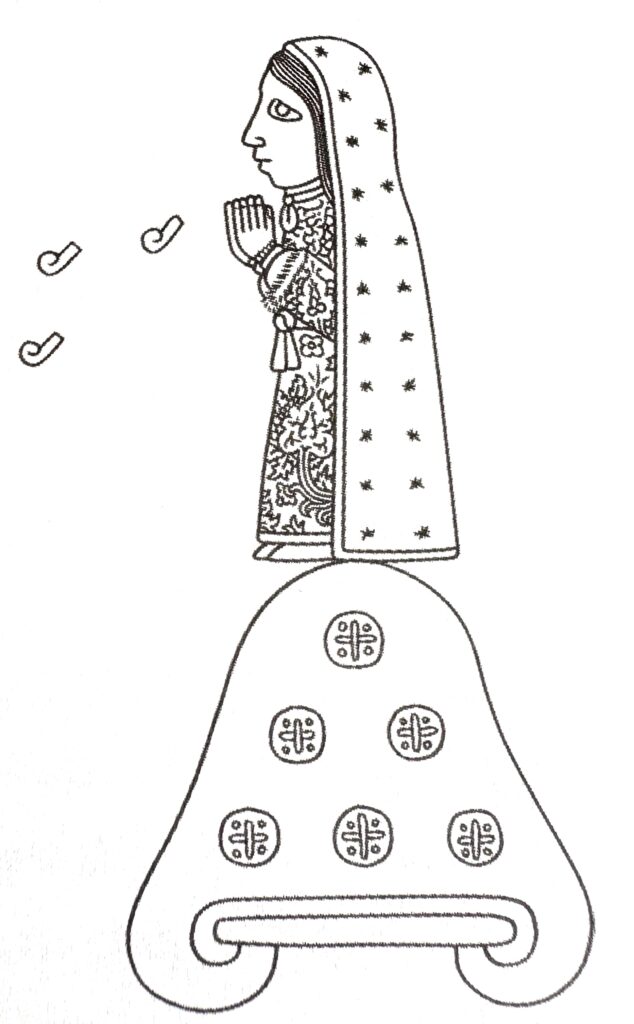
By using older pre-Christian terms for a supreme entity Guadalupe attaches herself to ancient traditions. She is the mother of:
These titles bridge the Mesoamerican Flower World belief system with Christianity. She is asking Juan Diego and the native audience to discern what she is about to say through beauty and the heart, the way they have traditionally always understood the wisdom of the ages and divine things. She is tenderly speaking in terms that they would understand.

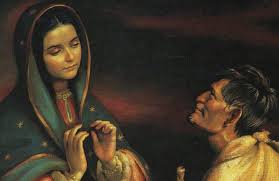
The Perfect Virgin replied: “My youngest and dearest son I have no lack of servants, of messengers to whom I can give the task of carrying my breath, but it is very necessary that you personally go and plead that my wish my will become a reality, be carried out through your intercession; and so I tell you to go again, tomorrow, to see the bishop and make him hear my wish that he will build my house of God.”

The crucial aspect of this narrative is that Juan Diego, undertake the significant mission precisely due to his humble status. Symbolizing every Nahua man, his identity is pivotal to the entire story. It is imperative that he enters flower world and personally retrieve the flowers from paradise bringing them back to the earthly realm.
At the second meeting the Bishop asks for a sign. The virgin says that she will give him a sign tomorrow, but then Diego learns that his uncle is very ill, so he goes in search of a priest to give him the last sacraments; and avoids returning to the Lady. He thinks that if he goes by the eastern side of the hill (traveling in the direction of the sun), she will not see him. But she does and she blocks his way. He prostrates himself and explains how his uncle has been taken ill.
By changing his course Juan Diego unwittingly places himself in a position to follow the ancient world tradition of following the path of the sun into the Flower World Paradise. In other words by trying to avoid his destiny he ends up fulfilling it.
She says to him: “Am I not your mother, are you not under my protection, am I not the source of your joy, are you not in the hollow of my mantle? Let nothing disturb you. Do not let your uncle’s illness pressure you with grief, because he will not die of it now. You may be certain that he is already well. Fortified with this miracle and with heavenly encouragement Juan Diego is ready to finally fulfil his quest.
Our Lady (as the hummingbird) at the bottom of Flower Mountain, the axis mundi, within which is paradise, where reside the heavenly flowers, which alone make one happy, the only truth to be found on earth, we also have the final player in place. We have the Bishop (represnting the princes of the world), who is the lord and prince of the Church, awaiting to see the sign, the flowers which Juan Diego will eventually bring him in his tilma.
Diego has been consoled by Mary’s words and a deep peace and stillness descend on him. This abrupt silence was the signal something magnificent was about to occur that would change everything. Mary orders him to the top of the hill.


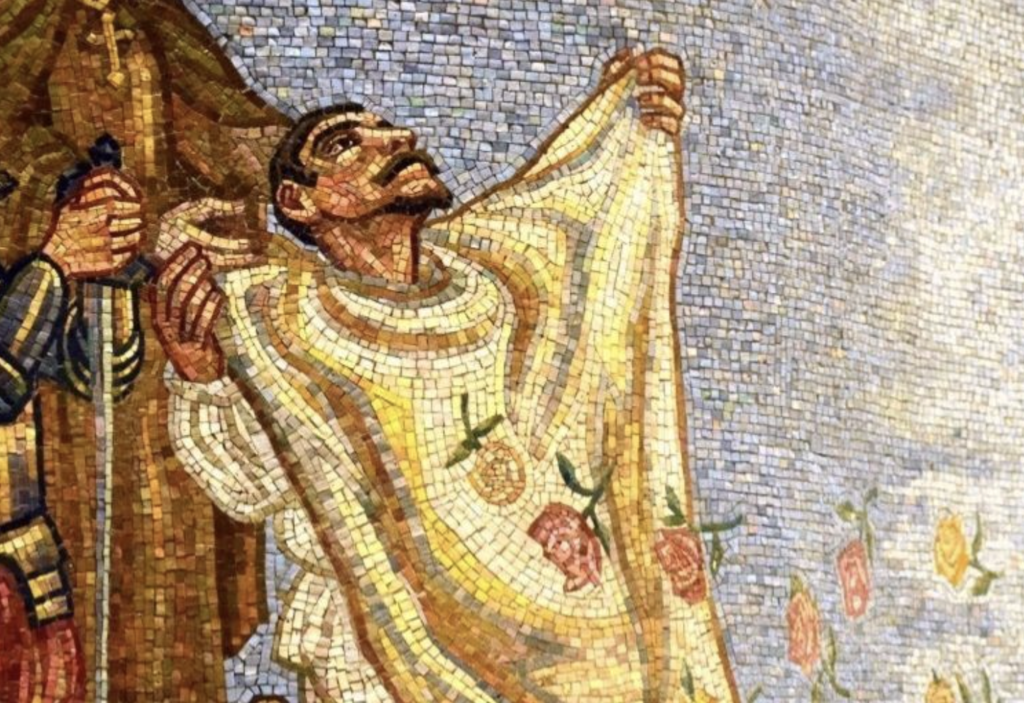
Not a warrior nor a nobleman, but a commoner entered the Flower World Paradise and gathered the flowers of beauty and truth. One can only imagine the tremendous hope that must’ve flared up within every Nahua. By arranging the flowers in his tilma, Our Lady demonstrates her role as a vessel through which God manifests himself on Earth. The Nahua now knew that the truth they had always sought was possessed by the friars, whom they are now being implicitly told are worthy of trust. Don Diego achieves entry to the bishop and then with the prodigious memory, typical of Nahua training, he relates everything he has seen. He adds: “And so that it will be clear that my message is truth”, thus underlining the understanding that truth is rooted and embedded in the past.
Millions of indigenous conversions


The friars commented: “They have done much penance by giving alms both to the poor into their almshouses by fasting rigorously and scourging themselves both publicly and privately. Our main source regarding the multitude of conversions is Fray Motolinia who estimates approximately 5 to 9 million indigenous were baptized in Mexico by 1537.


As they traversed through the wilderness and hills thousands of converts sought out priests for baptism and confession. The friars encountered groups ranging from 1000 to 2000 individuals, who had left their lands in search of priests. Among them were pregnant women some giving birth during the journey and nearly all carried their children on their backs even elderly; and frail individuals travelled 52 to 70 miles searching for a confessor.
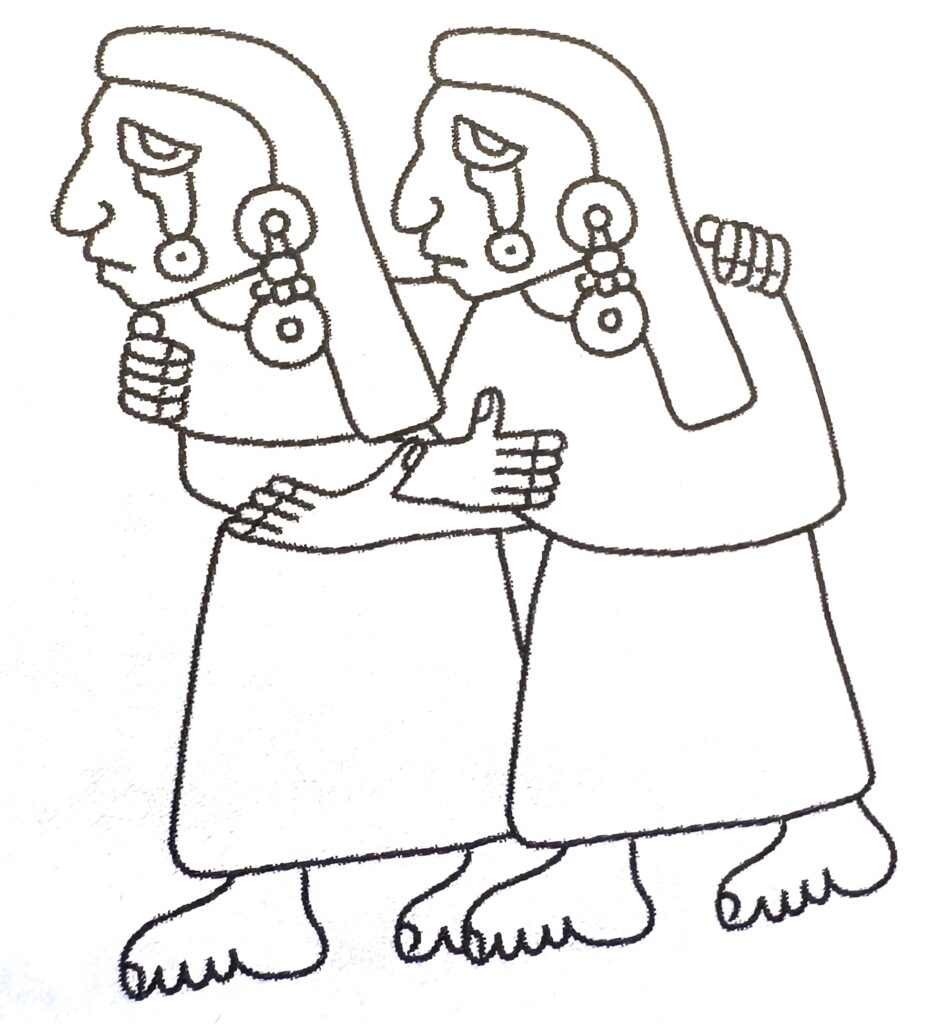
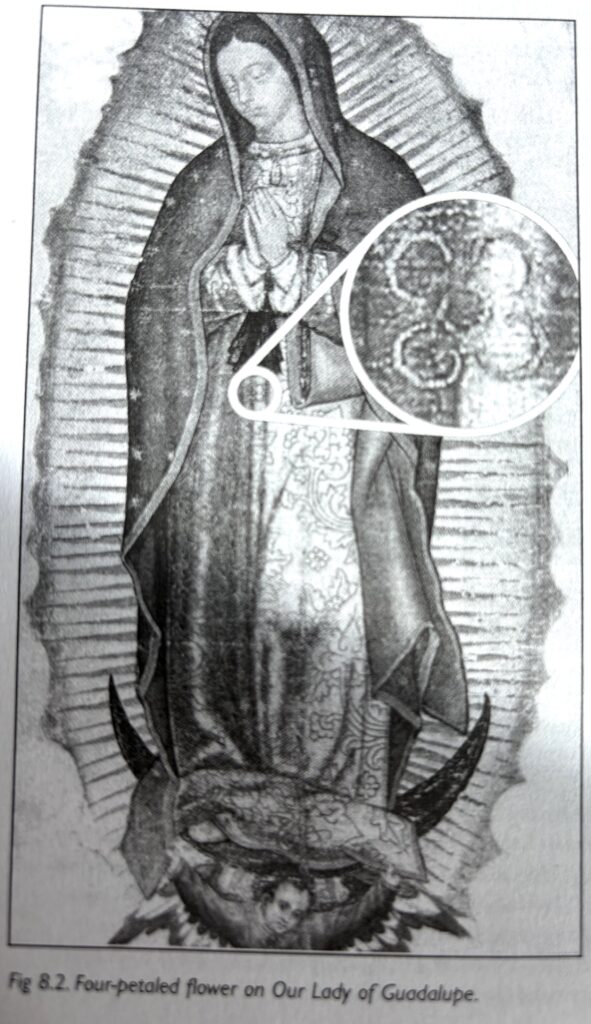
There is one very small aspect of the tilma that often goes unnoticed by modern eyes, but spoke volumes to the Nahua. Just beneath the cincture of her mantle, in the folds over her pregnant womb is a four petal flower, a quatrefoil, the ancient symbol of the axis mundi, as if to emphasize Our Lady of Guadalupe’s personal connection to the Nahua.
Here is the portal between earth and heaven. In her womb is the vital intersection of the universe, where heaven and earth meet. This line between our world and heaven extends from the centre point of the flower and takes the viewer directly to the “fruit of her womb” that is Jesus Christ, the source of all earthly beauty truth and goodness and the way to paradise.
Another trace of flower world post-conversion is found in the morality plays that took place during Holy Week 1539. Morality plays were a powerful tool for catechesis. Friar Motolonia recorded the amazement of those who witnessed the care the native people took in re-creating the Adam and Eve story. The designing of the play’s scenery to represent paradise was far beyond what the friars asked for. The earthly paradise was decorated with different kinds of trees, full of fruits and flowers, some of them natural and some of them with golden feathers. They adorned the scenery with various precious birds including the roseate spoonbill, whose singing and chattering filled the air to the extent that it interfered with the acting. To depict the Garden of Eden everything was covered in “gold and feather work.”
The Guadalupe event features not a syncretism or a blending of beliefs, but a bridge leading the Nahua away from their pagan practices and toward the full embrace of Christianity.