|
(SOUND OF A ROWING BOAT AND GIRL SINGING IN THE MOSO LANGUAGE)
|
|
NAMU:
|
My Ama doesn’t remember when I was born. She doesn’t remember the year or the month or the day. All she knows is that I cried too much.
|
|
(FADE ROWING AND SINGING)
|
|
AMA:
|
From the moment you were born, you were trouble
|
|
(TRADITIONAL CHANTING TO HELP THE BIRTH)
|
|
NAMU:
|
But the mountains were already white, so she knew that it was early winter, when the boy in her stomach refused to come out. Her friend Dujema gave her a dried corncob to bite on.
|
|
AMA:
|
Ooooh! A boy is worth the pain.
|
|
(SOUNDS OF AMA PUSHING, THEN BABY NAMU CRYING)
|
|
NAMU:
|
My Ama groaned louder and gave a big push.
|
|
DUJEMA:
|
It’s a big head, a boy’s head.
|
|
NAMU:
|
Dujema went to the fireplace for a piece of kindling to light the holy sage brush. Its smoke drifted up through the opening in the roof towards the gods in heaven. Dujema passed the scissors through the smoke and cut the umbilical cord.
|
|
(BRING UP AND TAKE DOWN CHANTING AGAIN)
|
|
NAMU:
|
Then she dipped me in the enamel basin.
|
|
(SOUND OF SPLASHING WATER.THEN VOICE OVER CHANTING)
|
|
DUJEMA:
|
The water is pure. The baby is well. All is in harmony.
|
|
NAMU:
|
And she handed me to my mother.
|
|
DUJEMA:
|
It’s a girl.
|
|
AMA:
|
A girl !
|
|
NAMU:
|
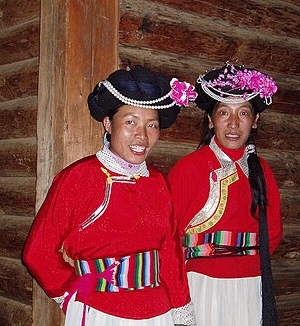
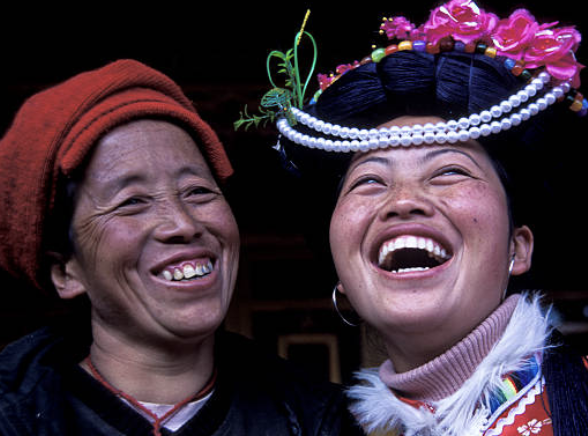
Ama’s disappointment at my birth was unusual. For we Moso people tend to favour daughters over sons. That’s why the Chinese call us the country the Country of Daughters. Among us it is women, not men, who inherit the family house and rule the household. But a family needs sons as well as daughters. We need men to travel with the horse caravans, to trade in the outside world horse caravans to trade in the outside world, and to make the long journey to Lhasa to study the holy Buddhist scriptures and to become lamas.
|
|
(A BUDDHIST MONK CHANTS SUTRAS)
|
|
NAMU:
|
Without our lamas we could not name our children or send the souls of the departed onto the next cycle of life.
|
|
(MIX FROM THE CHANTING TO THE CRYING OF NAMU AS A BABY)
|
|
NAMU:
|
Ama tried everything to stop me crying. Finally she asked the oldest lama in the village to name me. He placed his hand on my belly
|
|
MONK:
|
Her name is Erche Namu
|
|
AMA:
|
Erche Namu, my princess.
|
|
NAMU:
|
But I didn’t stop crying until my younger brother arrived. My Ama had several lovers before Zhemi my father, but he was the one she loved the most.
|
|
(WE HEAR THE RUNNING WATER OF A STREAM)
|
|
AMA:
|
When I was young I used to imagine the young men helpless with love, as they watched me bathe. I imagined them falling over each other to offer me their coloured belts.Then when I fell in love for the first time with Nambu, I left his belt outside my flower room, as a sign that he was welcome to enter.
|
|
NAMU:
|
As a girl I longed for my own flower room, where we receive our lovers. We don’t get married. It is said that it is the Moso are the only people in the world who consider marriage an attack on the family. We have no word in our language for husband or for father. Free relationships, in which men visit their lovers at night, and return to their mothers’ houses at dawn, are known as walking marriages. So my mother never got married. She was a good cook, a skilled horse woman, and could use a bow and arrow as well as any man. She was very beautiful, but she was also restless and impatient. Dujema, mother’s closest friend told me.
|
|
DUJEMA:
|
Your mother was like you, spoiled by all her talents.
|
|
NAMU:
|
It was boredom that turned her into a revolutionary.
|
|
(ESTABLISH CHINESE COMMUNIST MARCHING SONG AND TAKE UNDER)
|
|
NAMU:
|
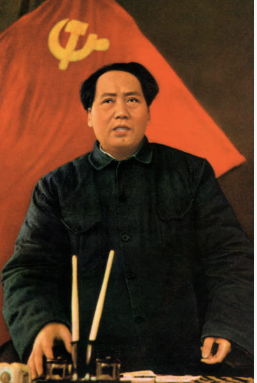
In 1956 the People’s Revolution Army arrived at my grandmother’s village.
|
|
SOLDIER:
|
China has turned over. The feudal era is dead. Chairman Mao will give you everything you need. A new era has dawned. Your great saint, the living Buddha will have to work for his living, like everybody else./span>
|
|
AMA:
|
I love their revolutionary songs. I want to march to the top of the mountains. I want to see what is on the other side. I am going to learn Chinese.
|
|
(FADE SONG AND HEAR POUNDING OF BEANS)
|
|
NAMU:
|
My grandmother pounded the soy beans
|
|
(RITUAL SONG)
|
|
NAMU:
|
And sang the ritual song for people who have lost their souls./span>
|
|
(FADE SINGING)
|
|
NAMU:
|
But the Communists did not like our yak butter tea or our fleas; and soon after they left to liberate other villages. That year when the people came out to dance under the stars, and sang to our mountain goddess, all the men’s eyes were on my Ama, when she sang the courtship song with one called Nambu.
|
|
(MAN SINGING. VOICE OVER)
|
|
NAMBU:
|
Little sister, you are like moonlight in the night sky, but the moon needs a star above it.
|
|
(WOMAN SINGING IN RESPONSE: VOICE OVER)
|
|
AMA:
|
Night has not fallen. The moon has not risen, but the butterfly is already looking for honey.
|
|
NAMBU:
|
The butterfly has found a beautiful flower and the moon is already high over the lake.
|